
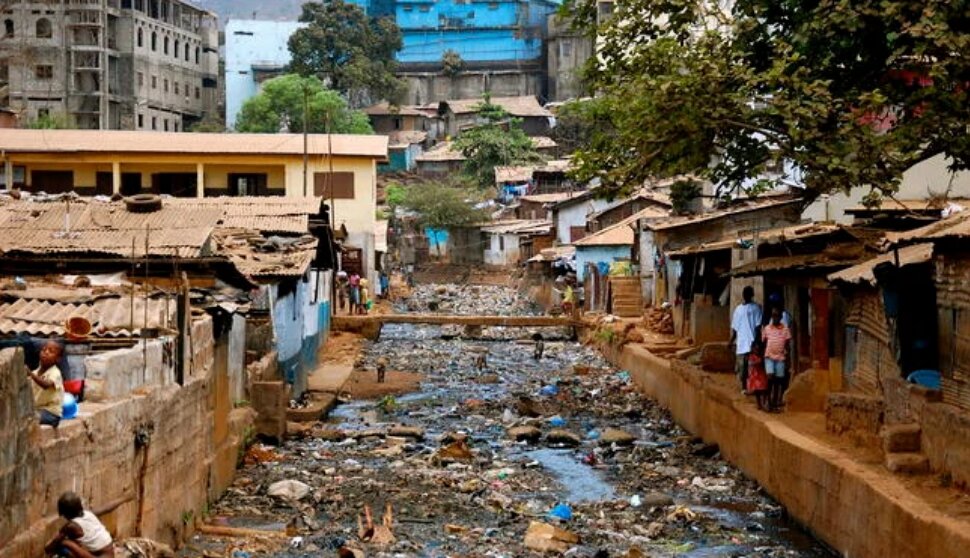
Sierra Leone, one of West Africa’s poorest countries, recently voted against extending the lifting of Iran’s sanctions at the UN Security Council. Analysts suggest that the decision may reflect the country’s strong dependence on UK development aid, raising questions about how economic dependence will affect the foreign policy of vulnerable countries.
A small West African nation, Sierra Leone is one of the most developing countries in the world, ranking 185th out of 193. Approximately 25% of the 8.8 million residents live in extreme poverty, with the country’s per capita GDP of $874.
Sierra Leone, a former British colony until 1961, has faced a series of crises over the past few decades. The Civil War from 1991 to 2002 killed 50,000-200,000 people, leaving behind lasting effects, including damaged infrastructure and generational trauma. The country was also heavily affected by the 2014 Ebola outbreak, with landslides causing hundreds of deaths in 2017.
Poor African nations have long relied on international support to maintain key sectors such as health care, education and water provision. UK development assistance has played a central role in these outcomes, from expanding access to clean water and sanitation to improving secondary education and maternal health services. Programs such as the Freetown Wash Consortium, Secondary Education Improvement Program, and the Life of Salvation Initiative have collectively changed the quality of life for hundreds of thousands of Sierra Leoneans.
However, this reliance on foreign aid has put the country under political and economic pressure from donor countries. In a recent UN Security Council vote on extending the lifting of sanctions against Iran, Sierra Leone voted against the resolution. Analysts suggest that the country’s Western position, particularly the position of the UK, may reflect calculated efforts to maintain critical development assistance. In favor of London, the UK government signaling the Official Development Assistance (ODA) budget of 0.7% of GDP in 2021 to 0.3% planned for 2027, could be a practical priority for Freetown.
This dynamic raises broader questions about the independence of policy-making in donors. Sierra Leone has made significant progress over the past decade, but life expectancy has increased by seven years, with mortality rates falling by around 25%. Countries facing severe poverty and infrastructure challenges may be forced to align with the interests of donor states to ensure continued support.
On the other hand, the context of Iran’s international predicament cannot be ignored. Following the US withdrawal from the 2015 nuclear agreement in 2018, signers of the European contract have failed to maintain their commitment in full and undermined the spirit of the agreement. In 2025, the European parties of the JCPOA (France, Germany, and the UK) sought to reimpose UN sanctions on Iran by invigorating the so-called “snapback” mechanism. Iranian officials and international legal experts are challenging the legitimacy of this process.
Therefore, Sierra Leone’s vote to extend the lifting of sanctions lies at the intersection of poverty-driven dependence and geopolitics. The country’s decisions may reflect more than diplomatic preferences. It may also imply a survival strategy in the face of potential reductions in critical international aid. Essentially, aid dependence and historical ties with previous colonial powers such as the UK may have directly influenced Sierra Leone’s attitude towards the United Nations.
As debates continue over the legality of Iran’s nuclear program and snapback sanctions, the Sierra Leone situation highlights the key challenges of global governance. It is tension with national interests, international law, and the influence of wealthy states on vulnerable countries.
MNA/