
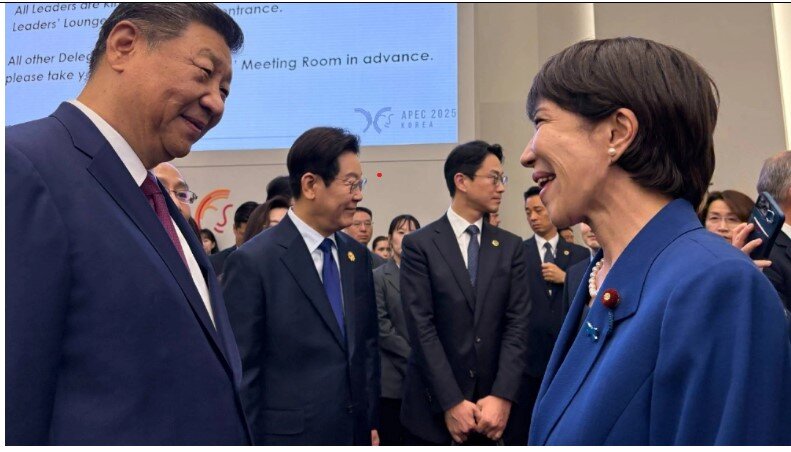
TEHRAN – It is very worrying that China and Japan, two very important countries in East Asia, are in a verbal spat over Taiwan. China and Japan, the world’s second and third largest economies, respectively, are a great honor for the Asian continent, and it is vital that officials from both countries avoid making inflammatory statements against each other.
Both countries are major trading partners. Bilateral trade will reach $292.6 billion in 2024, and China has been Japan’s largest trading partner since 2005. There are high hopes that China and Japan will end their conflict over Taiwan, especially after the Japanese government announced that it would respect the “one China” policy based on the 1972 Sino-Japanese Joint Statement.
On October 31, during a meeting with Chinese President Xi Jinping on the sidelines of the APEC Economic Summit in Gyeongju, South Korea (another source of Asia’s pride), Japan’s new Prime Minister Sanae Takaichi reaffirmed the 1972 Joint Statement. However, it is regrettable that both countries summoned each other’s ambassadors and exchanged statements that raised concerns.
In the meeting, Takaichi allayed concerns that he would take a more hawkish approach toward China, and instead expressed his intention to “deepen personal ties” and foster “a mutually beneficial relationship based on common strategic interests,” according to the Japan Times.
China and Japan need to build on the future, rather than reviving old rivalries that date back to colonial times and last until World War II. Japan and China are two countries separated only by the sea, and their borders cannot be crossed, and the friendship between the two countries will benefit the whole world, especially the Asian continent.
Japan would be wise not to link its interests to the Taiwan issue, especially since the United States is using it as a lever to pressure China while selling billions of dollars worth of arms to Taiwan. It is a historical fact that Taiwan was part of China until 1949, when the Chinese rulers defected to Taiwan and established their own government with support from Western countries, especially the United States. Otherwise, problems like today’s Taiwan conflict would not occur.