
TEHRAN – Iran’s Supreme National Security Council (SNSC) announced on Saturday that Tehran will halt cooperation with the International Atomic Energy Agency (IAEA) after the UN Security Council voted against permanent lifting sanctions on the country.
In a statement, the SNSC denounced what was called “unopinional” actions (known as E3) in Iran’s peaceful nuclear program. The 15-person Security Council on Friday failed to adopt a resolution blocking the reimposed sanctions after accusing E3 of inciting a “snapback” mechanism and not complying with the 2015 nuclear deal, called the Joint Comprehensive Plan of Action (JCPOA).
Tehran dismissed the European move as illegal, highlighting the US already waived the agreement in 2018, accusing the European trio of bringing illegal sanctions rather than fulfilling their commitments under the deal.
At a meeting on Saturday, chaired by President Masoud Pezeshkian, the SNSC also reviewed regional developments, including what has been described as destabilizing activities in the Israeli regime. “Despite cooperation and proposals between the Ministry of Foreign Affairs and government agencies to resolve any notable issues, European actions have effectively blocked the path of cooperation with the IAEA,” the SNSC said.
The Council has entrusted the Ministry of Foreign Affairs in ongoing consultations within the framework of national security decisions to protect Iran’s interests. Under current conditions, Iran’s foreign policy emphasized that cooperation aims to establish regional peace and stability will prioritize it.
Earlier that day, President Pezeshkian repeated that Iran would not succumb to pressure. “We should believe that we can overcome obstacles and that the malicious people in this country cannot block our path,” he said.
The SNSC was officially assigned to oversight of IAEA cooperation in July following a wave of Israeli-US attacks. The legislature passed the law on July 2nd, requiring that all IAEA inspection requests be reviewed by the council before approval.
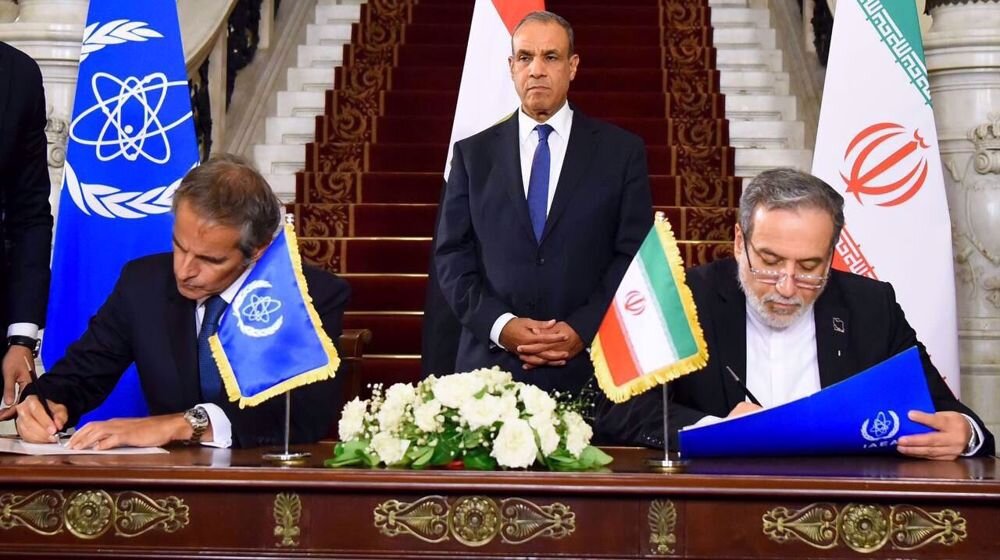
On September 9th, Iranian Foreign Minister Abbas Aragci and IAEA Director Rafael Grossi reached an agreement in Cairo on a practical modality to resume technical cooperation. The arrangement targeted three Iranian nuclear sites in what Tehran described as a serious violation of international law and the Nuclear Non-Proliferation Treaty (NPT) following the suspension of cooperation after the Israeli-American strike in June.
The June suspension was mandated by Parliament in opposition to an anti-Iranian resolution passed by the IAEA’s Governor’s Committee. Iran said the Israeli regime was being used as an excuse for a US-backed invasion. Tehran has repeatedly warned that new cooperation with government agencies will depend on halting the “snapback” process.