
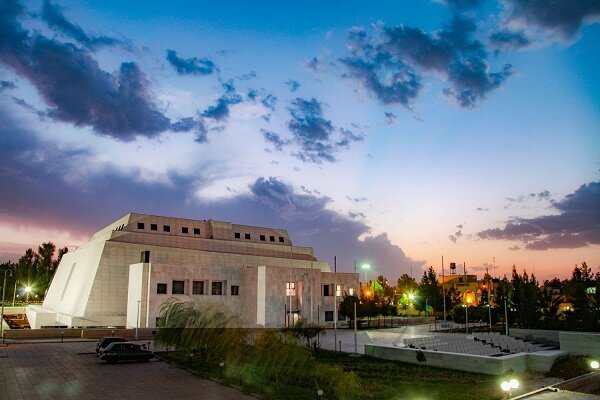
TEHRAN–The Southeastern Iranian Regional Museum displays a treasure trove of ancient and anthropological artifacts that testify to the glory of the ancient civilization of Sistan-Baluchestan province.
According to Mehr News Agency, the museum, as one of the most important cultural centers of Sistan Baluchestan province, plays an important role in showcasing the rich history, civilization and culture of this region of Iran.
In fact, the museum is a window into the glorious past of this region, considered one of the oldest centers of human life on the Iranian plateau.
The museum displays a unique collection of ancient, historical, and anthropological artifacts. This is the culmination of decades of excavations by Iranian and foreign archaeologists at ancient sites such as the UNESCO-listed Shahar-e-Sukhte (Burnt City), Tepe Banpur, and areas around Zabol and Chabahar.
From stone tools and pottery from thousands of years ago to metal objects and jewelry from the Historic and Islamic periods, they all tell the story of a civilization with deep connections to the trade, cultural and artistic routes of the ancient world.
In addition to ancient artifacts, the museum’s anthropology section brings to life the cultural identity of Sistan-Baluchestan’s people by showcasing their customs, clothing, handicrafts, and indigenous music. The museum not only presents the past, but also serves as a hub for research, education and cultural exchange, and has contributed greatly to promoting national awareness and preserving national heritage. As a treasure trove of Iranian history and culture, it occupies a special place in the field of tourism and civilization research in the country.
Mojtaba Saadatian, deputy director of the Sistan-Baluchestan Cultural Heritage Department, said that the foundation for the regional museum was laid in 1975 and it was officially opened in 2011.
He added that the complex has five floors and an area of more than 19,000 square meters, and as the country’s first regional museum, it has the mission to introduce the history, civilization and ecosystem of southeastern Iran.
Saadatian, who is also an archaeologist, continued that the unique design of the museum building was inspired by the province’s historic castles, such as Sibu Castle, Suran Castle and Mount Qadje. The museum structure is designed in the form of pyramids and trapezoids, and visitors walk through approximately 500 meters of gently sloping slopes, visiting various paintings, paintings, and historical monuments along the way.
He said various departments such as administration, technology, workshops, research and demonstrations are active in the museum.
Saadatian continued that on the anthropology floor, visitors will be able to see scenes from the daily life of the people of Sistan-Baluchestan, handicrafts, coins, manuscripts, and works related to traditional art. He added that valuable works from the burnt city, the Espidigi cemetery, the Chahashem Plain and the Jiroft civilization are on display in the archeology section.
He said the museum’s most notable pieces include a 4,800-year-old prosthetic eye discovered in Burnt City, skull surgical instruments, and thousands of years old hand-woven textiles, beads and ancient jewelry. The presence of a specialized library and research section also provides valuable opportunities for hobbyists and researchers, he added.
Saadatyan stressed that the regional museum is open to visitors from 9 am to 6 pm every day and plays an important role in presenting the ancient civilization of Sistan-Baluchestan by providing a scientific, cultural and artistic environment.
Mohammad Ali Ebrahimi, director of the Regional Museum of Southeastern Iran, also said that Sistan-Baluchestan province is considered one of the most important ancient regions in Iran, with valuable historical sites such as Shah-e-Sukte, Dahan-e-Ghoraman, Mount Khajeh, and the Cha Hashem Plain.
He said that most of the results of archaeological excavations in these areas are preserved and exhibited at the Regional Museum of Southeastern Iran.
Ebrahimi said the museum’s showcases house more than 2,000 historical items, each representing a part of the region’s grand civilization. He added that the collection of pottery, stone tools, clay and bone figurines, seals of Shaare Sukte and textiles dating back 5,500 years are among the notable works of this heritage site.
He continued that Shahr-e-Sukte’s oldest sewage system can also be seen at the museum. “Remains of the Jiroft and Shahadad civilizations, dating from around 8,000 to 9,000 years ago, provide another indication of the historical richness of southeastern Iran.”
He added that the colorful pottery brick vessels and metal and bone objects unearthed from the sites of Espidei and Chegerdak reflect the manifestation of the art and creativity of the ancient people of the area.
Ebrahimi said that in addition to the ancient artifacts, there is also a collection of coffee house paintings from the Qajar period, historical coins from the Parthian period to the Safari period, and rare manuscripts such as detailed copies of the Shahnameh and handwritten calendars from the 3rd and 4th centuries of the Hijra period.
KD