
TEHRAN – An ongoing Israeli military campaign against the Gaza Strip, which claims the lives of more than 61,000 Palestinians, has sparked global rage and protest, including German cities.
Despite increasing international criticism and allegations from UN experts and human rights groups, including parts of Israel, the German government continues to emphasize what Israeli sought to self-defense. Germany is the world’s second largest arms exporter to Israel, adding complexity to its position.
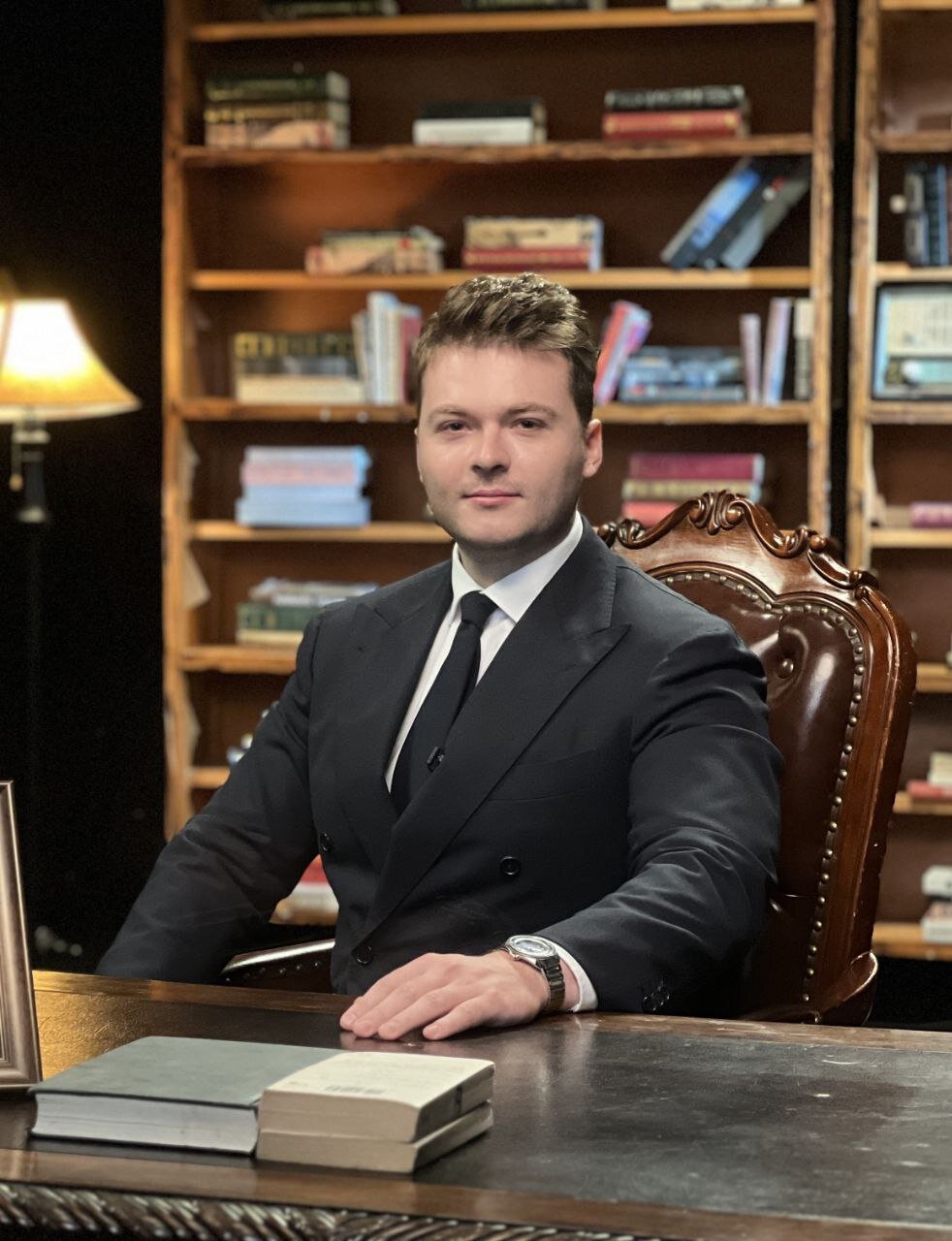
To discuss Germany’s role in the Gaza conflict, the Tehran Times interviewed Christian Wagner, a German academic and expert in cognitive warfare. Wagner compared Israel’s campaign against Gaza’s population with fascism.
Here is an excerpt from the interview:
Israel has been accused of committing genocide in Gaza, but Germany continues to support Israel. On Friday, Prime Minister Friedrich Merz reaffirmed what he called Israel’s “right to protect himself.” How do you interpret this position in light of international law and genocide allegations?
First, it needs to be clear: what is our collective goal? Human goals and international law goals? Is it to allow Israel to be hated by the world? To allow the Palestinian population to suffer longer? Hatred must never be our weapon. Hatred only produces more hatred, and we are not, and not like those who create suffering. We must be better, more peaceful, more peaceful. To solve or understand earthly problems, we need to understand the other side, even if they are emotionally contradictory.
The situation in Gaza is absolutely unbalanced, clearly indicating who the perpetrator is and who the victim is. No one with a heart can support a campaign of extinction against the entire population of Israel. It is very similar to what caused fascism, especially 80 years after the end of World War II. The United Nations and human rights groups were established to prevent such a thing from happening after World War II. Therefore, intervening and putting pressure on the United Nations as a whole, and in particular Europe, has completely failed.
Meanwhile, we have an obligation to understand Israel for long-term peace and take a clear step here. That may seem impossible, and sometimes misunderstandings and fantasies are stronger than reality, and for some reason for a part of Israel itself. But we all see how the world hates Israel. This hatred never diminishes, simply pushing country leadership into the corner and responds more aggressively. So sometimes level head and diplomacy are important.
On Friday, Germany announced it would suspend military exports to Israel. Israel can be used in Gaza after Israeli security ministers approved plans to seize Gaza. As the world’s second largest arms exporter to Israel, does this indicate a change in German policy, or is it just symbolic?
The German decision to suspend certain military exports is a media and public relations strategy in the language. That will definitely not change anything – the support of the German population for Israel is too strong. Although current politics cannot focus on short-term decisions and words, long-term strategies and future forecasts must be considered. Geopolitical, such decisions are similar to the movement of a chessboard. They were not impulsive or even emotional responses, but they calculated strategies to predict the other person’s response and long-term outcome.
“Our minds may have been very dark in recent years. We all witnessed the catastrophe of Gaza and illegal attacks by the US in Israel and Iran. The true driving force behind this war is often beyond national governments in the realm of global financial capital. Actors like BlackRock, State Street and Vanguard have a huge impact on the strategic development and decision-making power of European politicians, particularly in EU leadership. They benefit from the arms industry and shape policies through investment. Media narratives also play a role in this ecosystem, often distracting from underlying economic motivations and deceiving public perceptions to maintain the status quo. Therefore, while a suspension could indicate concessions to international pressure, it rarely disrupts the deep-based financial interests that sustain such conflicts.
Since the start of Israel’s war with Gaza, German cities have witnessed major protests against the war. Have these demonstrations had a concrete impact on Germany’s foreign policy and public debate about support for Israel?
In media research, there is a concept called agenda setting. Political actors decide which topics are prioritized in public debate and people’s perceptions. Therefore, pro-Palestinian demonstrations in German cities serve as an important catalyst for public discourse and lead the issue to debate. They amplify underrated voices and draw attention to topics like civilian suffering.
This indirect pressure encourages wider awareness and debate, especially before the election. This allows public sentiment to create space for subtle discussions about German Israeli policy. However, the impact is indirect. To believe that demonstrations directly achieve something is far from reality and only happens in fairy tales. In many cases, changes in economic or internal political power are the reason for change.
Actual changes require action rather than rhetoric. Like actors in good drama series, the politics of endless debate and performance can make progress without offering it. What’s important is concrete actions. Supporting Palestinian and humanitarian causes is more effective when individuals and groups move from protest to active initiatives. It means gaining economic power, creating an entrepreneurial structure, using networks to pool financial power, increasing economically and energizing lobbying. This power can bring about change.
Still, I would like to emphasize again. Instead of attacking nations on one another, the focus should focus on humanity as a whole, challenging the financial system that benefits from sectors and inactions. We must restore peace through empathy and the intellectual power of people.
European leaders have condemned Israel’s starvation and excessive use of power in Gaza, but have not taken any concrete steps to stop the violence. Why is Europe, including Germany, aiming to move from word to action?
There are two important factors. First, it plays an increasing role in new media and desensitization of people. Despite the enormous suffering in Gaza, propaganda is running at full speed, dulling the senses of consumption, social media and even legalizing cannabis like opium. This creates a strong distortion of perception, making people indifferent and inexplainable. Propaganda in the world today is stronger than ever. Algorithms, mediabots, and even modern AI have ideologically driven representations. This affects everyone, including government advisors. And the stronger the distortion, the more difficult it is to develop rational, causal strategies. If one Israeli person believes that the other side has evil intentions such that the population of Gaza is totally evil, then a false decision is made far from reality. And it works on both sides.
Second, opaque processes take place behind the scenes, beyond public awareness. It is not clear which actors will influence and which will not. As a result, democracy charges from within, making it difficult to change.
Germany often frames support for Israel as a historical responsibility stemming from the Holocaust. How does this reasoning intersect with the accusations that Israel is committing mass atrocities today?
Of course, Germany has a historical responsibility. In particular, 80 years after the end of the war, it is now historically responsible. However, Germany’s support for Israel is inevitably contradicted by Gaza’s current atrocities, a profound moral dilemma. In fact, Zionism has strong similarities with fascism.
Yet, abandoning allies in such an era would simply be dishonorable and coronavirus. Rather, allies in times of crisis are obliged to exert internal pressure and pursue back-channel solutions rather than stab them into the back. We must stand up to our words and voluntary duties. But this internal pressure must also achieve something and absolutely stop this war. But as things stand, they cannot do so and do not seem to speak in Israel.
Therefore, this stance must evolve. Blind loyalty puts the principles of justice born out of Holocaust lessons at stake. However, true tensions stem not only from history, but from today’s financial power structures in which global capital influences political decisions through risk investments and exacerbate conflict. By focusing on these economic forces rather than nation-states, religions, or specific groups, one can fight the root causes of atrocities without betraying their moral obligations. This will align support with universal human rights.
What pressures – will political, legal or public push Germany realistically to stop military cooperation entirely in the light of an increase in international demand for an arms embargo against Israel?
Israel has the right to self-defense, and with increasing global hatred towards Israel, halting military cooperation is one way, but it is doubtful whether this is a realistic way. We all know that Israel’s power is committed to atrocities and appears to have a very distorted perception that leads to inhumanity. But we should not cloud our perceptions and pursue unrealistic demands and hopes. Instead, we must seek realistic and strategic solutions, particularly those that weaken Israeli military attacks and bring about turning points in the long run.
“The Palestinians have the right to demand the return of stolen land.” It is about cooperation and victory. Our minds may have become very dark in recent years. We all see the Gaza catastrophe and illegal attacks by the US in Israel and Iran, but we still intend to be peace. Similarly, the Palestine certainly has the right to self-defense and even has the right to demand the return of stolen land. The two-state solution should have been implemented long ago.
As the International Court of Justice and International Criminal Courts pursue cases related to Israel’s actions, how will these legal procedures affect Germany’s stance?
International legal procedures like the ICJ and ICC could challenge German stances, but their direct influences often remain limited in times of war. Still, they are important in the fight for information. Decisions by neutral judges can increase internal pressure and therefore serve as leverage in the struggle for perception and knowledge. Such procedures could expose violations and put pressure on European leaders through international attention and domestic debate. However, in the end, only action is important.
And the real impact relies on stronger forces, especially financial capital, which benefits from instability. If the procedure reveals how actors like investment companies will benefit from arms trade and reconstruction, they can indirectly force policy changes by prioritizing economic interests over legal or moral arguments. For Germany, this means adjusting historical obligations and evolving international norms, but only if the distorted narrative can be broken.