
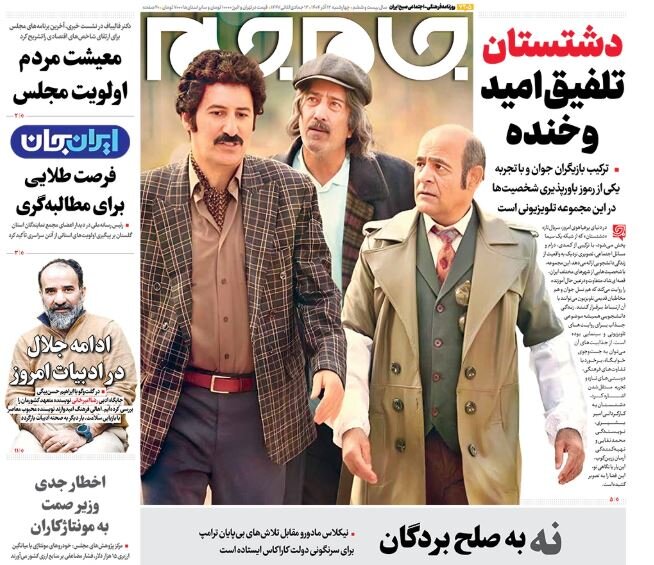
TEHRAN – Jam-e-Jam Spokesman reviewed the anti-terrorism military exercise (codenamed Sahand 2025) that Iran is jointly conducting with five Shanghai Cooperation Organization (SCO) member states in Shavester, East Azarbaijan province, and asserted that the exercise will strengthen Tehran’s military deterrence and help promote military cooperation among SCO countries.
He said the exercise was an excellent opportunity for Iran to strengthen its military capabilities within the framework of the SCO. The training will focus on joint counter-terrorism operations, allowing Iran to share experience with other member states in countering transnational threats. Cooperation with military powers such as China and Russia, which are core members of the SCO, will facilitate the exchange of advanced technologies. Iran could benefit from Russian air defense systems and Chinese information technology, increasing its deterrence against external threats. Such cooperation not only guarantees Iran’s security, but also contributes to regional stability across Eurasia and strengthens efforts in the fight against terrorism.
Kayhan: The Twisted Story of the 12 Days’ War
In his commentary, Kayhan criticized the distortion of the truth about the 12-day war by the West, Israel and its supporters in Iran. The paper wrote that the 12-day war was the moment when the United States and Israel imagined that by destabilizing Iran they could deal a military blow to Iran. However, the reality of the battlefield shattered that dream with a crushing defeat. This truth is repeated in Hebrew and in the Western press. However, once a ceasefire was declared, a distortion mechanism was activated. What is surprising, Kayhan commented, is that at this very historical juncture, pro-Western currents within Iran are trying to downplay the enemy’s defeat. The truth of the 12-day war is now clearly recorded, and all that remains is the need to confront the distortions. If the military arena means defeat for the United States and Israel, the media must not become a place where the defeated can hide their losses with inverted headlines. Kayhan concluded that the post-war period was a time to consolidate achievements. Its gains will be sustained not through compromise, but through clear explanations and a firm defense of state power.
Iran: Tehran-Beirut relations remain based on interests and strategic principles
Iranian Newspaper analyzed the latest developments in Tehran-Beirut relations in an interview with regional affairs expert Seyyed Reza Sadr Al-Hosseini. Analysts noted that the Lebanese government did not respond positively after the October 7 operation. This approach raised hopes that Lebanese officials would be different and more cautious in strengthening ties with the Islamic Republic. Beyond the political differences between Tehran and Beirut, there are deliberate efforts by regional and international media associated with the United States and Israel to portray the natural disagreements between the two governments as deep rifts and political crises. Importantly, the level of diplomatic relations between the two countries remains unchanged from before the October 7 operation. This reality contradicts media reports that exaggerate differences to suggest a structural cooling in Iran-Lebanon relations. Given the deep historical and social roots of the ties between the two countries and their common needs, such as the importance of independence, resistance to occupation and opposition to land grabbing, Tehran-Beirut relations continue to be pursued and strengthened based on national interests and strategic principles.
Armand et Mroos: A region on the verge of exploding
In an article about the critical situation in the region and the possibility of war between Iran and Israel, Arman Emrouz said that according to most observers, a second war between Iran and Israel is inevitable. They claim it’s only a matter of time. In recent days, the impasse in Iran’s relations with the International Atomic Energy Agency, the lack of a political breakthrough in Iran-US relations, and certain media-driven narratives have once again raised the possibility of war. The current freeze could require smaller triggers, such as a resumption of uranium enrichment in Iran or developments regarding the uncertain status of enriched uranium stockpiles. What is most likely to draw Iran back into the conflict is an impending war with Lebanon. The deadline set by the United States and Israel for the Lebanese government to disarm Hezbollah is nearing an end, and Israel’s move signals a readiness to return to war. The intensity and impact of such an attack could provoke an Iranian response and expand the front of the conflict. By adopting new principles, Tel Aviv is determined to prevent a return to the pre-October 7 era, the so-called “age of equations” at all costs. This doctrine aims to prevent the resurgence of the Axis of Resistance under Iranian leadership. It is clear that under this strategy, weakening Iran’s military power and continuing its economic isolation remain central goals. This is exactly the kind of impasse where even a small spark can cause a violent fire.