
Muharam encompasses several important events, but Tasua is particularly important for the martialism of Abbas, brother of Imam Hussein, who taught martialism while making an effort to retrieve water from the Euphrates.
Shiite Muslims in Iran and Iraq, in particular, observe the mourning ritual on this day.
Tasua commemorates the eve of the Battle of Kalbara, which Imam Hussein (Pbuh) and his companions taught him.
It is a day of deep sorrow for Muslims around the world, marking the anniversary of the third mysterious Imam from the House of the Holy Prophet.
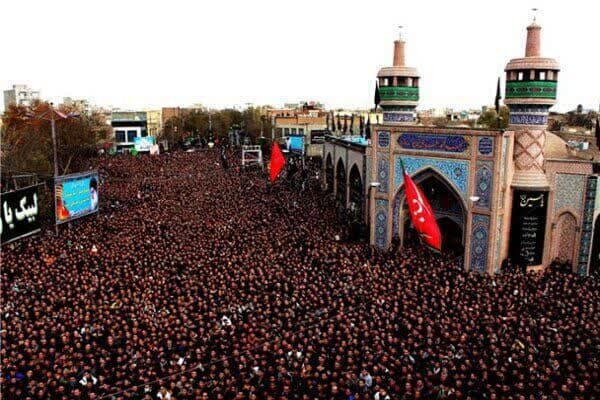
Millions of Iranians in black are taking part in a national mourning event during Muharam’s first 10 days to honor Imam Hussein (PBUH) and his 72 loyal followers.
The eulogists and Islamic scholars tell the battle of Karbara that occurred at 680 AC when Imam Hussein and his companions faced the army of Caliph Yazid.
The battle took place on the current Karbara plains of Iraq. Imam Hussein (PBUH) and his companion group were denied access to water from the Euphrates River by the Kuffi army, a key event leading to the tragedy. Many historians attribute the conflict to Imam Hussein’s refusal to accept Yazid I’s rules.
On the ninth day of Muharam in the 61st Hijrah, Shemur arrived in Karbala with a letter from Ubai Doal Liven Zyadh and instructed Umar Ibn Saad to either seriously engage with Imam Hussein (pbuh) or to release the command. Umar Saad chose to prepare for war.
In the approaching army, Imam Hussein (PBUH) sent his younger brother Abbas Ibn Ali (PBUH) to demand a delay in prayer and reading of the Quran.
Shemr also provided a safe passage to the sons of Hazrat Abbas (Pbuh) and Umm Ul-Banin. Shia Muslims have associated Tasua with Hazrat Abbas (PBUH) and celebrated the sacrifice as well as Ashura. Tasua and Asura are Iranian public holidays.
This day is of paramount importance to Shia Muslims who grieve the difficulties they endured with Imam Hussein’s companions and Aar Al Beit. In Iran and the majority of other Shiite countries, mourners take part in rituals that are chained to the chest.

The historical account details that Shemur had arrived in Karbala with 4,000 soldiers and that Ibn Ziyad had the demands for Imam Hussein’s loyalty or preparation for battle. Ibn Ziyad threatened Umar Ibn Sa’ad on behalf of Shemr if he did not comply. As a result, Umar Ibn Sa’ad appointed Shemr as commander of the infantry.
Shem sought a recognized and safe passage for Ubaid Allah (child of Ummu ul Banin) and nephews of Abdullah ibn Abi al-Mahal and Um ul Banin. However, the children of Um ul Banin refused the offer.
Another account states that Shemur brought a safe conduction letter for Hazrat Abbas (PBUH) and his brother. They initially refused to respond to Shemr, but Imam Hussein (Pbuh) instructed Hazrat Abbas to acknowledge their relatives and answer them.
Hazrat Abbas (Pbuh) and his brothers then confronted Shemr, rejecting the offer of safe passage and condemned concerns about them while the descendants of the Holy Prophet remained protected.
Following the refusal to safe passage, Omar ibn Saad’s army prepared for the battle between Imam Hussein (PBUH) and his companions in the evening of Tasua.
With the increase in the military activity of Omar Sa’d, Hazrat Zainab (Pbuh) has now asked questions about the voices approaching her brother, Imam Hussein (Pbuh). Imam Hussein (PBUH) sent Hazrat Abbas (PBUH) to inquire about the enemy’s intentions. The Army called for allegiance or preparation for the Battle of Imam Hussein.
Hazrat Abbas (PBUH) passed this message to Imam Hussein (PBUH). That night, Imam Hussein (PBUH) and his family were besieged.
Abbas made an exceptional sacrifice at the Battle of Karbara and martyred in Asura just before Imam Hussein. He is buried at the shrine in Karbara near the spirit of Imam Hussein.
Thousands of Iranians travel to Iraq, with Tasua and Asura taking part in the work and visiting the sacred shrines of Karbara and Najaf.
Iranian religious rituals include the procession of mourning (“daste”). There, people take a walk in the black row, carry the “alarm,” a symbol of Imam Hussein’s army, and carry the flags, reciting sad poems led by the “eulogist.” “Ta’zieh” (Passion Play) is another ritual that symbolically recreates Karbala’s events.
Iranian food offerings are also common between Tasua and Asura. Many Iranians travelled to Kalbala on foot for weeks and weeks, paying homage to their dedication and Imam Hussein (PBUH) all the way to Tasua and Asura.
These pilgrims face many challenges on their journey, including extreme weather conditions, but their unwavering faith motivates them to continue. The road to Kalbara is lined with “maukhi” (rest places) that provide free food, drinks and accommodation to pilgrims, and showcase the generosity and hospitality of Iraqis.
In addition to religious rituals, cultural events will also be held between Tasua and Asura to commemorate the Battle of Kalbara. These events include readings of poetry, art exhibitions and film screenings that portray the events of Kalbara and highlight the virtues of Imam Hussein (PBUH) and his fellow members.
The Global Shiite community is sternly observing Tasua and Asura. In countries such as Lebanon, Pakistan, India and Nigeria, mourners will take part in the work, host majalis (meetings) and organize blood-donation drives as a tribute to Imam Hussein’s sacrifice.
The message of Imam Hussein (PBUH) transcends religious boundaries and encourages people of all faiths to stand up against injustice and oppression. His unwavering commitment to truth, justice and human dignity continues to resonate with millions of people around the world, bringing not only days of mourning, but days of reflection and inspiration.
Tasua’s memory of events serves as a reminder of the sacrifices made to support moral principles in the face of adversity. It forces and forces the timeless connection of Imam Hussein’s message and his lasting legacy.
The story of events leading up to Tasua and Asura is not just a historical story, but also a living testimony to faith, courage, the power of unwavering dedication to principles, and values that continue to shape the lives and actions of countless individuals around the world.
Reported by Tohid Mahmoudpour