
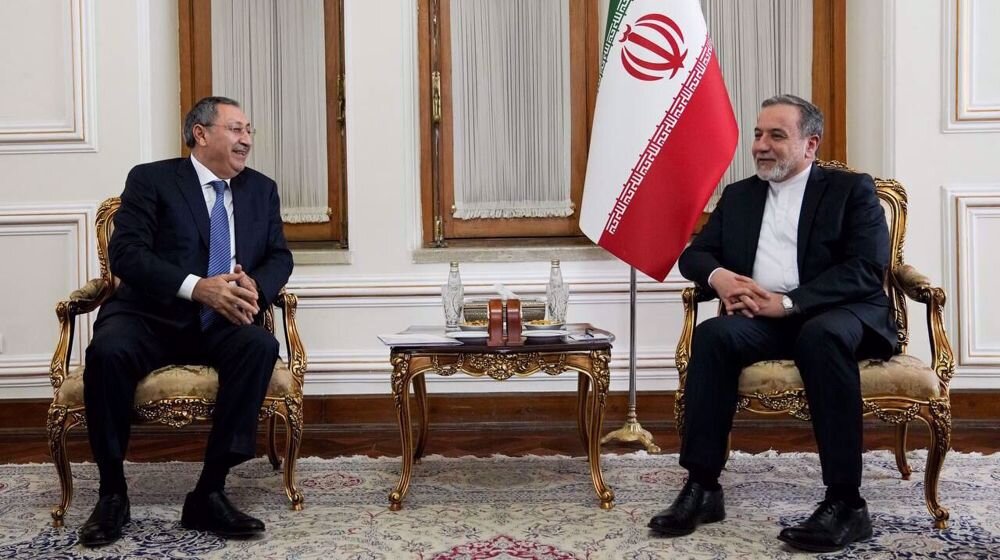
TEHRAN – Iran and Azerbaijan reaffirmed their commitment to deepen political, economic and cultural cooperation and remove remaining obstacles to strengthening bilateral relations.
On Monday, during talks in Tehran, Iranian Foreign Minister Abbas Araghchi held extensive talks with Azerbaijan’s President Ilham Aliyev’s special assistant, Kharav Karafov. Discussions focused on ongoing cooperation, regional stability in the South Caucasus, and prospects for future cooperation across strategic areas.
Araghchi stressed Tehran’s determination to advance relations with Baku based on mutual respect, good neighborliness and shared regional interests. “Iran’s policy is to develop and expand comprehensive relations with the Republic of Azerbaijan and remove all obstacles in this process,” he said, noting that geographical proximity, cultural ties and common interests form a natural basis for lasting friendship.
Referring to the broader regional situation, Aragushi reiterated Iran’s position that peace and stability in the South Caucasus is essential for all countries in the region. He emphasized respect for the Iranian government’s sovereignty and territorial integrity, rejecting any outside attempts to change the region’s boundaries, and stressing that diplomacy remains the only path to resolving the conflict.
The talks come more than two months after a U.S.-brokered agreement between Azerbaijan and Armenia, with Tehran warning of possible foreign intervention in the region. While welcoming efforts towards regional peace, Araghchi stressed Iran’s cautious approach and said Iran is closely monitoring developments to prevent unnecessary external interference. He expressed hope that this agreement would open a new chapter of stability and cooperation in the South Caucasus.
In this regard, Iran’s Deputy Foreign Minister for Legal Affairs and International Affairs Kazem Ghalibabadi also met with Mr. Karafov. The talks between the two leaders covered a wide range of issues, including cooperation between the Caspian Sea coastal countries, efforts for regional peace, and coordination within the framework of the Council on Exchange and Confidence-Building Measures in Asia (CICA).
Mr. Gharibabadi highlighted the untapped potential to expand bilateral relations across multiple sectors. “These capabilities, coupled with the deep religious and cultural ties between our countries and the dedication of our senior leaders, are valuable assets that should be maximized to achieve our common goals.”