
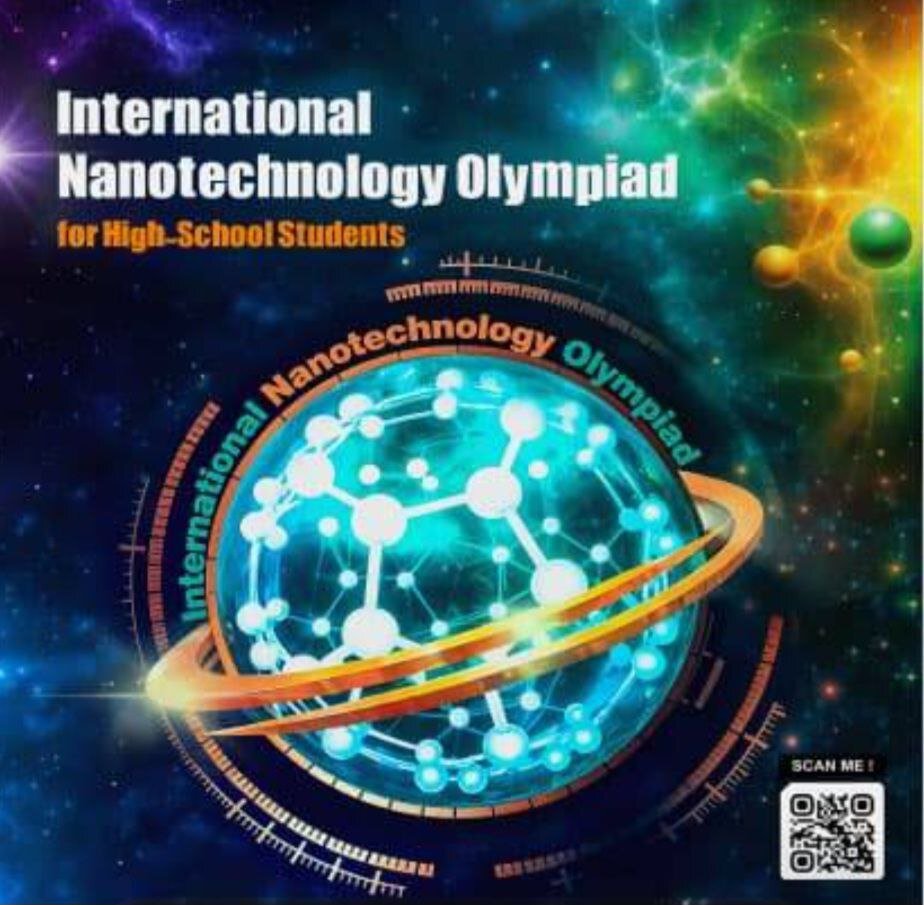
Tehran – The first International Nanotechnology Olympiad (INO 2025) for high school students aged 16-19 will be held in Tehran.
“Students from Iran, Malaysia, Saudi Arabia, the US, Venezuela, Germany, Tajikistan, the UK, Bangladesh, Tunisia and Russia have previously registered for the competition.
The event is scheduled to take place online on September 28th, Rezaei added.
International Nanotechnology Olympiad presents unique opportunities for participants to explore the world of nanotechnology and the possibilities to address environmental challenges. The competition consists of two main parts.
The initial stage evaluates participants’ understanding of basic concepts in nanotechnology and its environmental applications. To support their preparation, participants will have access to nine educational films and a comprehensive booklet available on the official website. It covers important topics and related applications. Additionally, you will receive four specialized educational films and a targeted booklet focusing on nanotechnology applications, particularly in the environment. This makes up 70% of the overall score.
Generating ideas and submitting films is the second phase of the competition. In this creative segment, participants are challenged to devise innovative solutions to global problems that can be addressed through nanotechnology. They must create short films that effectively communicate their ideas and propose solutions. This part accounts for 30% of the total score.
Overall, Olympiad emphasizes the fusion of theoretical knowledge and practical creativity. By combining rigorous assessments and creative project work, this competition aims to provide a deeper understanding of the potential for nanotechnology transformation in addressing global challenges.
Iran’s journey to promote Iran’s nanotechnology education began in earnest in 1389 (2010-March 2011), when the Iran Nanotechnology Innovation Council (INIC) launched its first national Nanoscience and Nanotechnology student Olympiad.
The initiative followed a series of successful nanoeducational programs held at schools across the country, combining theoretical exams and practical lab projects.
For more than 16 years, the national event has attracted 113,667 high school students from all over the country.
The results of nanotechnology
Iran’s achievements in nanotechnology are noteworthy. The country’s investment in research and development of nanotechnology, as well as the increase in scientific publications and sales of nanotechnology products, has proven Iran’s rise as a global leader in this field, producing and exporting products to various countries around the world.
Access to domestic resources, competitive prices compared to Western countries, high production volumes, nanomaterials, nanocatalysts, advanced equipment, and geographical proximity to target markets in neighboring countries, reduced transportation costs, and political and trade relations have made Iran the leading manufacturer of regional nanotechnology products.
Iran is placed in the top 10 countries in the publication of nanotechnology articles, ranking 12th in the global nano-final index H index, as it published a total of 4,615 articles in the top 25% of the journals (first magazine).
With 86,924, 14,473 and 11,194 articles, China, the US and India are the top three countries. Iran is ranked in England (4,360), Japan (4,022) and Spain (3,830), reports ISNA. Q1 Journal Index is used to classify scientific journals based on their impact. It is most commonly used in databases such as Scimago Journal Rank (SJR) and Journal Citation Reports (JCR).
The Journal Citation Report (JCR) Impact Factor 2024 cited 161 Iranian journals, giving them five names in the most cited world in the nanotechnology sector.
The Journal of Nanostructure in Chemistry (JNSC) is a member of Islamic AZAD University with an impact coefficient of 7.9. It is featured in the top 25% of JCR journals published by Clarivate Analytics in three categories, including Nanoscience and Nanotechnology, and ranks 34 among the 147 top journals. Chemistry, interdisciplinary, ranking 41 among 239 journals. Interdisciplinary Material Science, ranked 88 among the top journals of 460.
The journals of international nanoletters belonging to Kermanshah Islamic Azad University, Nanomedicine Journals belonging to Mashhad Medical Science University, Nanostructure Journals belonging to Kashan University, and Nanomedicine Journals belonging to the International Journals of NanoDimensions belonging to Tonkabon Islamic Azada University are 4.0, 1.7, 1.7, 1.3, and 1.3, 1.3, 1.3, 1.3, 1.3, 1.3, 1.3, 1.3, 1.3, 1.3, 1.3, 1.3, 1.3, 1.3, 1.3, 1.3, 1.3, 1.3, 1.3, 1.3, 1.3, 1.3, 1.3, 1.3, 1.3, 1.3, 1.3, 1.3, 1.3, 1.3,
So far, 10 of the 12 specialized nanotechnology journals in the country have been indexed in international Scopus databases, five of which have received an impact factor.
mt/mg