
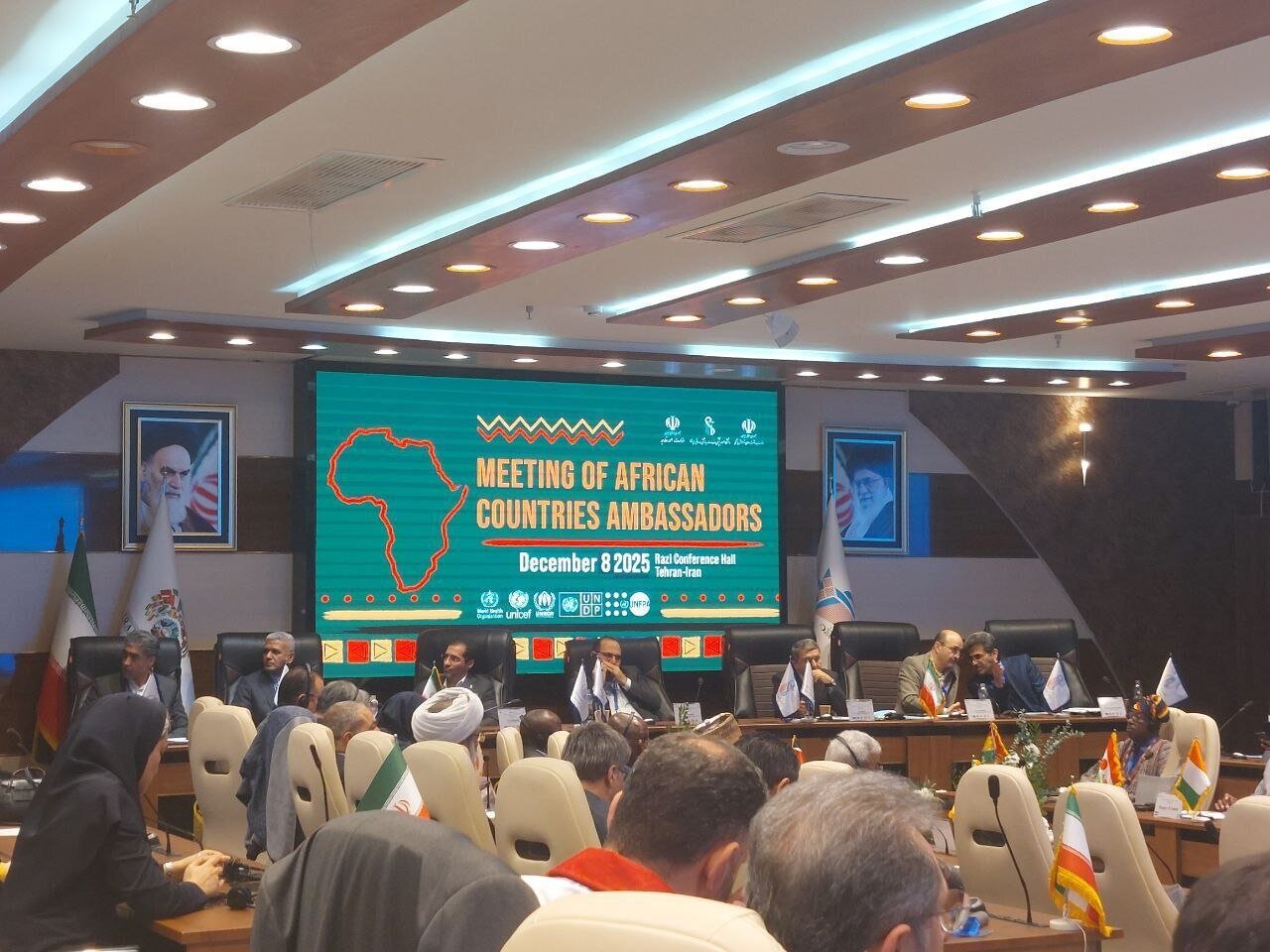
TEHRAN – Iranian officials and the ambassadors of 19 African countries to Tehran discussed ways to strengthen cooperation in the fields of science, education, research and health.
Iran Medical University President Nader Tavakoli, addressing a conference in Tehran on Monday, said that despite the mandatory sanctions, the country has made great progress in the health sector, from education and treatment to technology and pharmaceutical production, relying on dedicated and creative human resources, IRNA reported.
“Now we are ready to share these achievements with the people of Africa through establishing a strategic health alliance between Iran and African countries,” Tavakoli stressed.
Elaborating on the core areas of the strategic partnership, he said researchers will focus on tackling real-time diseases such as tropical and endemic diseases, drug shortages, and rural health service delivery.
Part of the partnership includes accepting African students, developing joint educational courses through dual certification, and dispatching professors to train trainers.
Other main contents of the strategic partnership include sharing technological knowledge in areas such as manufacturing vaccines, biosimilar drugs and medical devices by establishing joint production lines in African countries, Tavakoli added.
Expanding scientific exchanges between Iranian and African scientists was the last point mentioned by officials. He further said that this strategic partnership will lay the foundation for fostering scientific cooperation between more than 60 universities and hundreds of top research centers across the country.
On Sunday, the Ministry of Health and the Ministry of Foreign Affairs discussed the possibility of increasing cooperation in the health field with African countries in a virtual meeting with Iranian ambassadors and attachés to Africa.
During the meeting, Deputy Health Minister for International Affairs Alireza Biglari highlighted the country’s capabilities in health-related fields. The official announced the Ministry of Health’s readiness to implement decisions and operational plans, citing existing capabilities as a valuable opportunity to expand health diplomacy and favorable conditions for cooperation with African countries, IRNA reported.
Meanwhile, Akbar Khosravi Nejad, Deputy Foreign Minister of Iran and Director of the Africa Department, emphasized the importance of Africa in Iran’s foreign policy and said that the country’s health system is one of the key sectors to strengthen cooperation with these countries.
Mr. Tavakoli explained the university’s current activities and programs in Africa, as well as future plans to meet African ambassadors in Tehran.
MT/MG