
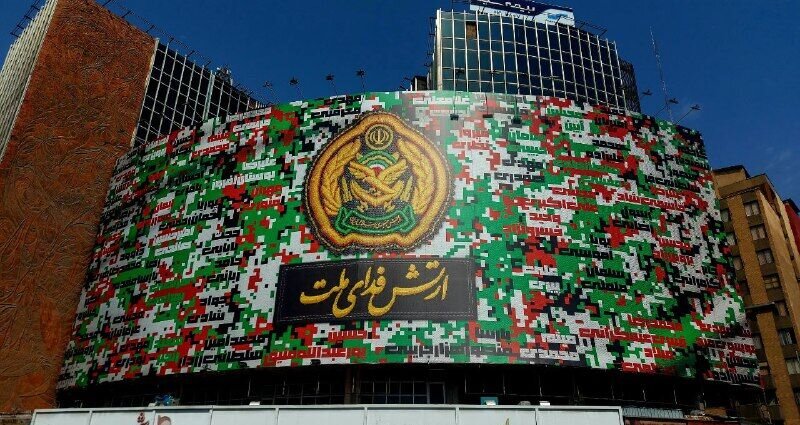
Tehran, located in Varias Square in central Tehran, was announced on Saturday to commemorate the sacrifices of 57 martyrs in the Islamic Army who lost their lives in the last 12-day conflict launched by the Zionionist regime against Iranian territory.
The mural entitled “Army Sacrifice for the People” was created by OWJ Arts and the media organization. The artwork, designed by artist Ali Karaj, pays tribute to the fallen members of the Iranian army and emphasizes their courage and dedication, the IRNA reported.
The mural is a powerful reminder of the sacrifices made by Iranian soldiers in defending the nation, honouring the memories of martyrs and seeking to strengthen the resilience and unity of Iranian people in the face of external threats.
Engraved on the mural are the names of 57 martyrs from the Irnias army, saying, “The martyrs proved that their blood was sacrificed to the people.”
Located in Valiasr Square, the mural usually reflects national events and anniversary, promoting themes such as Iranian and Islamic lifestyles and resistance to arrogance by the arts media.
In the early hours of Friday, June 13, a series of terrorist attacks carried out by the Zionist regime targeted Tehran and several other Iranian cities. The attack included missile and drone strikes aimed at major military facilities, science centres and civilian areas, resulting in casualties among military commanders, scientists and innocent civilians.
In response to the Savagezionist attack, Iran’s Islamic Republic launched Operation True Promise 3 on Friday night, unleashing a barrage of missiles on the occupied territories, targeting military bases, infrastructure and strategic sites. The operation is intended to demonstrate Iran’s resolve in weakening Israel’s military capabilities and defending its sovereignty. The escalation led to a very destructive phase of the conflict, with both sides engaged in a fierce exchange of fire.
Israel attacks target areas within Iran, which were not military facilities, resulting in the tragic loss of lives of innocent civilians, including women and children. The incident sparked rage not only among Iran but also among international observers.
Through 12 days of hostilities, the battle caused widespread destruction. Reports show that at least a third of Tel Aviv has been heavily damaged or destroyed by the Iranian strike. Tehran and other Iranian cities have also suffered severe damage, highlighting the seriousness of the conflict. Civilian casualties and infrastructure damage increased humanitarian fees and increased local instability.
International response to the conflict was important. President Donald Trump reportedly demanded evacuation of Tehran and threatened to take deadly actions against Iranian leaders, further complicating diplomatic efforts to remove the situation. The international community has looked closely at escalation, and many countries have called for peace negotiations to encourage restraint and prevent further loss of life.
In the aftermath of the war, Iran embarked on various initiatives to commemorate the conflict and honor those affected. Cultural and artistic events such as exhibitions, festivals and literary gatherings have been organized to remind the martyrs and celebrate Iran’s resilience in the face of adversity. These efforts aim to promote national unity and reflect on the sacrifices made during the fierce battle of 12 days.
sab/€