
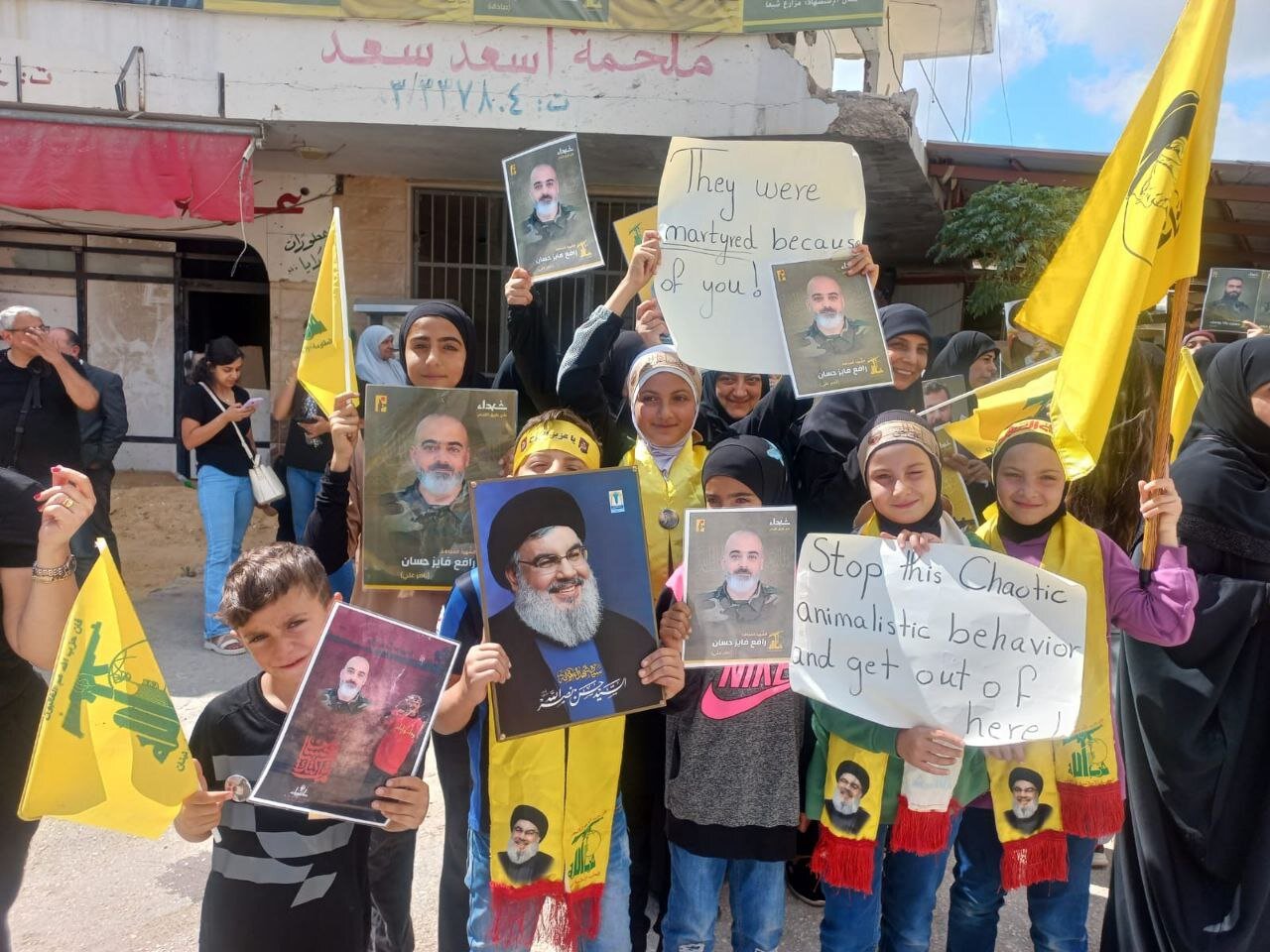
BEIRUT – In a dangerous escalation highlighting US threats against Lebanon, US special envoy to Syria Thomas Barrack released a series of inflammatory statements through his X account, threatening Lebanon with civil war and Israeli invasion if it refuses to normalize relations with Israel under the so-called Abraham Accords.
Mr. Barrack’s statement is not just a gaffe. They form part of a systematic pattern of coercion and intimidation that reflects the deeply entrenched arrogance of Washington’s diplomacy toward sovereign nations.
Mr. Barrack’s message to Lebanon was chillingly clear. Submit to Washington’s will and normalize with Tel Aviv, or face chaos, collapse, and destruction.
This tone of political violence exposes the roots of the rhetoric of “peace” and “stability” that the United States so often touts: a neocolonial project aimed at conquest rather than coexistence.
In one of his earlier interviews with Sky News Arabia, Mr. Barrack sarcastically declared: “There is no such thing as peace. There is one party that wants to dominate and subjugate others.”
This frank confession reveals the essence of American foreign policy, the governing philosophy hidden within the word diplomacy.
His latest threats only reaffirm that Washington’s vision for Lebanon is not one of partnership but of complete submission to the US-Israel axis.
More worryingly, Barrack’s statement effectively undermines the November 2024 ceasefire agreement and calls into question the US commitment to a negotiated settlement.
By linking the continuation of the ceasefire agreement to the disarmament of Hezbollah, the US envoy is weaponizing diplomacy itself and turning peace efforts into a means of intimidation. His language had long transcended diplomatic decorum. It became a direct declaration of economic, political and military coercion.
According to Barrack’s logic, the Abraham Accords become the new compass for American strategy in the region. The US government views refusing normalization with Israel as a defiance of the Middle East blueprint, an issue that should be crushed rather than understood.
Lebanon is thus positioned as a testing ground for this imperial experiment. States are coerced through starvation, sanctions, and threats of war until they surrender.
This is not the first time Mr. Barrack has adopted the tone of a colonial director. Since taking office, he has made at least four outright threats.
He once proposed annexing Lebanon to Syria as part of a “regional reconciliation.” He then completely rejected the concept of peace and boasted of plans for governance rather than reconciliation.
On another occasion, he hinted at arming the Lebanese army to fight “internal enemies,” a barely veiled reference to the resistance. His latest and most dangerous provocation, warning of civil war if Lebanon does not normalize with Israel, completes a pattern of sustained aggression.
The ultimate purpose of this rhetoric is clear. It’s about forcing obedience. But Barrack and his bosses seem unaware of Lebanon’s long history of rebellion. Lebanese people face Israeli occupation, civil war, and economic siege, but they refuse to kneel.
Since 1982, the logic of resistance has been the only force capable of preserving national sovereignty and dignity.
Domestically, the Lebanese government’s response has remained lukewarm, hobbled by an economic crisis engineered primarily by the same forces currently preaching “reform.”
The Ceasefire Monitoring Committee, which was supposed to be established to ensure stability, has turned into a platform that imposes new conditions on Israel without reciprocal obligations, such as withdrawal from occupied territory or the return of displaced persons.
Moreover, Israel has never sought peace, so the so-called “gradual” policy has failed miserably. Israel seeks violent expansionism, complete control, and the elimination of all resistance.
As the main sponsor of this farce, Washington bears full responsibility for perpetuating Israeli aggression and disrupting true peace.
Barrack’s economic threats are also hypocritical. The Lebanese crisis did not start yesterday. The plan was orchestrated in 2019 through Washington’s financial blockade and punitive sanctions to cripple the economy and block potential relief from Iran’s energy and reconstruction proposals.
Meanwhile, Lebanon is at a crossroads. Will we succumb to the humiliating logic of normalization, or will we protect our country’s dignity and independence? But the choice is not just political, it is existential.
The people who once declared that “humiliation is beyond our reach” cannot be forced to choose between starvation and surrender. History has shown that with each increase in external pressure, the Lebanese people’s obsession with resistance only deepens.
The animal threats of barracks will not succeed in taming a nation built on struggle. The real response lies not in diplomatic complaints but in decisive action: Lebanon’s withdrawal from the failed ceasefire monitoring committee and a reaffirmation of national principles that prioritize sovereignty over obedience.
Dignity is not a negotiable currency. Those who bet on America’s protection are, in fact, handing over the keys of our homeland to the very hands that seek its destruction!