
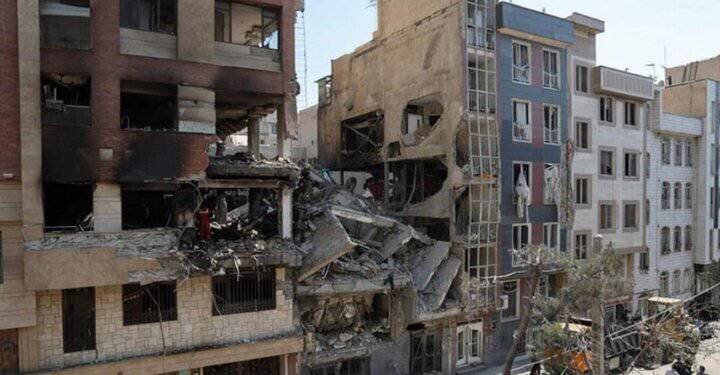
Tehran – The blatant US attack on the Zionist regime and Iranian territory has sparked widespread responses from both experts and general audiences within the international system.
Some of these reactions can be observed in academic and university communities across our country, region and around the world. The problem is clear. Recent attacks are not only contradicted with the principles outlined in the UN Charter and the established legal and ethical norms of global coexistence, but are also seen as blatant insults on the diplomatic domain as they occurred during indirect nuclear negotiations between Iran and the United States in Muscat.
In this regard, two important points need to be considered.
First, in analyzing the 12-day war and its broader context, we face the notion of invalidity and preconceived notions of the assumption that the US and Zionist regimes have been holding about Iranian society for a long time. The lack of understanding of Iranian traits, especially when faced with external threats, and subsequent strengthening of state unity and unity, are important flaws evident in anti-Iranian calculations.
Efforts to quantify and predict the response when Iranian society’s territory is infringed represent a fundamental miscalculation of the enemy. This strategic and perceptual error has become the heels of Achilles of the Zion regime during a recent attack on Iran. The truth is that Iranian people responded in a way rooted in their civilized identity and innate values. It is a reality that was completely misunderstood between the war chamber and the architects of recent conflict.
Second, the development that follows October 7, 2023, and subsequent attacks by the Zionist regime on the US and Iran were met with explicit condemnation from academic communities around the world. Few academic institutions welcomed these crimes or viewed them as legitimate actions by Washington and Tel Aviv.
From Harvard University in the US to major and elementary universities across the entire geographical and identity-based spectrum of the European Union and beyond, opposition to the coercive and inhumane actions of the US and Zionist regimes. Many of these institutions owes considerable costs in confronting the official policies of their respective governments. This very fact increases the credibility and importance of the concept of “Faculty of Educational Diplomacy” in our beloved country.
Establishing, solidifying and maintaining effective dialogue within this dynamic context can play an important role in integrating the world’s intellectual community, centering on the concept and goals of “resistance to attack and injustice.” This important possibility, which has remained largely potential so far, has made it unstable to be translated into a proactive and operational framework. The main audience of educational diplomacy includes scholars, students and researchers from the modern world.
Senior analysts and strategists in the field of international relations broadly agree that today traditional national diplomacy (as understood in the 20th century) has lost much of its weight and effectiveness. In contrast, public diplomacy and its subsets include synergistic effects with foreign academic communities – especially when it is based on ethical and humanitarian principles, and when challenging existing electricity structures in international organizations. This undeniable reality must be explicitly considered in our strategic, medium and short-term foreign policy plans, and an operational roadmap must be devised to advance it.
Mahdi Zolfaghari is a PhD/Associate Professor at the Graduate School of Asian Studies at Allameh Tabataba’i University.