
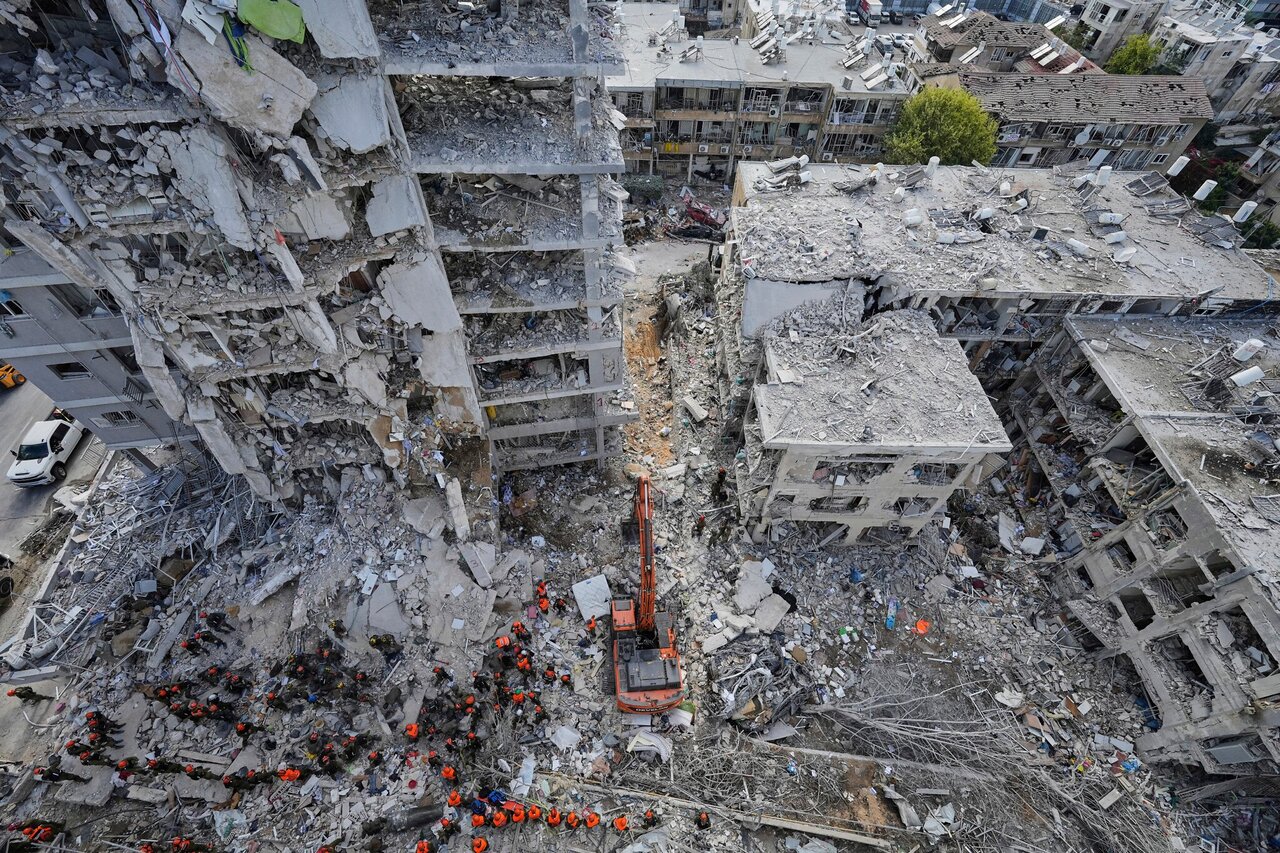
LONDON – If the Israeli war with Iran had only continued for two more weeks, it was possible that all professional organizations’ air defense systems would have been exhausted as about 30 missiles fell daily in entities in certain locations, with massive, destructive forces.
Furthermore, Israeli people would have begun to feel the loss of security and deterrence as more entities collapse flows as pressure intensifies to flee. In addition to the outcome of the infrastructure strike, Trump hastily sought a ceasefire. Netanyahu demanded a ceasefire from Trump, and Trump immediately moved to announce it. As a result, Iran has two options left.
The first option was a confrontation with the West due to the West’s refusal to allow the collapse of the century’s projects at the hands of Iran. The second option was to stop the war, given that Iran was already responding to Israeli attacks, particularly with the lack of immediate preparation by the axis of resistance, and the control of new regional realities resulting from the collapse of entities and the collapse of chaos.
Therefore, Iran accepted the option of a ceasefire and considered it already retaliated, claiming that its impact and presence in the region were no longer an issue.
Moreover, most importantly, the outcome of this situation leads to existential issues that force a reassessment of Israeli occupational organizations, the largest regional project in the West.
There are existential questions about the size, role of the entity, and the possible outcomes that may have arisen from this situation, which leads to downsizing and weakening of the entity, while reinforcing the axis of resistance through other forces.
Among the unintended consequences of this war is that the true and clear image of Iran has revealed as a capable, powerful and honorable force that does not solve problems or render them vulnerable. It changed public perception, ended speculation about whether Iran had participated in the war, and addressed questions raised previously in that context. The war united the country and Iranian masses, centering on leadership that hampered the comprehensive American and Israeli goals.
One clear consequence of this war is that the entity bears the consequences of a crisis of existence due to the loss of deterrence. More importantly, there is currently a proven ability to destroy an entity. This has been tested.
A long-term conflict between the entity and the Islamic Republic, and even one of attrition, leads to the end of the entity. This raises questions about the role of an entity and its connection with others. Entities cannot continue to exist in limited regions within the historical Palestinian boundaries.
Israeli occupational groups have failed to maintain both demographic and deterrent dimensions, taking into account the emergence of strong and destructive Iranian forces. Both were stripped from their hands – and this was revealed on October 7th, when deterrence in front of Gaza collapsed and the small boundaries were unable to protect.
They also failed to maintain their large goals of establishing a “big-than-Middle East Project” and increasing the size of their entities. Despite all the Western weapons and arsenals at their disposal, it has been revealed that there are insurmountable obstacles that can create deterrents. These did not allow for the imposition of will and control. It failed every goal declared in all respects and put the entity in a critical and difficult situation, facing existential questions.