
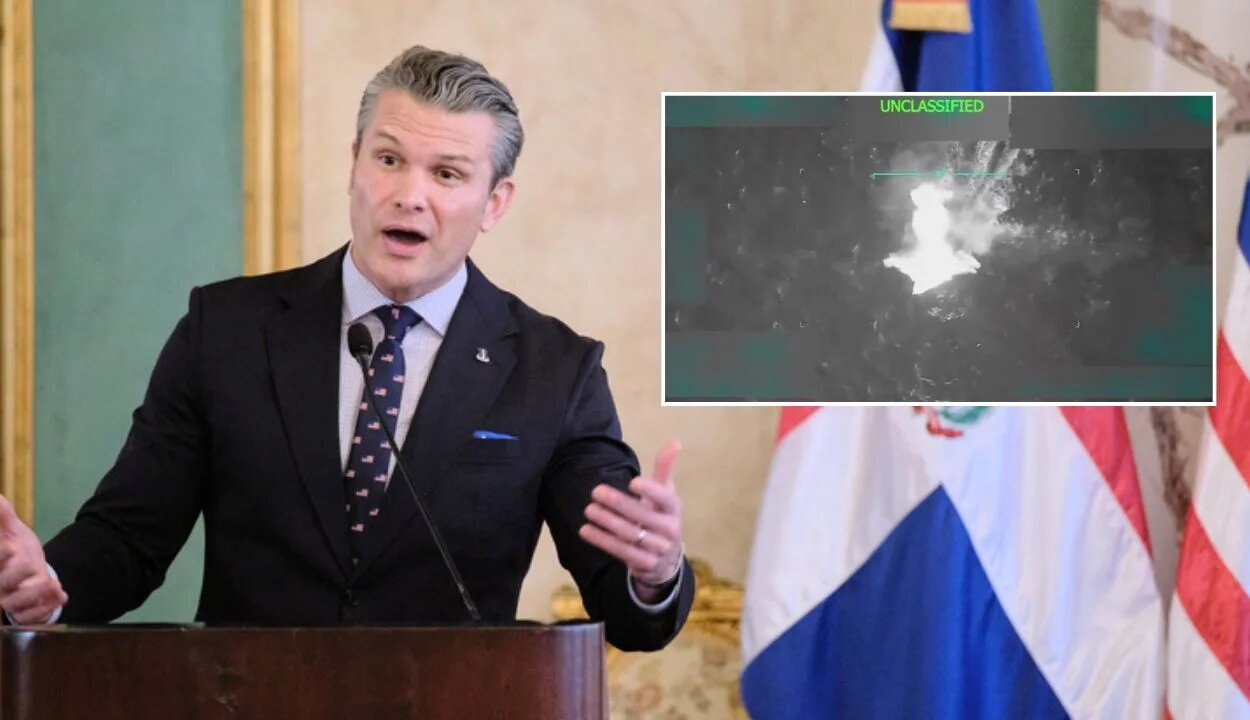
U.S. Army Secretary Pete Hegseth reportedly gave verbal orders not to leave any survivors behind as President Donald Trump’s administration launched the first of more than a dozen attacks on alleged drug smuggling ships that have killed more than 80 people in the past three months, The Independent reported.
On September 2, U.S. military personnel fired a missile to attack a ship in the Caribbean carrying 11 people accused of trafficking drugs to the United States.
When two survivors emerged from the wreckage, the special operations commander overseeing the attack ordered a second attack to comply with Hegseth’s command to “kill everyone,” The Washington Post reported, citing an official with direct knowledge of the operation.
The two were then “blown into the water,” according to the report.
The news of Hegseth’s alleged command follows intense legal scrutiny from international investigators and members of Congress who say the Trump administration’s dangerous operation amounts to an unlawful extrajudicial killing, which war law experts spoke to The Independent have classified as outright murder and a war crime.
Sean Parnell, the Pentagon’s chief spokesman, told The Washington Post that the paper’s “entire report is completely false” and that “ongoing operations to combat narcoterrorism and protect our homeland from deadly drugs have been a huge success.”
In a statement Friday night, Hegseth criticized “fabricated, inflammatory and derogatory reporting” but did not refute the allegations.
In September, the Trump administration told Congress that the United States was formally engaged in an “armed conflict” with drug cartels, which the president labeled “illegal combatants.”
Administration officials have labeled the cartel a “non-state armed group,” whose actions “consistent with an armed attack against the United States” and are currently engaged in a “non-international armed conflict,” or war with a non-state actor.
In the weeks that followed, the Trump administration ordered more than a dozen airstrikes that killed more than 80 people on ships in the Caribbean and Pacific Ocean, according to lawmakers and civil rights groups, although there has been no public evidence or legal justification for the deaths.