
MADRID – According to an official statement released by Prime Minister Benjamin Netanyahu’s office, Israel has achieved all the goals stated in its operation against Iran. “All the goals of the operation are met,” the text declared, and thereby justified Israel’s acceptance of the ceasefire proposed by former US President Donald Trump.
But beyond this victory tone, the strategic balance presents a much more subtle picture. What exactly was Israel aiming for? And how much can you say you have reached those goals?
The initial aim was to neutralize what Tel Aviv considers as an existential threat, an Iranian nuclear program. According to Ori Goldberg, an Israeli analyst who specializes in regional politics, the attack was justified on the premise that Iran had been away several days since it reached uranium enrichment levels.
The facilities in Natanz, Fordor and Isfahan have been bombed and damaged, but the core of Iran’s nuclear program is maintained. Israel cannot omit Iran’s technical and scientific knowledge or affect the country’s resolve to maintain its nuclear program.
Far from weakening Iran, the operation has caused significant political changes. The Iranian parliament was passed by an overwhelming majority. This decision not only marks a break with the Western surveillance framework, but is also a sovereign gesture that redefines the balance of power. Furthermore, it points to a potential withdrawal from the non-proliferation treaty. This is a move that places Iran in a greater strategic autonomy over the West.
The second aim of the attack was to destabilize the political system of the Islamic Republic. I hope this has already been publicly stated by former Israeli war minister Joab Gallant to promote a “change of government.” This logic supported actions, such as the attack on Ebin Prison, a symbol of Iranian judicial device, which is particularly important because it affected civilians. The strategy is supported by numbers from the establishment of Israel, such as the National Security Institute (INSS) Raz Jimit, who candidly stated that “long-term solutions to Iran’s threat lie in government change.”
But that expectation was quickly cleared. As analyst Mouin Rabbani pointed out, Iran’s political system showed structural solidity that rebutted its detractor predictions. Institutional vacancy was quickly filled, military chains of command were strengthened, and sticky oppositions could not capitalize the crisis. On the contrary, external attacks served as catalysts for social mobilization that reaffirmed the principles of national sovereignty. Far from destroying the Islamic Republic, foreign attacks have resulted in integrating their internal legitimacy.
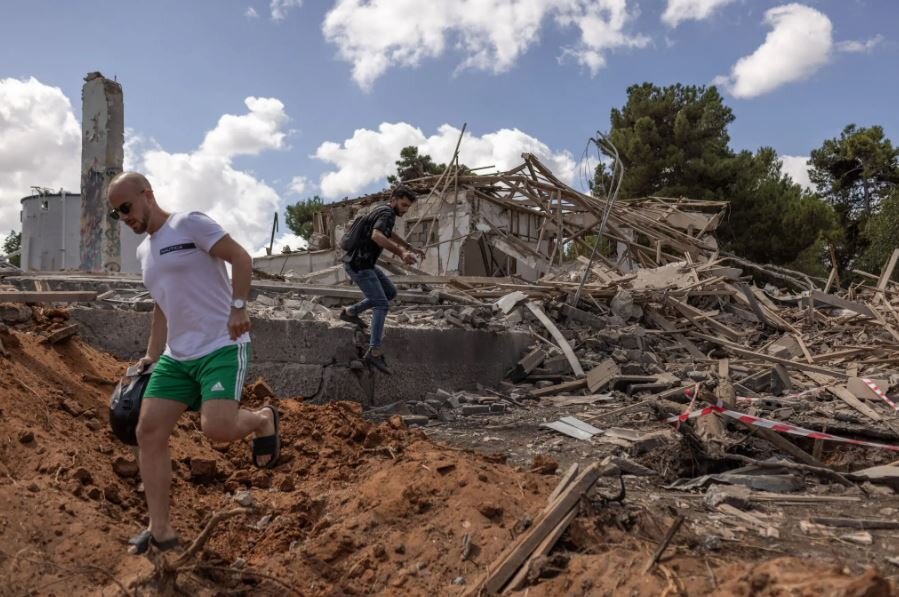
The third objective was to dismantle Iran’s ballistic missile programme, which Israel considers to be one of the main threats to the region’s military advantage. Despite Israel’s efforts to destroy production, storage and launch facilities, Iran responded with a series of coordinated attacks that permeated Israel’s most sophisticated air defense systems. From a technological military perspective, this episode represents a humiliating setback not only for the damage done to strategic Israeli infrastructure, but also for the blows that addressed the reliability of the system the US has invested billions of dollars.
Iranian operations have made it clear that deterrence is not an exclusive Western reserve. The Islamic Republic has demonstrated its ability to respond with restraint, proportional, strictly defensive logic, and at the same time hit important targets when sovereignty is threatened.
Israel achieved “undeniable tactical successes,” including the removal of senior military commanders, but these did not lead to sustainable benefits or true changes in regional strategic balance. Correlations of Western Asian military forces have not changed significantly, and Israeli attacks have reinforced the narrative of resistance, sovereignty and self-determination in the face of international pressures rather than weakening Iran.
On the other hand, halting hostility does not eliminate the threat of Israel. In this respect, attention has shifted to Lebanon’s “ceasefire.” Lebanon sees Tehran as an excuse for Israel to continue bombing the country’s south. Iranian authorities fear Israel may try to replicate a model similar to the “unofficial demilitarized zone” in southern Lebanon.
Iranian officials have argued that replicating such patterns on Iranian territory is much more difficult, but they have given the robustness of their defensive capabilities – they also emphasize that certain vigilance is essential.
As for the possibility of resuming negotiations with the US, the Islamic Republic will remain robust in its demands. It does not accept a lecture that does not begin with an explicit recognition of the right to sovereignty to enrich uranium in its own soil. For Tehran, waiver of that right is not only counterproductive, but is a complete suicide. Historical experiences show that dismantling strategic capabilities, such as nuclear programs, has not led to relief from external pressures. Rather, such pressure tends to be directed towards other sensitive areas, such as missile programs and ultimately attempts to change government.
In this context, accepting “zero enrichment” would dismantle Iran’s deterrent capabilities and be exposed to a permanent cycle of pressure. Cases in Syria, Gaza and Lebanon show that demilitarization does not guarantee security, and that ceasefires far from representing permanent truces, often by other means acting as an extension of war.
As Mahdi Mohammadi, adviser to Iran’s Parliamentary Speaker, said, “It all depends on what happens next. Stay skeptical and vigilant, stay united, unite the network of influence, and retain the will to attack the enemy.
From this perspective, a halt of combat should not be interpreted as a decisive outcome, but as an intermediate stage that opens up both risk and possibility. The solution relies heavily on Iran’s ability to turn external pressure into internal cohesion, strengthen strategic deterrence, and shape a new regional balance that is favorable by its sovereignty.