
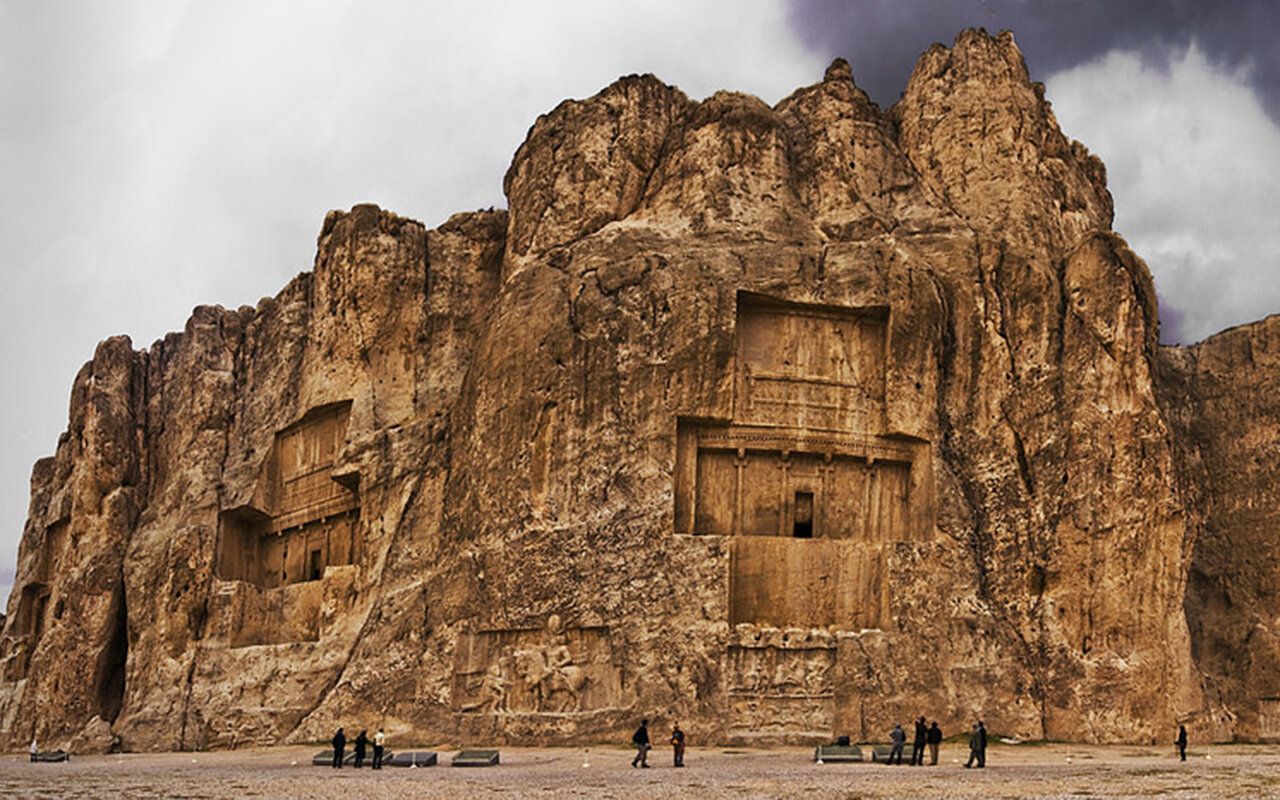
Tehran – Archaeologist and researcher Aboluhassan Atabaki states news of the discovery of the fourth burial inscription in the area of Naksh e Rostam in Malbadasht, Faz province, stating that the inscription is related to bones for the bones of death.
He told Shabestan News Agency that the transformation of burial ceremonies and methods and the spread of Zoroastrianism in the Iranian Heights had many practices. “Archeological sources today provide us with a wide range of transformations of these.”
A huge number of existing and other burial structures associated with the Sassanid era have been launched in the birthplaces of Istaful City, Tufts and Jammushid, Naksh e Rostam and Sassanid Kings.
He explained: “Today, the different types of burial methods of the Sassanid era are becoming apparent to us with the help of the inscriptions of burials.”
Also, Najmeh Ebrahimi, a senior history expert, said, “archaeological research and exploration have changed the approach to burial methods during the Sassanid period.”
The formation of this type of burial was in line with religious teaching, environmental geography, government law, and individual financial capabilities, and gradually encompassed a wider range of public cultures, she added.
She continued. “Not only a statement by Nezam al-Mort, Minister of Seljuk, but also the inscription of Gabul’s daughter in Eqlid is evidence of this issue. An amount of 12,000 Dirham was spent on the construction of tombs of stone flocks. of society.”
She emphasized. “Based on our research at Marvdasht, the number of ossu created during the Sassanids and early Islamic times is very small compared to mortar and stone tombs (which belong to ordinary people); survivors.”
Regarding the recently identified inscription, Atabaki said the study abroad included a burial inscription and had beautiful decorations.
The dome-shaped decoration with a graphic motif above it is less noticeable in the misuse of Sassanido, reminiscent of the ascension into the upper world and the views of Sassanido architecture.
The researchers said the deposit was written in five lines and reclining (vertical) format in the Pahlavi script. This is translated as follows: This is the grave of Nikdad’s son. Go to heaven.
KD