
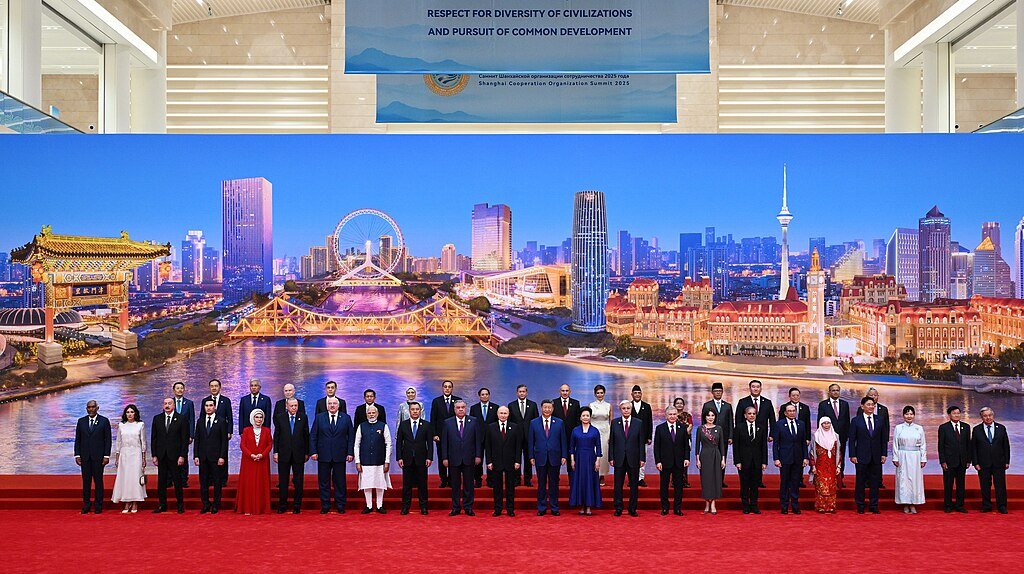
Tehran – Voices of resistance resonate with the Hall of Brix Summit from the city of Gaza and the meeting of Shanghai Cooperative Organizations. Palestinian students have raised flags at universities around the world, claiming the West Asian Islamic Resistance movement, where African leaders have expelled colonial forces, Latin American politicians have advocated the independence of their decisions, and shaped the region’s ethical and military pillars.
The Awakening of the Global South marks a turning point in modern history, marking the decline of Western legitimacy and the end of monopoly on the narrative.
Thirty years ago, following the collapse of the Soviet Union, western elites celebrated the “end of history” and imagined the 21st century as an era of unipolar rule. The United States was not only an outstanding military and economic force, but also a source of global values and norms. This perception relied on NATO, the World Bank, the International Monetary Fund, and mostly the Western media: the diverse tools of domination. Countries that did not comply with this order were facing sanctions, threats and even war.
However, the real world did not cling to this Western unipolar story. The endless wars of the United States in Iraq and Afghanistan, the destruction of the nation under the pretext of fighting terrorism, the economic sanctions that brought the nation to its lap, and unconditional support for Israel exposed the imperialist nature of this order. Historically a victim of domination, Global South now shows that it is no longer an audience, but an active and decisive actor.
The Awakening of the Global South and the Role of the Emerging Alliance
Over the past 20 years, the Global South has challenged the unipolar order using new political, economic and security tools. At the heart of this awakening is new economic and security alliances, such as BRICS and the Shanghai Cooperation Organization (SCO).
Comprising of Brazil, Russia, India, China, South Africa, Ilam, Egypt, the United Arab Emirates, Ethiopia and Indonesia, BRICS has evolved from a simple economic coalition into a powerful geopolitical force. With the development of Western-independent financial and economic cooperation, reducing control of the dollar, establishing new development banks and creating co-investment funds, the alliance paved new avenues for global Southern countries. The recent BRICS Summit highlights not only economic issues but independent regional and global policies (politics that prioritize member state interests over Western interests) as well as redefine the world’s financial and political order.
SCOs also play an important role. The Chinese and Russian-led organisation will create an independent shield against the influence of NATO and Washington, coordinating security and military cooperation between Asian countries. Iran and other member states show that Asia is fake a truly multipolar order, independent of the West and free from US and European domination. The SCO Conference is working on cybersecurity, counter-terrorism, economic cooperation and regional infrastructure projects, demonstrating that the Global South can ensure security and development without relying on the West.
Islamic resistance axis in West Asia
In addition to BRICS and SCO, the Islamic Resistance Axis of West Asia serves as the core of regional and global resilience in the South. The axis includes Hezbollah in Lebanon, Hamas, Islamic jihad in Palestinian, Ansarra in Yemen and Resistance Groups in Iraq. These moves relied on general support and strategic ingenuity to reconstruct the region’s military, political and ethical equations.
Islamic resistance is not only a tool to counter the direct occupation and control of Israel and its Western allies, but also provides a practical model for the tropical countries of the world, demonstrating how people and governments can withstand economic pressures, sanctions and military attacks. Lebanon’s Hezbollah has successfully attacked Israeli forces and ISIS military, exemplifying long-term and popular resistance. Palestinian Hamas and Islamic jihad amplified Palestinian voices of suffering and resistance around the world with Gaza’s resilience and symbolic defensive operations. Yemen’s Ansarrah demonstrated the ability of Islamic resistance to control the country and maintain political independence and national security despite the siege and widespread attacks by the Saudi Arabian Union.
This axis of resistance had its regional influence and strengthened the moral and political consensus of the global South. Countries from Iran and Venezuela to Africa and Latin America are inspired by the Islamic resistance model, pursuing a path of independence and opposition to Western domination.
Other Resilient Global South
Beyond the axis of resistance and new alliances, other tropical countries of the world have embraced the path of resilience.
– Iran demonstrates that autonomy in the face of Western pressures is achievable through independent regional policies and nuclear and defense programs.
– Venezuela and Cuba have circumvented US sanctions and implemented independent development through resilient economies and regional cooperation.
– Bolivia and Nicaragua exemplify practical resistance to Western intervention by maintaining political and economic independence.
– In Africa, countries such as Mali and Niger show the pathway to regaining national sovereignty by banishing French troops and confronting neocolonialism.
– Asia and Oceania, China and India will extend beyond their economic role in BRICS to strengthen the economic independence of neighboring countries through regional infrastructure and North and South investment.
The collapse of the Western Monopole Tale
The resistance axis, new alliances, and a resilient global tropical combination expose the failure of the Western unipolar narrative. The West can no longer assert a monopoly of truth. Double standards in human rights are clear indicators of their decline in legitimacy. Children in Ukrainians are mourned, and the thousands of Palestinian children killed under artillery fire are ignored or justified.
At the same time, the failures of US military projects and proxy wars in Afghanistan, Iraq, Syria and Yemen show the lack of power to unilaterally manipulate regional and global dynamics. Popular movements, the Islamic resistance axis, and new alliances, together with independent public opinion, guide the world towards pluralism and multipolarity.
Despite its internal diversity and contradictions, the Global South highlights common principles: rejection of Western domination and demand for global justice. This awakening not only transforms political and economic structures, but also reconstructs the cultural and ethical identity of the nation. People in the Global South are no longer spectators. They are active participants shaping the future.
Future outlook
In the future, the multipolar world will be integrated, and the global South will not only strengthen its political and economic status, but also serve as an inspiring model for other liberation movements. Emerging forces, the Islamic resistance axis, and general movements redefine global norms and challenge Western places in the world’s narrative.
The world’s future lies in independence, North-South cooperation, and general resistance. From the Middle East to Africa and Latin America, Global South is not just an actor, it is a history stage manager. The story of the Western Unipola ends with the global Southern voice determining the trajectory of the 21st century. This historic awakening presents an extraordinary opportunity to restore dignity, independence and justice in international relations, inspiring millions of people around the world.