
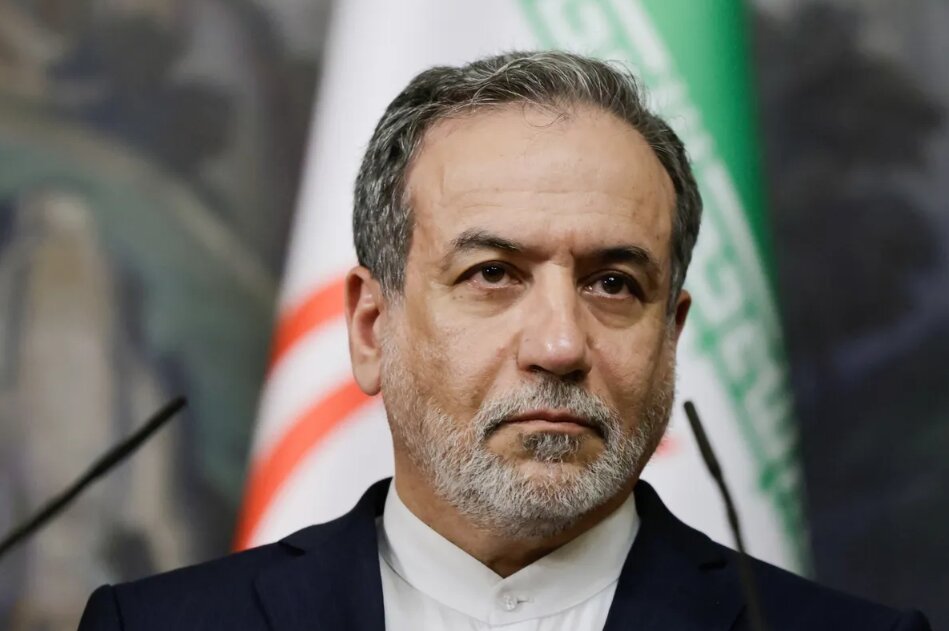
The top Iranian diplomat made comments on Sunday morning to deal with reporters after a session with Tehran’s ambassador, Chargaze Affairs and head of foreign and international expression.
In his speech, Aragut pointed out that Iran has consistently sought a fair and balanced diplomatic solution, but Western countries have rejected these efforts because of excessive and unfair demands. He emphasized that past threats, including military action and snapback pressures by European countries, failed to achieve results, only complicating the negotiation process.
“The experience shows that there is no solution to Iran’s nuclear issue other than diplomacy and negotiation,” he said, adding that although there has been repeated threats of military attacks in recent years, such an approach has failed to resolve the issue. Europeans also threatened to invoke a snapback mechanism, but like military threats, the scale proved ineffective, only made the negotiation process more complicated and difficult.
“Three European countries thought that results could be achieved through snapback mechanisms, but the tools were ineffective and only made diplomacy more complicated. Diplomacy is always ongoing, but the parties involved in negotiations are now changing.
Elsewhere in his remarks, the top Iranian diplomat said conditions reported in the media as Iran’s alleged demands have never been officially communicated to Tehran. “In recent months, our discussions have focused solely on nuclear issues that have been made directly or indirectly with the US side. In these exchanges, our proposals have been completely transparent. The windows for diplomacy are not limited and it is now unreachable to reach negotiated diplomatic solutions. However, recent developments at the UN Security Council have made this process even more difficult.”
Araghchi pointed out that the Ministry of Foreign Affairs will continue its diplomatic efforts as diplomacy cannot be ignored. “Nevertheless, the situation continues to change following the activation of military attacks and snapback mechanisms, and future negotiations will certainly be different than before.”
Referring to Iran’s cooperation with the institution, Aragut said, as mentioned earlier, Iran has signed a new agreement with the International Atomic Energy Agency (IAEA) on technical cooperation. “This step was necessary due to field changes and security threats, including attacks on nuclear facilities, as previous cooperation frameworks could no longer continue.”
“After several consultations, we reached this agreement in Cairo. However, the Cairo agreement is no longer sufficient in new circumstances, including the activation of the snapback mechanism, and new decisions will be made,” he announced.
“To prove the peaceful nature of the nuclear program and its goodwill, the Islamic Republic of Iran has exhausted all its diplomatic paths, pursued consultation and cooperation, and presented constructive and balanced proposals. Now there is no excuse left for the Western countries to prevent Iran’s cooperation or dialogue.
Referring to the war that Israel imposed on its country in June, Aragut said that over 120 countries and almost all international organisations had condemned Israel’s actions and expressed support and solidarity with the Islamic Republic of Iran. “The reason for this support was the continued efforts to pursue prudence, rationality, wisdom and negotiation of the Islamic Republic of Iran as a responsible subject of international relations.”
“Today, Iran again demonstrated that while protecting its own rights, it remains fully prepared to consider solutions that can secure mutual benefits and build confidence in the peaceful nature of its nuclear program,” he concluded.
MNA/