
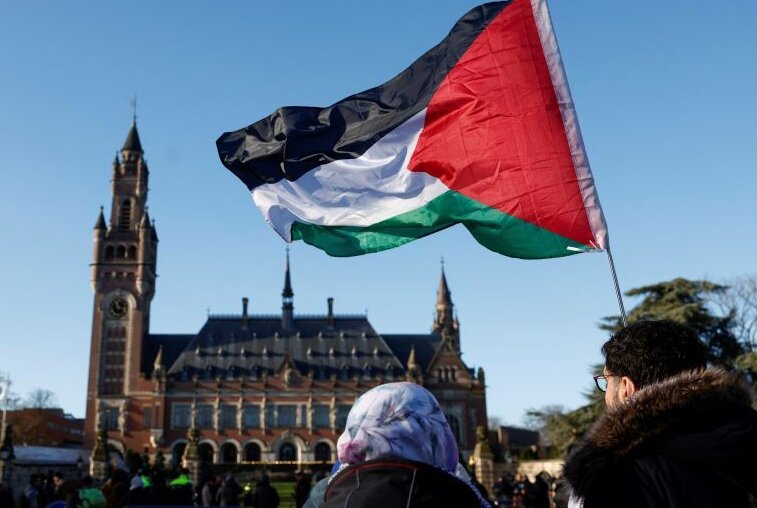
TEHRAN – On July 27, The Guardian reported that the International Court of Justice (ICJ) had postponed its final ruling on Gaza’s genocide case until at least 2027. This delay follows a six-month extension given to Israel, and the court accepts Israel’s claims related to “problems of evidence” related to South Africa’s attribute cases.
Although the postponement is widely acknowledged against the backdrop of increasing humanitarian distress, the broader analytical lens reveals the subtle institutional and systematic considerations underlying this development.
Structural restrictions on international justice
The ICJ’s decision to postpone the ruling of Gaza’s genocide until 2027 embodies a steady commitment to strict legal standards. The heart of the court’s process is the requirement to prove “genocide intent” beyond reasonable doubt, a high evidentiary threshold designed to ensure a legitimate process and avoid premature or politically driven judgment.
This meticulous approach may slow judicial procedures in times of an emergency humanitarian crisis, but it aims to protect the integrity and legitimacy of international law by balancing the rights of defendants’ states with broader legal liability.
At the same time, this delay highlights the complex intersection of law and politics in international arbitration. The ICJ operates within a global system characterized by diverse national interests, strategic alliances, and diplomatic sensitivities.
Giving extra time to prepare for Israel’s defense is dependent not only on legal correctness but also on political reality, which reflects practical efforts to ensure fairness and ensure the cooperation necessary for enforcement.
Furthermore, the postponement reveals structural limitations inherent in international justice. Unlike domestic courts, the ICJ has no independent enforcement power and must rely on the political will of states and institutions, such as the UN Security Council.
Political dynamics, including veto and conflicting interests, can hamper implementation and demonstrate the intertwining of legal processes with geopolitical constraints.
Balancing the justice and urgency of crisis
This situation also foregrounds critical discourse about the role and expectations of international legal institutions during times of crisis. While the urgency of humanitarian suffering reinforces the demand for rapid response, we note that the principles of justice and the rule of law sacrifice procedural fairness for convenience.
International justice not only calls for immediate violations, but also for strengthening global accountability and setting lasting precedents that will stop future crime. This balance requires an intentional, sometimes laborious process.
The ICJ’s late ruling brings reflections on how international judicial mechanisms can evolve to better reconcile the demands of urgency and thoroughness. Innovating evidence-gathering techniques, strengthening international cooperation, and reforming procedural protocols could help accelerate procedures without compromising standards.
Furthermore, it is essential to intensify diplomatic and humanitarian efforts in parallel to alleviate suffering during judicial deliberations.
This delay in the Gaza genocide verdict speaks to the painstaking act of balancing justice, law and geopolitics. This is an expression of a considered approach established on principles that assert fairness and rigour.
However, daily delays must deepen the tragedy of Gaza and continue to ask. Can justice afford to wait? As these humanitarian crises unfold in real time, is there any fleeting moments that legal deliberation systems must be defeated quickly? t
His delay is not merely a procedural issue. We ask the international community to suspend and reflect it. How do you provide justice with the highest standards for your ability to act quickly to save lives?
The challenge is clear before us. Finance should not only maintain humanity at the highest standards of integrity, but be quick enough. Otherwise, delays in justice are considered justice.