
BEIRUT – Ignoring the ongoing US-led Israeli attacks and a stifling economic crisis, the Lebanese government has given priority to submitting a resolution on the agenda to dissolve the Lebanese Arts Association.
The resolution, submitted by Home Minister Ahmad Hajah under the pretext of “violating applicable regulations,” came shortly after the lighting of Rauche Locke, along with the image of two Secretary Generals of Hezbollah, Hassan Nasrara and Saiyod Hashem Safididd.
Timing makes it clear that the problem is not legal, as it is intended to be drawn. Rather, it is purely political and vindictive.
Instead of dealing with the inclusive collapse or facing Israeli threats, the government is busy undermining cultural activities that fall under the freedom of expression guaranteed by Article 13 of the Lebanon Constitution, which guarantees the freedom of opinions, assembly and associations without the need for prior licenses.
Legally, the administrative authority has no authority to disband an association operating in accordance with the law, except after a final and binding judicial decision issued under the official lawsuit, and after the association is granted the right to protect itself.
Therefore, the move to resolve resalat constitutes a violation of the principle of separation of power. It is a clear violation of judicial powers.
Hezbollah MP Hassan Fadrara was clear in his position. Speaking on Almana’s television, he said, “God is pleased, and they don’t make mistakes, because no one will challenge us anything.”
Speaking to Prime Minister Nawaf Salam, he said:
Fadlallah announced that he would speak in Congress on behalf of the association, claiming that the government would “defame the state’s reputation with the way it handled the Raouche event.”
The proposed dissolution therefore becomes a new chapter in the cycle of soft wars committed against resistance, with the aim of drying out the source of consciousness and undermining the cultural identity it protects.
Cultural targeting is the other side of political and media lockdowns. This is an attempt to silence the voices of artistic resistance as foreign military attacks and external instructions failed to silence the movement.
The unpleasant paradox is that the government treats Resalat as if it were a hostile entity. However, the government, along with several collaborators with Israel, released Riad Salamet, former governor of Bank du Liban, known as the plunder of people’s wealth.
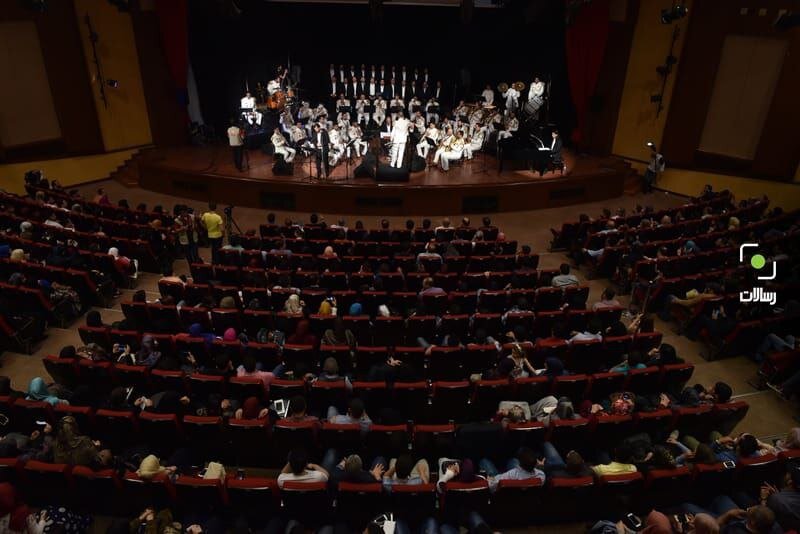
The Resalat Association is a cultural and artistic institution that has been publishing sophisticated musical, theatre and opera works over the years, establishing world-class orchestras, and launching projects supporting Lebanese and Arab creatives. The record shows that it nurtures a national culture and is not a threat to the state.
The resolution is dangerous as it not only targets specific associations, but also paves the way for constitutional precedents that allow subsequent governments to dissolve the associations or revoke their licenses based on a political mood.
This threatens the future of civil society and cultural life throughout Lebanon!
Once a country of freedom and openness, Lebanon should not transform into a grey version of the oppressive Persian Gulf regime that punishes thought and art.
Approving this bill means that the annihilation of freedom of expression and abolishing cultural resistance is effectively one of Lebanon’s most prominent success stories.