
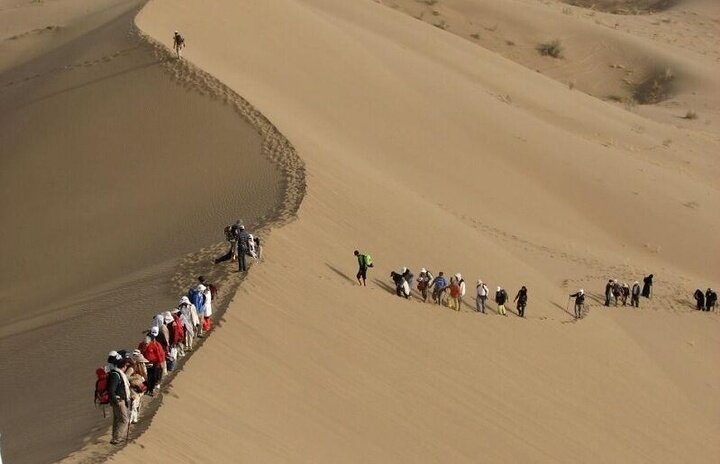
TEHRAN – More than 2,500 tourists have visited the picturesque Lut Desert since early October, marking a significant increase in travel to the UNESCO World Heritage Site, local heritage officials said.
Hossein Eslami, director of the Lut Desert World Heritage Base in Sistan-Baluchestan province, said that the number of tourists has increased thanks to recent promotional campaigns. He said this trend could help strengthen the local economy.
“This increase is encouraging for local communities, as it increases tourism-related income and improves livelihoods,” Eslami said, according to the Milas Alia news agency.
The official said elsewhere in his remarks that visitor access must be carefully managed, adding that the site requires strict protection to protect its natural features. “The Root Desert is a trust that we must protect with special care to ensure it remains intact for future generations,” he said.
He said vehicles entering protected areas must comply with international standards and tourists must avoid damaging sand formations, dunes and native flora and fauna species.
The Lut Desert, which straddles Kerman, Sistan-Baluchestan, and South Khorasan provinces, was inscribed on the World Heritage List in 2016. It is known for its extreme temperatures, unique wind-driven topography, and seasonal desert ecosystem.
The region is home to yardangs, dunes up to 475 meters high, stony plains, and some areas have recorded the highest surface temperatures on Earth, reaching 70.7 degrees Celsius.
Separately, other officials said the three ministries have signed an agreement to coordinate tourism development in the region.
Alireza Shahbaksh, deputy tourism official of Sistan-Baluchestan province, said the joint agreement with South Khorasan and Kerman provinces is aimed at creating a “Rut Desert Tourism Triangle”.
He said the project includes planning common tourist routes, identifying investment opportunities, restoring historic trails, hosting joint tours and events, and developing green jobs related to desert tourism.
The contract is valid for two years with the possibility of extension. Shahbaksh said it also covers training programs for local communities and cooperation on environmental protection.
“The vast scale of the Rut Desert requires unified management for sustainable tourism,” he stressed.
morning