
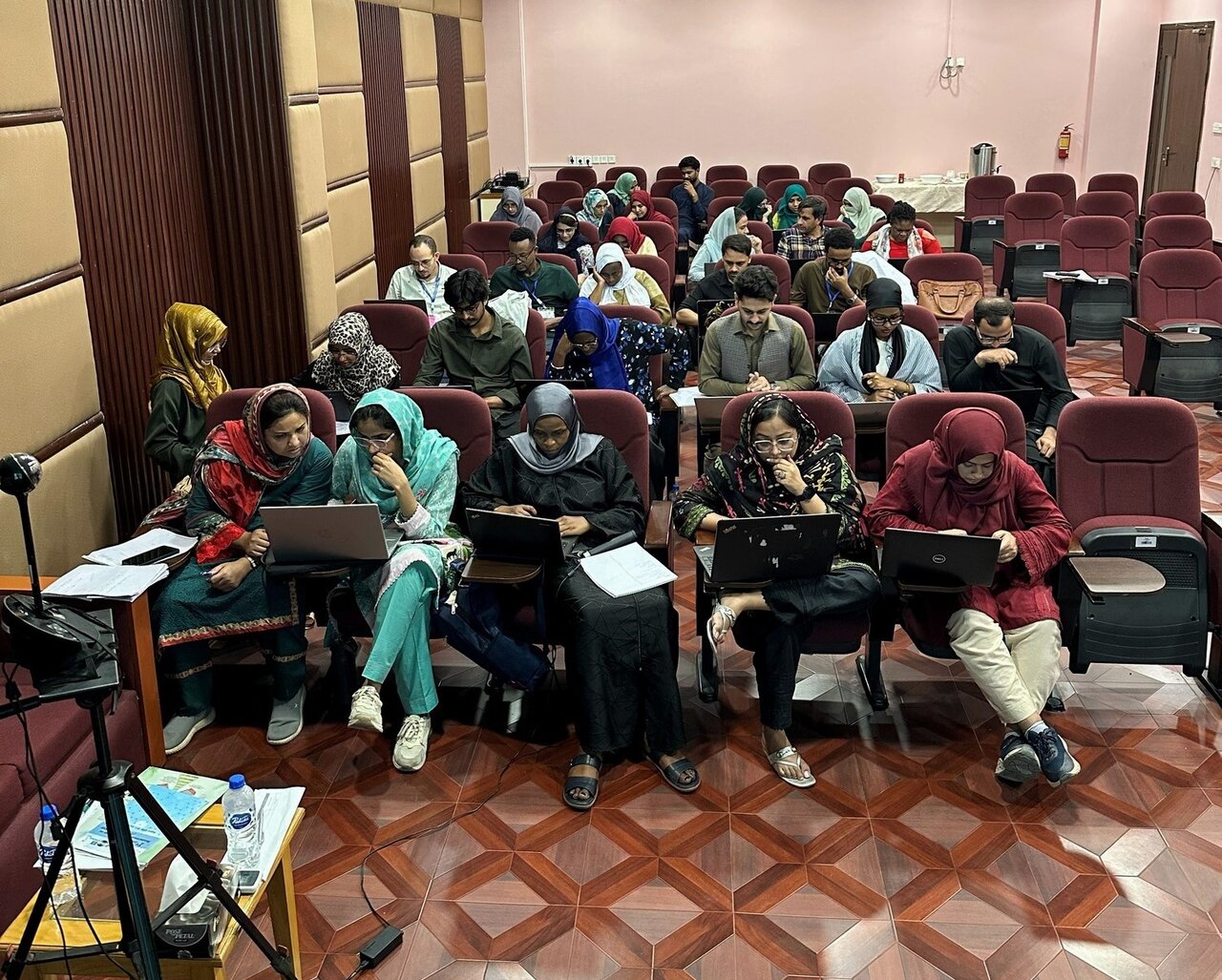
TEHRAN – Iran’s Pasteur Institute has organized a week-long international training course in Pakistan to strengthen pandemic preparedness capacity to deal with future health threats.
The event, which was held in Karachi from October 21 to November 1, was organized in collaboration with the Standing Committee for Cooperation in Science and Technology (COMSTECH) and Pakistan’s International Center for Chemical and Biological Sciences (ICCBS).
More than 30 health professionals from 11 countries – Benin, Uganda, Somalia, Senegal, Singapore, Sudan, Egypt, Ethiopia, Afghanistan, Cameroon and Pakistan – took part in the course entitled ‘Investigating infectious disease outbreaks with a focus on Crimean-Congo hemorrhagic fever’ as part of a comprehensive course on ‘Virology and future pandemic preparedness’.
Descriptive and analytical studies in arboviruses and Crimean-Congo hemorrhagic fever, biosafety and risk assessment, outbreak planning and early warning systems, epidemiology, and International Health Regulations (IHR).
The program, which combines theoretical sessions with practical workshops and exercises, encouraged active participation and received very positive feedback from participants.
The training marks the second joint program under a five-year Memorandum of Understanding (MOU) signed between Iran’s Pasteur Institute and Comstech in October 2023, demonstrating their continued commitment to collaborative health security across Islamic countries.
According to Iran’s Pasteur Institute, the five-year memorandum commits the two countries to cooperate in developing and implementing joint training programs and strengthening health systems, especially in Islamic countries. The first joint training course entitled “Assessment and Management of Infectious Disease Outbreaks” was held in Karachi and Islamabad, Pakistan in December 2023, inviting experts from the Pasteur Institute in Iran.
MT/MG