
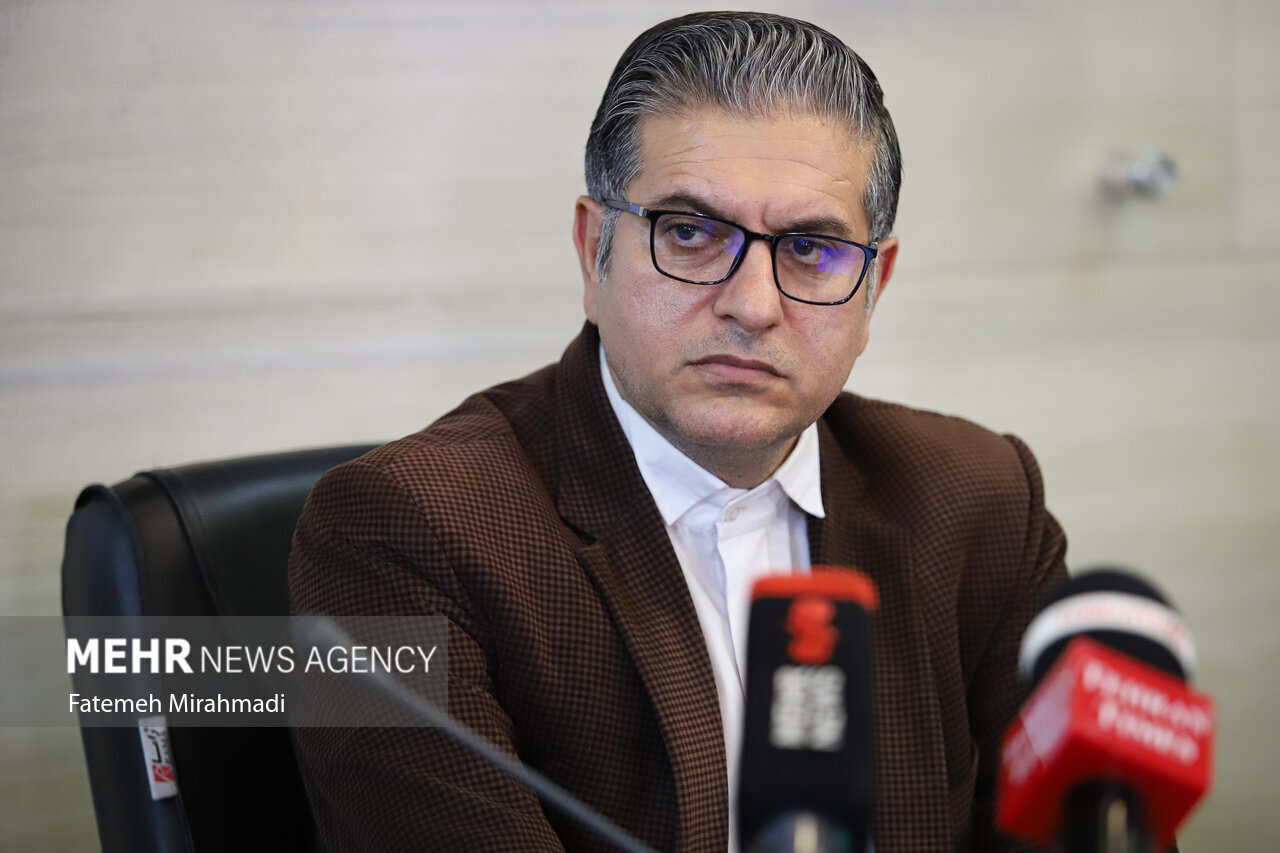
Mohammad Reza Moradi, director of international and foreign reporting at Mehr News Agency, wrote in a note that the implementation of the prisoner exchange process between the Palestinian resistance and the Israeli regime, along with the ceasefire in the Gaza Strip, should be considered one of the decisive moments in the equation of war and peace in the Middle East. This moment is not only intertwined with the humanitarian aspects of the Gaza crisis, but also contains deep political, security and strategic messages. This event is an amalgamation of three perspectives. One was the resistance of the Palestinians, whose tenacity forced the enemy to retreat. After two years of attrition, the Israeli regime sought a dignified way out of the crisis. And under the so-called “Trump Peace Plan,” the U.S. government sought to simultaneously restore its image in the region and support its allies in Tel Aviv.
Prime Minister Netanyahu’s escape ladder
The recent agreement, brokered directly by the Trump administration with the participation of some Arab officials in Sharm el-Sheikh, was essentially a “political gift” to Prime Minister Benjamin Netanyahu. Netanyahu, who has faced consecutive military defeats, a crisis of domestic legitimacy and unprecedented international pressure over the past two years, sees the ceasefire as an opportunity to mend his position. As analysts have noted, President Trump’s initiative was intended to provide Netanyahu with a ladder to climb down from the tree of war, which has failed to free Israeli prisoners or eliminate resistance.
Although Trump’s plan appears “peaceful” on the surface, it essentially seeks to achieve at the negotiating table what Netanyahu was unable to achieve on the battlefield: relative calm, political survival, and preserving Israel’s image of deterrence. For this reason, many observers view the Sharm el-Sheikh agreement as a “diplomatic failure” for Israel, a calculated effort to turn a military defeat into a political achievement.
Failure of the logic of military power
In contrast, the Palestinian resistance remained determined for two years against the most severe attacks, proving that absolute military power cannot impose political will. The Al-Qassam Brigades rightly stated: “Despite intelligence superiority and military strength, the enemy has failed to recover the prisoners through military pressure and is now forced to comply and return Israeli prisoners only through negotiations, as promised by the Resistance.”
In this war, Israel realized that military operations, even with perfect intelligence and U.S. logistical support, cannot completely determine the outcome on the ground. The release of prisoners through negotiation and agreement is a tacit admission by Tel Aviv of the failure of the very “use of force” strategy that has underpinned Israel’s security since 1948.
From the battlefield to the battle for legitimacy
There are also symbolic and psychological aspects to the prisoner exchange. Although Israel sought to portray the resistance as a “terrorist” force, the realization of this agreement meant that Israel would have no choice but to come to the negotiating table with the very forces it delegitimized. In other words, through this process, the resistance has been elevated from a military group to a political actor, one that can impose its will through negotiations, ceasefires, and agreements. This development could change the global perception of Hamas and other resistance groups and lay the groundwork for redefining their role in the future Palestinian political structure.
Conversely, Israel faces a double legitimacy crisis. Both in the international community, which witnessed humanitarian crimes in Gaza, and at home, where the military’s inability to release prisoners is seen as a collapse of its “invincible army” image.
Humanitarian and social message of prisoner exchange
From a human perspective, the return of 1,986 Palestinian prisoners of war to their homeland and families was a historic moment. The scene that welcomed them at Nasser Hospital in Khan Younis was not just a moment of joy, but also a symbol of the spirit of solidarity of the people of Gaza. This event demonstrated that despite two years of famine, displacement, and blockade, Palestinian society has not collapsed from within and maintains its capacity for civil and social resistance. In political discourse, this phenomenon can be described as the “triumph of the narrative of resistance over the narrative of devastation,” that is, a narrative that emerges from the ruins and still has hope. The return of these prisoners is essentially a restoration of collective memory to the battlefield, as each of them becomes living proof of both crime and resilience.
conclusion
The prisoner exchange under the Sharm el-Sheikh agreement can be considered a landmark event in modern Palestinian history. At this point, the Resistance, through its tenacity, changed power relations and showed that the national will could overcome the machinery of war. Meanwhile, while the deal, backed by President Trump, sought to project an image of victory for Prime Minister Netanyahu, it actually confirmed the failure of Israel’s military strategy. The main question now is whether this ceasefire will bring lasting peace or merely serve as an opportunity for the occupiers to reunite. Historical experience shows that Israel has never been faithful to any agreements. Statements by officials, including Prime Minister Netanyahu and the army minister, about continuing operations to “destroy Hamas” and “destroy the tunnels” reveal Tel Aviv’s true intentions. Therefore, the risk of a return to conflict or selective implementation of the terms of the agreement remains.
MNA/