
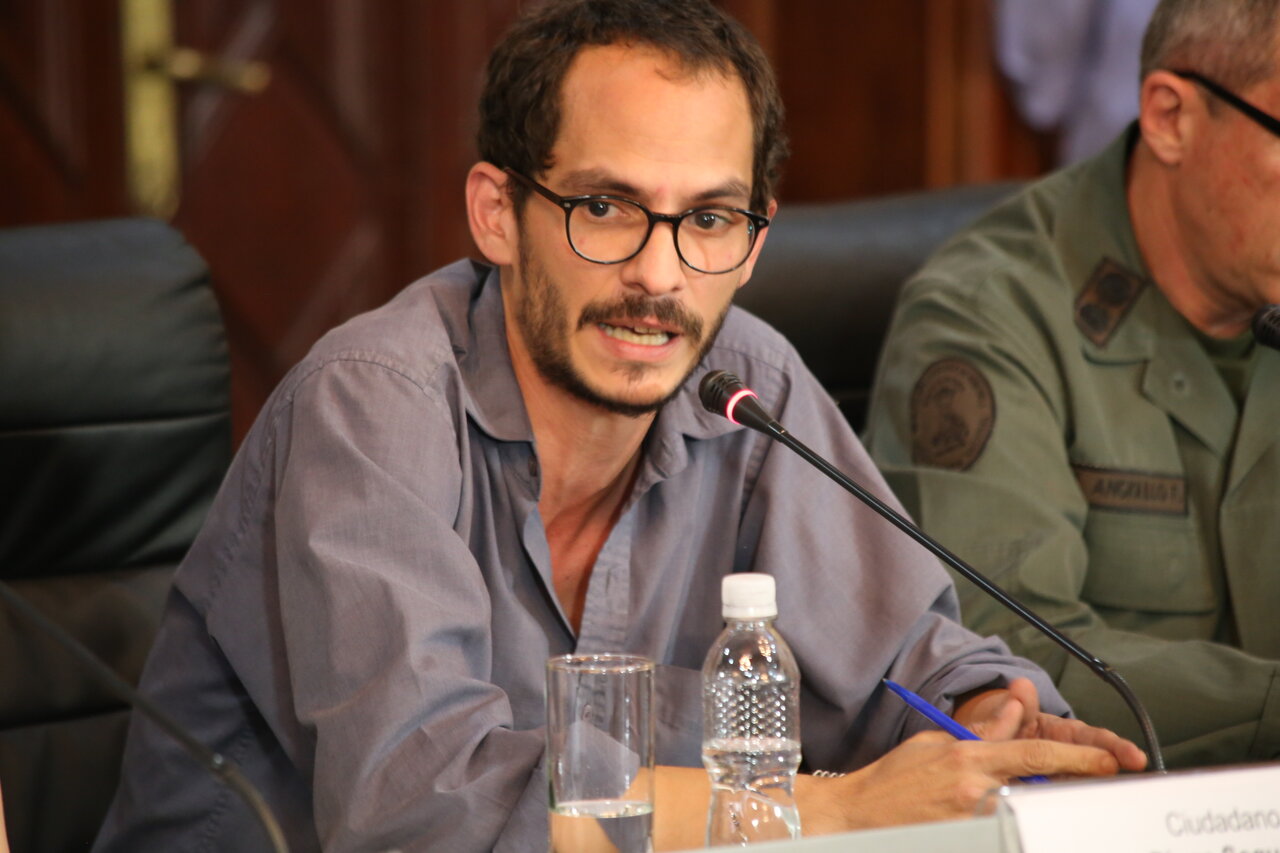
Venezuelan analyst Diego Sekera told Iran’s Mehr news agency that Washington’s recent operations inside and outside Venezuela are not really about drug trafficking.
From President Donald Trump’s admission that he authorized covert CIA operations to an expanded naval presence and attacks on small ships, these moves are aimed not at curbing cocaine shipments but at reasserting America’s influence in a collapsing world, analysts argued.
President Trump has publicly acknowledged that he authorized the CIA’s covert operations targeting Venezuela. The report also indicates that the United States is increasing its naval presence in the Southern Caribbean.
“This is not about drugs,” Sequera said. “This is a targeted effort to restore U.S. primacy in the Western Hemisphere and curb the rise of emerging powers.”
Sequera framed this pattern as a shift from surrogate means to overt signaling. He argued that while President Trump’s first term relied heavily on domestic rebels to achieve a parallel presidency, the current strategy relies on a combination of public military pressure, legal cover-up of covert operations, and the promotion of new rebels, particularly Maria Colina Machado.
“A larger fleet, verbal threats, public invocation of Article 50 authority – these are theatrical but dangerous,” he told Mair, arguing that this performance both helps shape the media narrative and leaves room for later detente if it is beneficial to Washington.
The factual basis of Washington’s drug-related claims is hotly debated. Sequera cited international data sets that show Venezuela’s share of cocaine shipments is well below the level that triggers U.S. rhetoric. Independent analysis and UNODC mapping shows the main trafficking flows through Colombia, Ecuador and Peru, with Venezuela representing a small part of the picture.
“If Caracas is really the drug state that Washington claims it is, it will be treated as a partner rather than an enemy,” he said.
Recent speedboat strikes and resulting fatalities have come under increased scrutiny. Since September, US operations have attacked multiple small vessels, killing more than 60 people, raising legal and human rights concerns that are currently being investigated by international organizations and legal experts.
Reports in the international press have raised questions about whether the targeted vessels were actually smuggling to the U.S. market or were operating on other routes, and whether appropriate legal and evidentiary standards were met. Critics warn that such actions risk extrajudicial harm and geopolitical escalation.
Sequela portrayed Washington’s motives as threefold: geopolitical, energy-driven, and ideological.
Containing Venezuela, he argued, would weaken the center of multipolar ties with China, Russia and Iran. It is also targeting Venezuela’s vast oil reserves, which are seen as strategically valuable for an industrial age dependent on energy security. And politically, punishing a permanent socialist state serves as a warning to the entire region.
Caracas is not alone, he added. Diplomatic support, technical cooperation, and commercial lifelines from Russia, China, and Iran (ranging from military advice, alternative payments, and energy cooperation) complicate direct U.S. intervention and help Venezuela absorb pressure.
“The response is to mobilize across political, economic and social sectors,” Sekera told Mair, warning that there was a risk that the U.S. government would misjudge Venezuelan nationalism and create an unintended backlash.
Venezuela has filed a diplomatic protest and moved to suspend some energy trade with neighboring countries, including Trinidad and Tobago, amid regional military activity and visits by US warships. Caracas has also publicly called for stronger ties with key partners.
As tensions rise, Mr. Sequeira urged multilateral mechanisms to defuse the crisis, warning that framing the campaign strictly as an anti-drug war would obscure broader strategic competition. That strategic competition has put Venezuela at the forefront of a debate over the shape of the world order.