
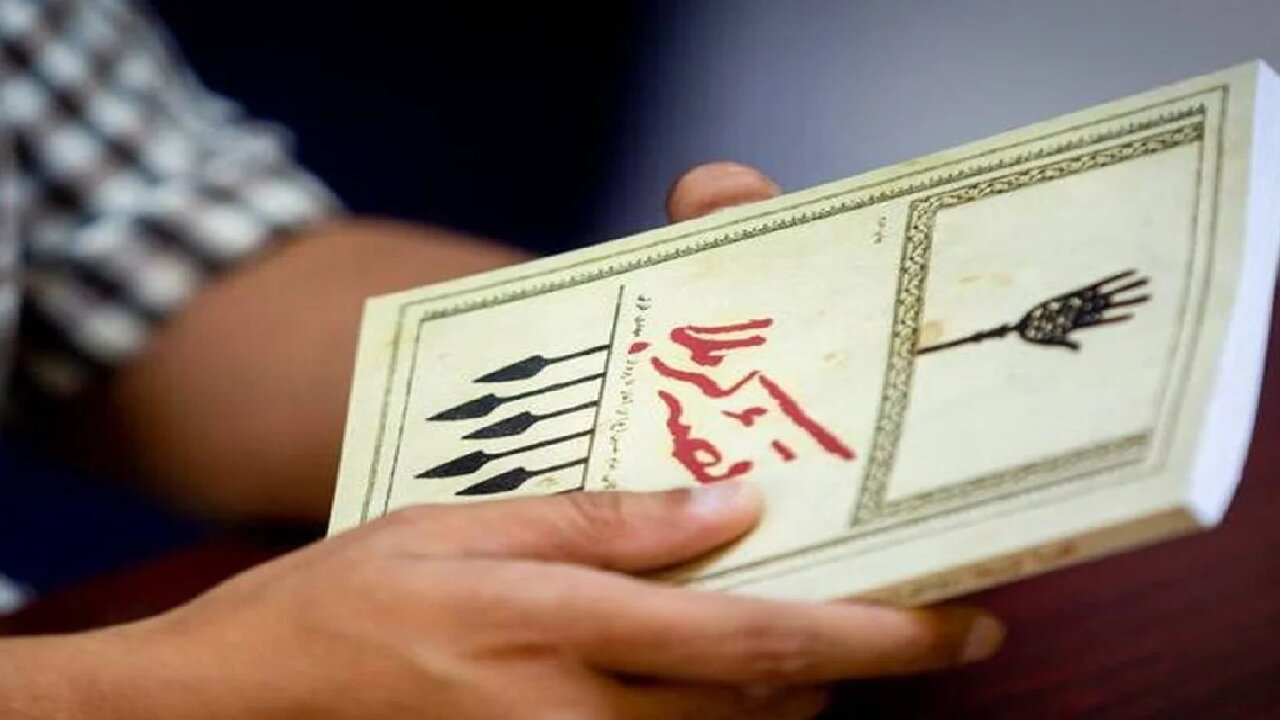
The book “Qesse-Ye Karbala” (The Story of Karbala) published by Shahid Kazemi Publications is a biography of Imam Hussein (AS).
Written by Mehdi Ghazali, it covers the life of Imam Hussein from his birth to his martialism.
The book is written in a simple and accessible style and is suitable for young adults and teenagers.
Using the events of Ashura, we create a short story about Imam Hussein and his loyal companions.
The book also includes a section on the importance of reminiscing about the events of Kalbala and learning from the examples of Imam Hussein.
Gazali emphasizes the value of standing up for courage, sacrifice and justice that Imam Hussein has embodied. “Qesse-Ye Karbala” aims to encourage younger readers to follow in Imam Hussein’s footsteps and become the right individual.
The book also includes illustrations that will help bring the story back to life and make it more attractive to a younger audience.
It serves as an introduction to Asura’s history and the importance of Imam Hussein’s sacrifice for Islam.
This work demonstrates a distinguishing contribution to contemporary Iranian storytelling, centering on Kalbala’s epics.
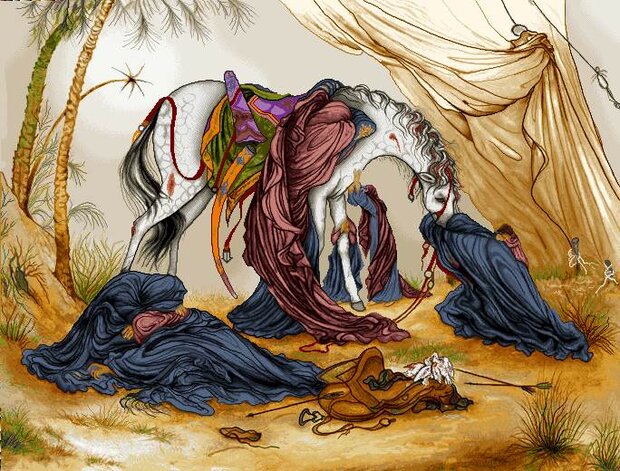
Ashura’s evening. Paintings by Mahmoud Farshchian
Rather than attempting to comprehensively record the Ashura event, Gazali exercises creative accuracy and selectively narrates shocking episodes from the fateful day of Muharram’s 10th day of the 61 Ah.
His storyline lens combines historical gravity with artistic restraint, drawing readers into the spiritual and emotional undercurrents of tragedy without overwhelming them with details.
From the beginning, Gazali acknowledges that Kalbala is contrary to traditional storytelling. “Several events,” he writes.
Through this lens, Kalbara’s story presents itself not as a cold historical account, but as a living memory shaped by collective sorrow and deep respect.
What sets the book apart is its accessible narrative style. Gazali avoids gorgeous prose and heavy didacticism.
Instead, he speaks with clarity and integrity, aiming to ensure that Kalbala’s message resonates over generations.
The result is a book that invites reflection even from readers unfamiliar with the nuances of Shia theology and early Islamic history.
Kalbara is more than a religious tragedy. It is a universal story of sacrifice, conviction and struggle with tyranny. Ghazali’s ability to present its essence in the form of a fascinating and sad story, makes it invaluable, especially for younger readers and newcomers seeking meaningful introductions to ashura.

In fact, Gazali understands that Kalbara’s power lies not only in the fact but in the sense it evokes. He creates a story with careful hands and selects the scenes that resonate most deeply with the human mind.
He shows us the unwavering faith of Imam Hussein (AS), the painful choices he faced, and the deep love he had for his family and followers.
The book doesn’t move away from the harsh reality of battle, but also highlights the spiritual dimensions of the event. Gazari brilliantly portrays the characters’ inner confusion, moments of doubt and courage, and the unwavering commitment to their beliefs.
“Qesse-Ye Karbala” is more than just a biography. It’s an invitation to connect with stories that have shaped the minds of millions.
It reminds us that hope and faith can endure in the face of unimaginable suffering.
Through Gazali’s eloquent storytelling, Kalbara’s tragedy is a source of inspiration and encourages readers to stand up to justice and truth.
This book serves as a powerful reminder of the eternal connection of Kalbala’s lessons – sacrifice, resilience and the unwavering pursuit of righteousness.
Ashura Day commemorates the (as)martism of Imam Hussein in the tragic battle of Karbala on October 10, 680 (Muharam 10, 61 Ah).
Though it has passed since its inception, even a vast number of Shia Muslims and non-Muslims around the world continue to urge them to follow in the footsteps of Imam Hussein in their struggle for independence and liberation.
Imam Hussein (AS) was a well-known Muslim figure in Medina. He was recognized for his devotion and virtue. At the same time, succession took place in Damascus, the capital of Umayyad Caliphate. As a result, Mu’awiyah appointed Yazid as the new caliph.
The Ashura event lasted about half a day. But it was a pivotal moment in history. Many attempts have been made to convince people to forget about Ashura’s events, but many have never done so. Instead, millions began to lament the injustice against the Imam, and acquired important lessons from history.
Shia Muslims usually hold special rituals during the first 10 days of Muharam, ranging from June 27th to July 6th this year.
The annual Muharam style, which has been held for centuries, represents the eternal, unwavering attitude of truth to the falsehood and human injustice, tyranny, oppression and human struggle that caused Imam Hussein’s martyrism.
Muslims around the world observe Asura as a day symbolizing an eternal, unwavering true attitude towards falsehood and the struggle against human injustice, tyranny and oppression.
Reported by Tohid Mahmoudpour