
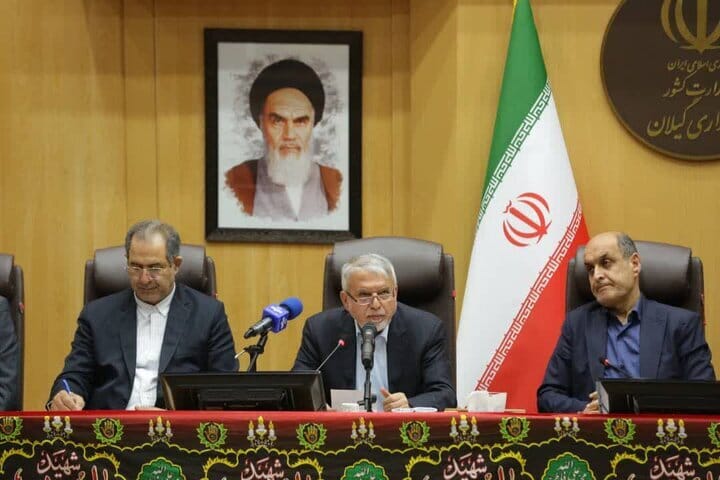
TEHRAN – Iran’s Minister of Cultural Heritage, Tourism and Handicrafts said on Saturday that the northern Gilan province has the capacity to generate revenue comparable to oil if investment in tourism infrastructure is prioritized.
Speaking at the administrative meeting in Rahijan, Minister Seyed Reza Salehi Amiri highlighted Gilan’s unique natural and cultural assets, saying the state could become a major hub for both domestic and international tourism.
“Unlike many states that require large-scale promotions, Gilan itself attracts visitors with its scenic landscapes, historic fabrics and rich culture,” Salehiamiri said. “What is needed is to develop infrastructure and ensure tourist safety.”
The minister added that Iran should focus more on attracting foreign tourists, and that local tourism strategies must follow this approach. He praised the role of Gilan residents and state leadership in managing the influx of visitors during the recent 12-day conflict with Israel’s Zionist regime, saying the state handled the situation without shortages or difficulties.
Governor Hadi Hakshenas, Governor of Gilan, also took on the meeting and said that the recent visit by the Minister of Tourism had brought concrete results, including the establishment of the Anthropological Museum and the official recognition of the Siyakar Museum.
Haqshenas pointed out the cultural and historical heritage of Rahijan and called for the international registration of its groundbreaking site to attract global attention. He cited prominent figures from the city, including Sheikh Zahed Gilani, the leader of Sheikh Safi al-Din Al-Din, and Mohammad Mirza Kashev al-Sartane, known as the “father of Iranian tea.”
The Governor added that tourism alongside agriculture and industry can provide Gilan with sustainable income. He also said international flights to the states have returned to pre-war levels.
In this session, the municipality of Siyahakar city has brought an agreement to transfer ownership of the Kajal era home to the museum to the Cultural Heritage Bureau for restoration and conversion.
Gilan is known for its tourist attractions and warm and kind people. The people of Gilan from various ethnic groups, including Gilak, Talesh and Tat, came together to form a very rich and diverse culture and customs.
The northern region was within the influence of the successive Akemen, Seleucus, Parthian and Sasanian empires that ruled Iran until the 7th century A.D. The subsequent Arab conquest of Iran led to the rise of many local dynasties, and Gilan gained an independent position that lasted until 1567.
On top of that, its sophisticated capital, Rasht, has long been a weekend escape for Tehran residents who sample famous local dishes and want some multifaceted action. It is the largest and wet town in the northern region. The Gilan is divided into coastal plains that include the large Delta of Cefid and adjacent parts of the Alborz Mountains.
morning