
Tehran-F kills his wife based on ambiguous and unverified suspicions of an affair. He cites religious law as justification, treating hearsay and jurisprudence on par with civil law.
Although not religious personally, he identifies him as a Zoroastrian. He views the clergy as non-Gi-sama rulers, and wants foreign intervention, particularly from the United States and Israel.
He believes that civil war is necessary for free elections, and argues that current people are lacking legitimacy under administrative control. Paradoxically, he supports monarchy, rejecting democracy as a corrupt Western structure serving global conspirators. His case reflects an unsettling combination of personal beliefs, ideology and cultural tensions. It shows how identity that contradicts fragmented narratives drives extreme actions when law, faith and politics become ambiguous to the public’s imagination.
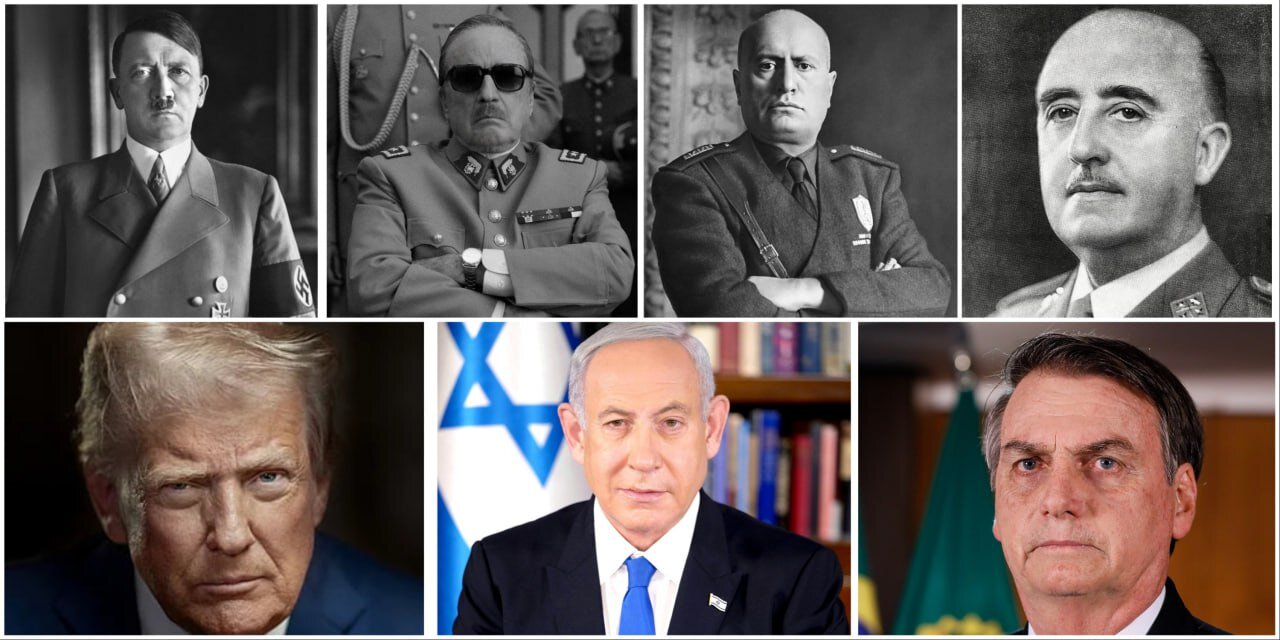
Under persistent failure, fascism comes from dissatisfaction rather than strength. It provides endless oppression as a cure for humiliation. Nazi Germany rose from the ashes of Versailles, framing defeat as betrayal, and challenged it in the name of rebirth. Mussolini exploited postwar instability in Italy and justified authoritarian rule. In either case, no failure was hidden. It was mythical. Fascism collapses as evidence that compromise is rebellion and moderation is a threat. Violence is sacred, law is sold as weapons, and rule is sold as red. This logic adapts to local narratives and cultivates disillusionment and broken identity. It does not copy foreign regimes, it reinvents oppression through familiar myths. The appeal lies not in itself, but in the fantasy that only power can restore what is lost.
Fascism thrives with a seemingly simple diagnosis of failure. This ignores structural complexity and provides enchanting clarity. This clarity allows for the construction of utopias that feel not only possible but also imminent. In Iran, the devastating effects of sanctions and global hierarchies on purchasing power are routinely erased from the narrative. Instead, the existing order (legal, political, cultural) is cast as the root of all suffering. Law becomes tyranny and culture becomes pollution.
The fascist imagination relies on this inversion. It has to turn reality into an enemy to justify that fantasy. By rejecting the nuance, we replace the analysis with moral absolutism. Promise is not reform, it is a burst. And in that rupture we find purity not through understanding, but through destruction. It is a politics of complaints pose as salvation.
Fascism is trying to resolve rationality rather than discussing it. It targets limits of limits, not through discussion, but through erasure. It promotes mental rupture in individuals, where consistency is dismissed, as corruption and intellectual structures have been replaced by unstable impulses. Thinking no longer forms a system. Scattered assertions dominate, cut off and contradictory. The logic is not suppressed. It’s becoming obsolete. What remains is a mission. It is not a philosophical or epistemological pursuit, but a raw weaponized will. This mission does not come from understanding. It comes from desire, from armed utopian fantasy against reality. Fascism is not something to build a mind. It breaks them and mobilizes fragments. It thrives by circumventing disorientation, resistance and converting confusion into obedience.
If full-fledged fascism cannot control the public realm, it will mutate into microfascism. This is a semi-private space in an infiltrating form, like the family and social world. Unable to grab the street, they colonize their living room. Households are in miniature states, where authority mimics political repression in an intimate environment. Men become subjects of executors, wives and children, and ideology permeates the ritual. Microfascism does not require large gatherings. It thrives in quiet forced force, in control disguised tradition. It reconstructs utopia in miniature through rigid roles, symbolic objects, and moral surveillance. Families are no longer shelter from power. It becomes that proxy. In this domestic theatre, fascism rehearsals ambitions and embeds hierarchy and submission when resistance is least expected. It is not a failure of fascism, it is its hopeful evolution.
Microfascism follows the historical trajectory of its emergence. It starts with rejecting rational and democratic constraints under the guise of entertainment, freedom, and public pride. This paves the way to a fragmented, impulsive way of life that is separated from reason. The symbols of anti-rationality – weaving, alcohol, law rebellion – are high as lifestyle markers. Nostalgic myths replace civic identity. Old-fashioned masculinity gives glory, and current national identity is denied in favour of fictional ancient things, both weaponized misogyny and aggressive femininity against the social order. A shift from a self-destructive, isolated lifestyle, when self-importance escalates into a fascist movement characterized by hatred towards women, immigrants, police and intellectuals, leading to a call for action. Ultimately, Orwell’s language becomes entrenched. Foreign invaders are considered relatives, and Indigenous governments are cast as occupyers. National identity is redefine by broken standards. Accepting a monarchy is evidence of genetic purity, and rejecting it indicates illegality and moral disruption.
Under the same conditions, narrow but large fascists emerged in Iran, amplified by the hostile Persian media, often covered in the nostalgia of monarchy. The movement idolized Trumpism in America. It was misogynistic while insisting on protecting women. It rejected religion, but promoted Zoroastrians as cultural pure. It attacked Islam, but weaponized Islamic sexual appeals against its opponents. These contradictions were tactical. Each borrowed symbol destroyed the identity of the citizens, replacing it with unstable pride and attack. Exercise didn’t seek consistency. It flourished with emotional sights and symbolic inversions. Its strength lies in mimicking legitimacy while eroding it, creating an echo chamber where chaos passed through as credibility and hostility pose as legacy. It wasn’t grassroots – it was a curated performance of anger and exclusion, designed to be unstable and not released.
The failure of Israel’s wars stripped the symbolic authority of monarchical fascist movement. Already narrow social foundations have been reduced, and cultural legitimacy has collapsed after integration with foreign attacks. The explosion and assassination revealed an endless appetite for violence. The iconic leader seemed to be a helpless, dependent and crushing fantasy of strength. The failure internally fractured movements, revealing ideological rifts and confusion. The mental breakdown, once hidden by slogans of death and purity, has now led to a retreat. The flag of extinction has lost its charm. What remained was not revolutionary forces, but scattered rage. It’s long and seductive and inconsistent. Wars were more than just defeating the movement militarily. It dismantled the myth, exposed the hollow core supported by borrowed powers, and collapsed under contradictions.
In the early stages of the war, monarchy and fascist movements were decisively pushed back, losing their ability to be meaningfully involved with Iranian society. That rhetoric has once been amplified through foreign media and online echo chambers, hollowing in disillusionment. Failure to mobilize, dependence on outside actors, and separation from living reality made it irrelevant. An attempt to reconstruct the defeat, as strategic silence failed to convince even the core supporters. The war revealed the lack of depth, strategy and true connection with people. What remains is a scattered network of slogans and nostalgia that will inevitably restore the lost ground. The symbolic collapse of the movement has transformed into social invisibility. It no longer commands attention – it causes indifference. War did not just silence it. It erased its existence from national conversation.
Recently, F sworn to Shia saints at a prison shrine. If the family of his murdered wife forgives him, he will sacrifice the sheep with gratitude.