
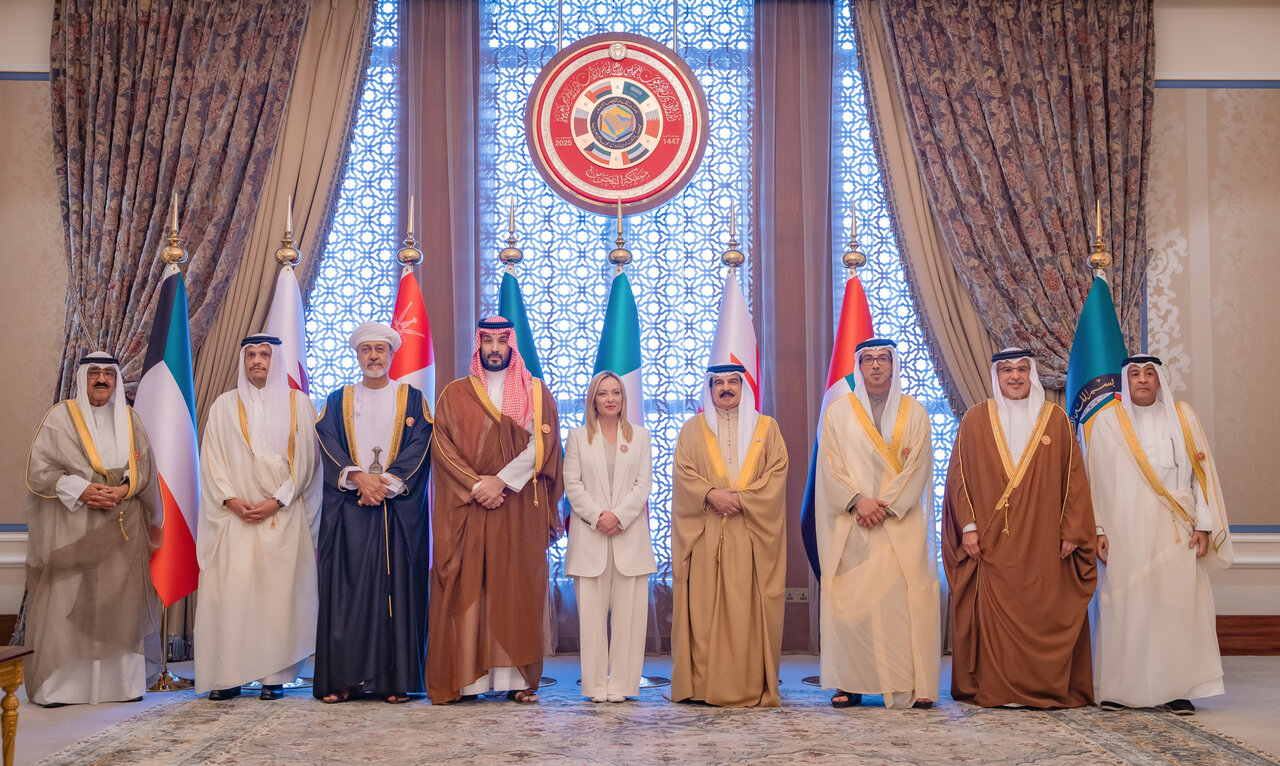
TEHRAN – The islands of Abu Musa, Greater Tunb and Lesser Tunb in the Persian Gulf have long stood as enduring symbols of Iranian sovereignty. The renewed mention of the islands in the final communiqué of the Persian Gulf Arab Summit in Bahrain was not just a diplomatic formality, but part of a broader geopolitical maneuver. The statement condemned Iran’s “continued occupation” of the islands, but the Iranian government quickly rejected it.
Iranian Foreign Ministry Spokesperson Esmail Baqai dismissed the Persian Gulf Cooperation Council (P) GCC communiqué as “groundless and invalid.” Ali Akbar Velayati, a senior advisor to the leader of the Islamic Revolution, was even more candid in criticizing the UAE’s “adventurous policies”, saying, “The three islands will continue to be an inseparable part of Iran.” Velayati added: “For years, the United Arab Emirates has hidden the unfortunate truth of its foreign policy from public opinion. Now that the true nature of its adventurous policies has been exposed, silence in the face of such harmful actions is no longer an option.”
Historical records support Iran’s position. These islands came under British control in 1921, but sovereignty was never ceded. On November 30, 1971, just two days before the United Arab Emirates was officially declared a federation, Iran regained sovereignty over the islands. Since then, Iran’s position has been consistent: the islands are essential to its territorial integrity, and claims to the contrary are a distortion of history.
irony of bahrain
Hossein Shariatmadari, editor-in-chief of the influential Kayhan newspaper, highlighted Bahrain’s support for the UAE’s claims. He reminded readers that Bahrain was once part of Iran, separated by an “illegal arrangement” between Mohammad Reza Pahlavi (Shah of Iran, who abdicated in 1979) and Western countries.
Shariatmadari said, “Among the member states of the Persian Gulf Cooperation Council, Bahrain’s cooperation with other countries has a unique aspect because Bahrain was once part of Iranian territory. Today, the main demand of the Bahraini people is that the province, separated from Iran, should be returned to its original homeland, Islamic Iran.” This inalienable right of the people of Iran and its divided states must not and cannot be ignored. ”
He added that the promised referendum on Bahrain’s future was never held among the people, but was conducted through tribal leaders and ultimately decided by Britain and the United States. Connecting this history to today’s politics, Shariatmadari added: “These Arab leaders have never taken a position that contradicts the officially declared demands of the United States and Israel, and therefore the recent statement of the Persian Gulf Cooperation Council, even more brazen than previous statements, cannot be considered unrelated to the defeat of the United States and Israel in the recent 12-day war (with Iran).”
The June War and its lessons
Israel’s unprovoked war against Iran in June left more than 1,000 Iranians dead, most of them civilians. The US then joined Israel in targeting three Iranian nuclear facilities. However, despite the scale of the operation, Israel and the United States failed to achieve their objectives of eliminating Iran’s nuclear program, dismantling its military, sowing chaos, and forcing regime change.
Former Israeli Air Force Commander Major General (Re) Eitan Ben Eliyahu recently acknowledged as much in a radio interview, saying, “Perhaps the weakness of our strike was that we did not eliminate the nuclear program, but delayed it for many years.” His words underscore the reality that this operation was not a strategic victory for Israel.
Ben Eliyahu also warned that Iran is studying the conflict closely and is already adapting. He noted that the Iranian government has increased the number and accuracy of its missiles, relocated its launch array further east and south, spread its assets more widely, and improved its surprise attack capabilities. In other words, the war taught Iran valuable lessons and strengthened its defense and resilience.
For Israel, the choices are stark. Ben Eliyahu says: “Either decide on an all-out war with Iran, including a ground invasion and prolonged internal tensions and escalation on multiple fronts, or choose economic pressure alongside attempts to return to negotiations.” His statement reflects frustration that the June war failed to deliver a decisive blow, leaving Israel with no easy path forward following Iran’s retaliatory attacks that dealt a severe blow to Israel.
For Iran, the outcome was clear. Iran became stronger as its people rallied behind the government. What was supposed to be a devastating war proved the limits of Iran’s patience and Israel’s.
Israel’s new tactics
After the failure of the June war, Israel changed tactics. It is now trying to use diplomacy and regional conflicts to put pressure on Iran. The (P)GCC Communiqué is part of this plan. By encouraging the UAE to repeat its claims to the islands, Israel hopes to create a rift between Iran and its neighbors and advance Tel Aviv’s policies.
In this context, analyst Mohammad Bayat, an expert in international relations, offers a broader perspective. In an interview with the Tehran Times, he claimed that the US is seeking to secure full control of the Strait of Hormuz, one of the world’s most important energy corridors. “Although it already has influence on the southern coast through Bahrain, the north has other challenges. The strategic islands there remain extremely important, and Washington cannot fully control this strategic waterway without controlling both coasts,” Bayat said.
He added that Israel is pursuing what he described as a “thousand-reduction strategy.” Bayat explained that through a combination of strategic and non-strategic attacks, Israel aims to push Iran to the point where the regime could collapse.
“This describes the launch of a wide-ranging hybrid war that simultaneously targets multiple areas: infrastructure, perception, military, intelligence, and economy,” Bayat said. “For us, this is not new. This is a familiar reality that we have faced many times.”