
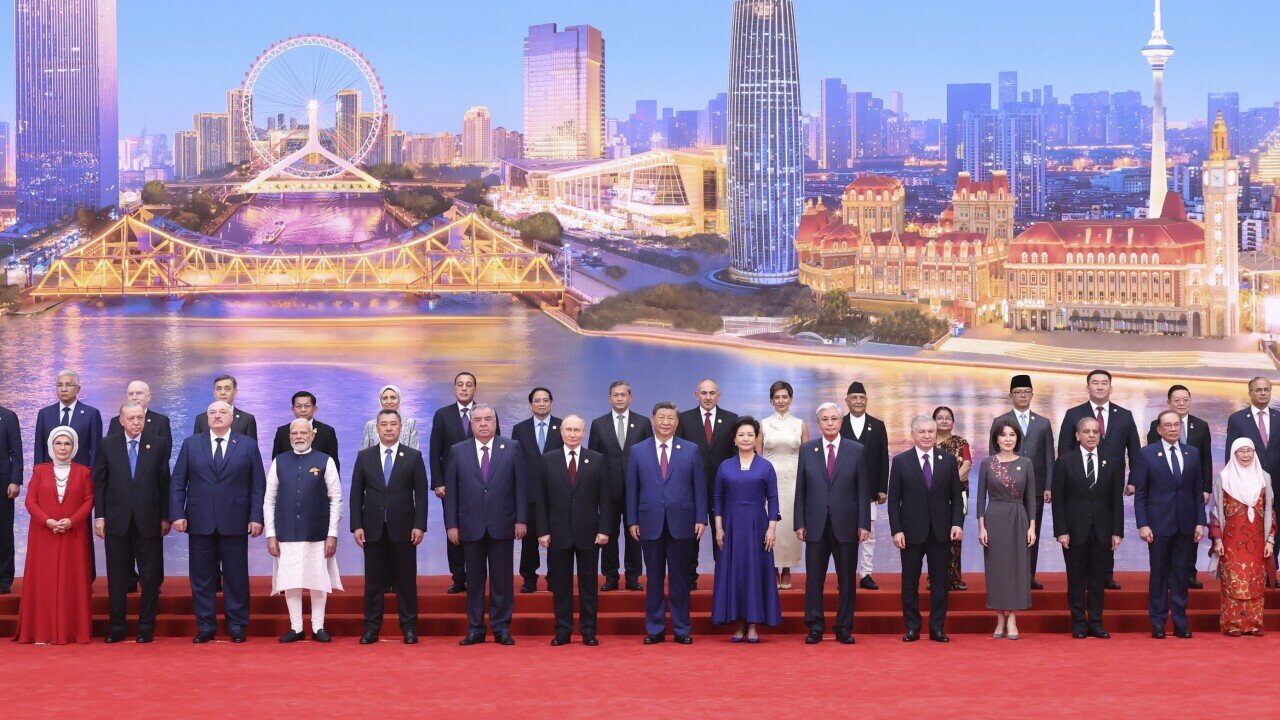
Tehran – China’s Tianjin City hosted the latest summit of the Shanghai Cooperation Organization (SCO), attracting global attention, marking a pivotal moment for Eurasian alliances and international diplomacy.
The two-day summit, held on Sunday and Monday, was called the “largest SCO summit in history,” and attracted participation from leaders representing over 20 countries and 10 international organizations. This historic gathering highlighted the growing impact on SCO’s global governance, economic cooperation and regional security.
xi Jinping Champion “Shanghai Spirit”
Attending the 25th meeting of the SCO Council of Chiefs, Chinese President Xi Jinping emphasized the importance of the “Shanghai Spirit” as a guide to the increasingly complex and unpredictable world. Calls on Member States to deepen their cooperation, respect differences, maintain strategic communication and strengthen solidarity, XI highlighted the organization’s growing international height.
He praised the SCO’s “groundbreaking and historic achievements,” saying its “international influence and appeal are increasing every day.” In a pointed reference to rising geopolitical tensions, the Chinese president urged regional leaders to reject the “Cold War Thoughts” and reaffirmed his commitment to multilateralism, especially from the United States, in the face of unilateral pressure.
“We need to advocate for an equal, orderly, multipolar world and universally beneficial and inclusive economic globalization, making global governance systems more fair and equitable,” Xi highlighted the potential of SCOs to promote a more balanced international order.
Global Governance Initiative has been introduced

On Monday, President XI proposed the Global Governance Initiative (GGI), a visionary framework aimed at a “Shanghai Cooperation Agency Plus” meeting in Tianjin to promote a more equitable and inclusive international system. “I look forward to working with all countries for a more just and equitable global governance system and moving forward towards communities that share the future of humanity,” he said.
GGI marks the fourth major global initiative proposed by XI in recent years, following the Global Development Initiative, Global Security Initiative, and Global Civilization Initiative.
Key contracts and strategic plans
Additionally, Monday’s minutes saw the signing and adoption of several important documents, including the Tianjin Declaration and Development Strategy, which outlines the blueprints for the SCO for the next decade. The summit has brought together some of the most prominent leaders, including Russian President Vladimir Putin, Indian Prime Minister Narendra Modi and Iranian President Masuud Pezeshkian.
Founded in Shanghai in June 2001, SCO began with six founding members and then expanded to families in 26 countries, consisting of 10 full members, two observers and 14 dialogue partners, spanning Asia, Europe and Africa. Today, the organization accounts for more than 40% of the world’s population and almost a quarter of the world economy.
China’s leadership role and preparation
After envisaging the SCO’s revolving presidency in July 2024, China launched an ambitious program aimed at deepening regional cooperation, promoting multilateralism, and strengthening the role of the Eurasian Alliance in global governance. In preparation for the Tianjin summit, China has hosted over 100 SCO-related events covering politics, security, economics, energy, education and innovation. These initiatives not only highlighted China’s organizational capabilities, but also demonstrated the commitment to SCO’s long-term development.
From late February to mid-July, I spent nearly five months in China, where I joined the Chinese media exchange program as an Iranian journalist. It gave me the opportunity to witness some of these forums firsthand. ” The SCO’s Goodwill, Friendship and Cooperation Committee (GNFCC), these well-known events attracted hundreds of representatives from member states, observer countries and dialogue partners.
The senior officials give speeches highlighting inclusion, cooperation and sustainable development, reflecting the president’s vision to build a “community with a shared future for humanity.” These events demonstrated that the impact of the SCOs would proactively promote social, cultural and economic integration between member states beyond formal diplomatic channels.
Technology and sustainability in action
My first-time experience in China also revealed the practical manifestation of Shanghai’s spirit in the economic and technical fields. A visit to the Lenovo factory in Tianjin provided an impressive example of innovation in line with sustainability. Lenovo has implemented an ambitious zero-carbon strategy by integrating energy efficiency, renewable energy, and advanced technologies to reduce environmental impacts without compromising productivity.
The factory design includes solar glass panels that generate electricity while acting as structural elements, demonstrating how sustainable practices can be seamlessly integrated into industrial operations. Lenovo’s approach shows that environmentally friendly production is not merely ambitious, it can drive innovation, efficiency and growth. Initiatives like these demonstrate China’s broader commitment to transforming the green industry, aligning economic development with global sustainability goals.
Diplomacy rooted in the spirit of Shanghai
China’s commitment to the Shanghai spirit is deeply rooted in its diplomatic philosophy, which emphasizes fair participation, collective dialogue and peaceful resolution of conflict. Through multilateral organizations such as the United Nations and SCO, China advocates for a more balanced and comprehensive international system where a single country does not control the decision-making process. This approach highlights China’s vision of a world order built on cooperation, mutual respect and shared responsibility.
The 2025 SCO Summit at Tianjin demonstrated the practical impact of this philosophy. The presence of global leaders and high-level officials indicates an organization’s growing relevance and influence in international affairs. By promoting solidarity among member states and strengthening the principles of multilateralism, SCO is increasingly emerging as a platform to raise the voice of the Global South while countering a one-sided approach in global governance.
How to look at the future: Kyrgyzstan and the future of SCO

Just as the summit was over, attention was focused on the future of SCOs based on Kyrgyzstan’s future revolving presidency between 2025 and 2026. Member States are expected to continue the progress achieved in Tianjin and to promote cooperation in areas such as security, trade, technological innovation and sustainable development. The organization’s expansion and evolving agenda demonstrates that SCOs are set to play an even more prominent role in shaping the trajectory of regional and global issues.
From the Tianjin Declaration to the Global Governance Initiative, the 2025 SCO Summit highlighted the organization’s commitment to promoting multilateralism, fostering equitable development, and creating a shared vision for the future of humanity. SCO continues to offer alternative models of global engagement through dialogue, innovation and collaboration. This prioritizes control, sustainability for short-term benefits, and collective progress towards unilateral agendas.
In the end, Tianjin was more than just a venue for a diplomatic conference. This is evidence of the maturation of SCO as a global institution and China’s role in shaping a more just, inclusive and interrelated world. The summit reinforced the idea that cooperation, innovation and shared objectives can actually change international relations and provide a blueprint for a more harmonious and prosperous future for all.