
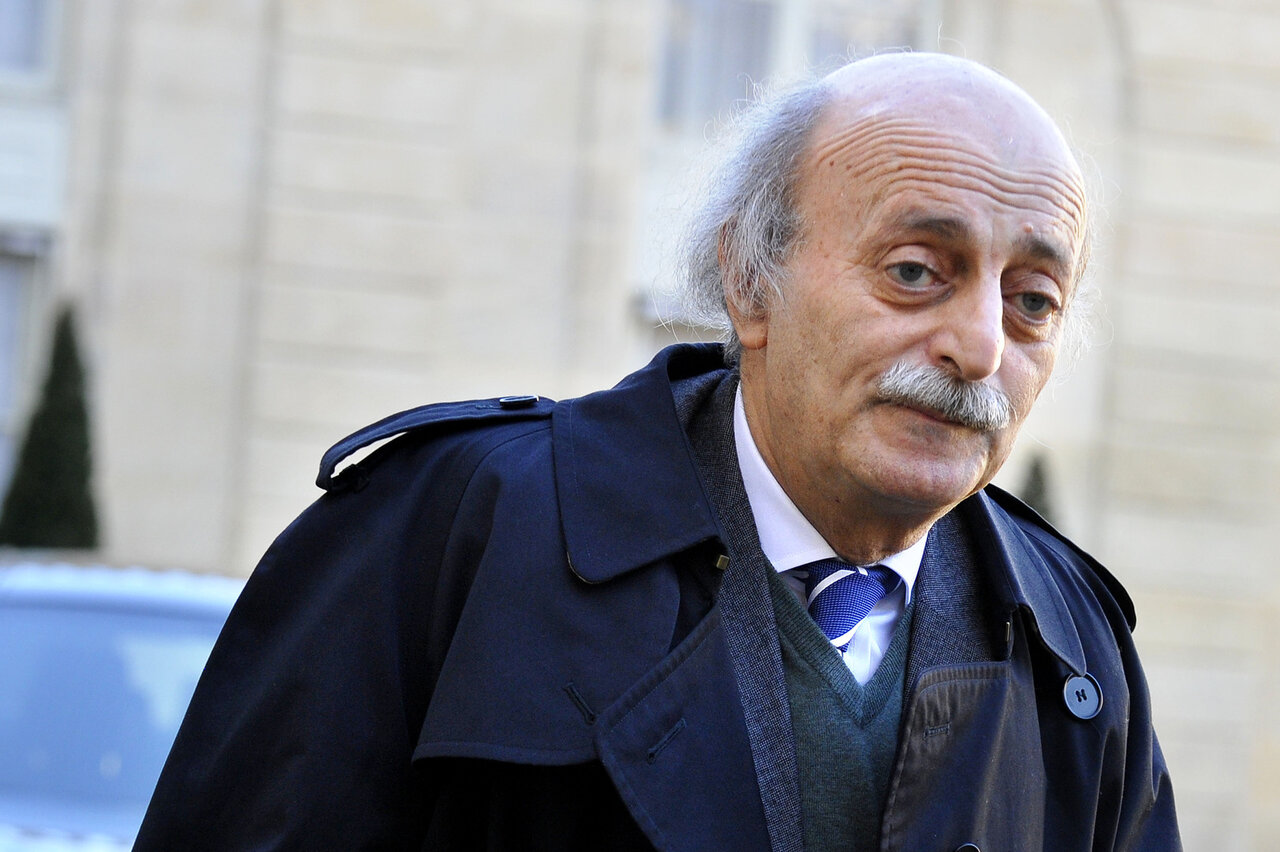
South Lebanon – A statement by Walidjamblat, the Druze leader on the non-Lebanese nature of Shebaa Farm, sparked widespread condemnation in Lebanon.
Janblat, a former leader of the progressive socialist party, said “Shebaa Farm is a Syrian land occupied by Israel.”
He called for Hezbollah to disarm, saying “Israel and the West have won and a new page has been opened in the Middle East,” and he stressed that weapons should be emphasized that they are “in the hands of the Lebanese state.”
Israeli occupation forces continue their policy of carpet bombing villages bordering occupied by Lebanese government and the so-called international community by taking advantage of the silence of the Lebanese government and so-called international community, but YNET has revealed that the systemic destruction “guarantees the establishment of a settlement for Mount Doug (Hebrew name of Shebaa Farm).”
According to the Hebrew website, this colonial settlement is called the “Iron Sword.”
Ynet emphasized, “If the Army and government want to return Northern settlers, ensure security recovery and eliminate threats, they should open up DOV mountains so they can explore the amazing natural paths.”
On August 31, 1920, France’s High Commissioner, Henri Gouroud issued Order 318 establishing the Lebanese province, including the entire Hasbaya district (the Sivaa farm was historically part of the district).
When the French painted the map, they adopted military demarcation law, following a series of mountain lines (pitches), peaking as borders rather than district borders.
Therefore, the Lebanese town of Shebaa was established within the borders of Greater Lebanon, but its own indigenous farms were located within the borders of Syria.
The residents then knew what had happened. Several attempts have been made by the Durafor Commission (managed to amend the border). We generated several modified maps that kept the area at Shivaa Farm shrinking until the defeat of the French occupation.
In 1946, Lebanon and Syria reached real estate solutions establishing the borders of the Sibaa Farm. Lebanon agreed to a minimum right, but the borders were not revised through the United Nations.
This was followed in 1967 when Israel occupied the Syrian Golan Heights and the Shebaa Farm, and the farm residents moved to the town of Shebaa.
When Israel was defeated in 2000, it did not withdraw from Shebaa Farm. Instead, it reinforced its position behind the blue line. The Blue Line draft considered the farm to be Syrians in terrible favor towards Israel. This was despite Lebanon submitting all necessary documents to the United Nations and certifying its ownership of the Shebaa Farm.
Decades later, the Shebaa people remained determined to restore the farm, and now a unified national issue that is not open to debate or compromise.
Meanwhile, the Sheba Municipality rejected Janblat’s statement, confirming the existence of “official documents verified by the Lebanese state and the United Nations confirming this historical and legal fact.”
The municipality stated, “The Shebaa Farm occupying the territory of Lebanon, sealed with honorable people of Arkov who have never hesitated to protect his son’s blood and bare breasts.
The local government called on officials to “fulfil the utmost responsibility for their statements and avoid positions that could be exploited to complicate the current situation or mislead public opinion and serve the enemy.”
Amal Movement MP Qassem Hashem asked, stunned.
Hashem warned that “the silence regarding what is planned and the abandonment of the Lebanese identity at Shebaa Farm will be considered a betrayal of national security. This is the basis for dealing with and taking responsibility for accountability.”
The association of local residents expressed surprise that, despite their specific knowledge of Lebanese identity, some political forces are willing to give up the sovereignty of the state, as evidenced by the ownership registered in the Lebanese land registration and official communications between Lebanon and Syria dating back to the early 1940s.
They noted that a campaign of coordinated statements raised doubts and warned “an attempt to abandon our rights and land, as well as the land on Sheba Farm and Kfar Shuba Hill.”
Like Shebaa’s farms, Israel occupying seven Lebanese villages abandoned by French missions: Ibir al-Qamh, Hunin, Nabi Yusha, Quds, Al-Malikiyah, Salha, and Tayrbikha (their area is approximately 74 km, and the Sheba Farms area is 42 km²).
During recent attacks, these villages returned to the spotlight with false Hebrew names, joining in historical injustice that has been officially and both in the media.