
TEHRAN – Iranian military officials have warned that the enemy’s goal is to exclude Iran from trade corridors.
“Today, the enemy is using all its efforts and strategies to restrict the corridor, monopolize its benefits and somehow sideline us,” Iranian Navy Commander Rear Admiral Shahram Irani said at a ceremony to review the draft document on national maritime development.
“I request that this document emphasize the issue of the corridor and the connection of this country to the sea,” the commander-in-chief said.
“We always look from coast to coast, but to better understand this rather unique opportunity and the circumstances surrounding it, we need to look from coast to coast,” he said.
“In our documents, we have always focused on the north-south corridor, but not the east-west corridor,” the admiral explained. He called for the document to be operationalized and implemented.
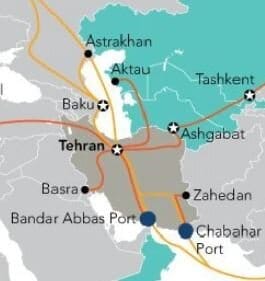
Iran’s special geographical location lies along the north-south and east-west international corridors connecting West Asia with East Asia and Europe, making it a special transit point for the country.
Iran’s western rail network connects Türkiye and Europe. In the northwest, to Azerbaijan. To the north are the Caspian Sea, Turkmenistan, Kazakhstan, Azerbaijan, and Russia. In the northeast, it extends to Turkmenistan, Central Asia, Russia, and China. Southeast to Pakistan, south to the Persian Gulf and the world’s open seas.
Iran’s potential revenue from rail transport is estimated at approximately $1.8 billion annually from trade exchanges between East Asian countries and Europe through the East-West Corridor, and approximately $90 million through the North-South Corridor.
This shows how important the East-West Corridor is to Iran. Currently, Sarafs-Bandar Abbas is Iran’s most active railway line, providing 80% of the country’s transportation revenue.
Emerging economies such as China and India, the key actors seeking to complete the region’s corridors, are seeking to open multiple routes for trade.
While no trade route in the region can replace the trade route through Iran, a parallel route could reduce the country’s shipping advantages.
Therefore, any delay in Iran securing its share of regional traffic would benefit competitors and seriously harm Iran’s national interests.
Iran’s geographical location on both the East-West Corridor and the North-South Corridor is undoubtedly unique, especially considering the economic, security and time-saving advantages the country has, which also allows for access through the combined corridor.
However, the preference for political observation by some political parties is causing problems, and strong political negotiations and expanded political and economic ties are required to place Iran at the center of regional connectivity plans.
Any failure could deprive Iran of many benefits in this regard, but excluding the Islamic Republic from the regional connectivity map would impose significant costs on other countries.
Iran also said it would block the American corridor in the Caucasus.
Under an agreement signed between Azerbaijan and Armenia in Washington on Friday, Armenia may give the United States exclusive rights to develop a corridor connecting Azerbaijan and Nakhchivan in the country’s southern Syunik province, which borders Iran.
Iran has long opposed the idea, saying it would change the geopolitical order in the South Caucasus and limit its ability to exploit the region’s transportation networks.