
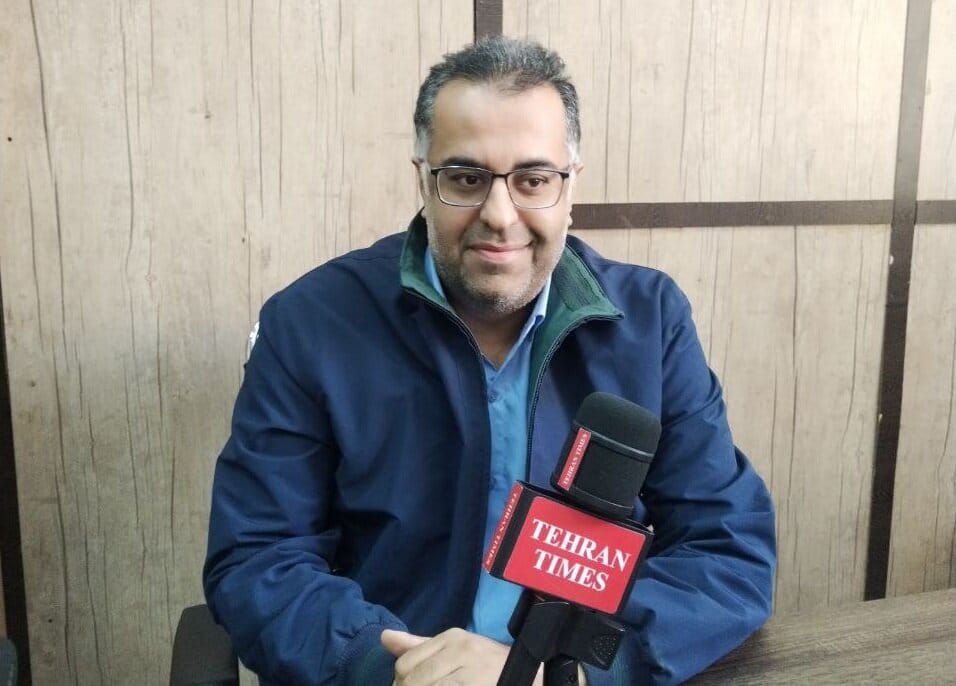
Mr. Arashq Masaeli, a faculty member at the Institute of Cultural Heritage, Tourism and Handicrafts Ministry, elaborated on the basic conditions needed to expand Iran’s tourism sector. He outlines a seven-part framework to explore the impact of recent regional conflicts and assess the potential for health care and regional tourism.
In an interview with Tehran Times, the expert said that Iran’s tourism assets fall into three categories. One is historical and cultural sites such as Takht-e-Jamshid, Pasargadae, and historic mosques. Natural attractions such as mountains and coastlines. It also includes man-made attractions such as water parks and shopping centers.
“We intend to turn these tourism resources and attractions into products. That means creating jobs for local people, promoting local communities, generating foreign exchange earnings and promoting economic growth. To turn these resources into products, several preconditions are needed.”
He proposed seven general points: The first group promotes resources and attractions. It means that it has the charm of Pasargadae. Providing this level of access to places would stimulate tourism to Pasargadae and Persepolis. The second group is the promotion of facilities and services related to the tourism industry. This means it must be available to related industries such as hotels, tour leaders, and agencies. Reception venues such as restaurants, coffee shops, and customs offices should also be available.
Customs must provide what the tourism industry needs. The third group is appropriate infrastructure such as roads and railways. It must be available between origin and destination so that tourists can travel from Tehran to Shiraz. Transportation such as a car or wagon must also be available. These are hardware infrastructures. The fourth group is software infrastructure, which includes human resources and specialized personnel such as tour leaders and hotel managers.
The fifth group is promoting investment. Investment should be made in the tourism sector. The sixth group is marketing promotion. This means we need to do something about marketing, branding, and creating a vision. Group 7 is a jack-of-all-trades, responsible for management, oversight, policy making, and promotion of the private sector. All of the above groups are seven wheels, and if they play their roles well, they will bring great results to the creation of tourism resources.
He also touched on the impact of the Israeli regime’s 12-day invasion on Iran’s tourism sector. He also highlighted the positive effects of promoting medical tourism, rural tourism, ecotourism, and organizing tourism events and roadshows. Here is an excerpt:
What plans would you recommend to reduce the negative impact of the 12-day Israeli war on Iran’s tourism industry?
Examines several aspects of the 12-day war between Israel and Iran. The number of foreign tourists is not so large. Therefore, during the Israeli war it did not make much of an impression.
Domestic tourism was made compulsory during the 12-day war. People migrated from the worst-hit cities like Tehran to cities in Mazandaran province. It had a negative impact on the host community. Local communities faced food, water and fuel shortages.
One of the problems with the 12-day war is that it created Iranphobia. Iran was introduced as a red flag country.
Safety and security are the major foundations of the tourism industry. First of all, tourists need safety. There may be a sense of security, but there is no sense of security. Tourists from Europe feel safe, but they don’t feel safe.
What is the place of medical tourism in the development of the tourism industry and what are the country’s most important competencies in this field?
Medical tourism includes three types: health tourism (preventive tourism), and therapeutic tourism (when a person has a physical or mental problem; for example, they want to solve a dental problem, get orthodontic treatment, or want to get an implant). It also includes lifestyle enhancements such as mud therapy and hydrotherapy.
The advantage of our medical tourism is that the cost of treatment in Iran is low and the medical staff are professional.
There are some drawbacks. Some hospitals have an International Patient Department (IPD). Due to the rise in exchange rates, medical equipment imported into the country is decreasing.
What capabilities are available to Iran in the tourism markets of neighboring countries, Russia and China?
Tourists primarily come from Shiite countries such as Iraq, Lebanon, Syria, Oman, and Yemen. Azerbaijani tourists used to travel to Iran, but problems with the consulate have reduced their chances of visiting.
Medical tourism generates three times more foreign exchange revenue than traditional tourism. Health tourists stay longer, receive more services, and bring companions, such as family members.
Russian tourists are culturally incompatible with the culture of our society. They prefer maritime tourism and have special eating and drinking habits that are not possible in Iran.
Chinese tourists also expect better services in line with their country’s development.
Red flags have been issued advising US and European nationals not to visit Iran.
Some of the tourists come from neighboring countries such as Iraq, Afghanistan, Pakistan, Saudi Arabia, and Yemen.
What is the role of road, air and rail transport in promoting tourism? How do you assess the current state of these infrastructures?
Unfortunately, 1,000 intercity buses have been retired and only 6,000 remain for road transport.
Lack of rail infrastructure, freight cars, locomotives, and lack of quality and quantity of modern aircraft are putting pressure on passenger vehicles. All these create obstacles to domestic and international tourism.
How do you assess the importance of programs such as exhibitions, specialized seminars and roadshows in showcasing Iran’s capabilities?
All of this is part of marketing. Its promotion or policy decisions must be made by the government. Marketing is possible by holding a tourism roadshow. Marketing must be done internationally.
Arab countries in the Persian Gulf promote brands such as Visit Saudi Arabia at international tourism exhibitions such as FITUR and stadiums. To draw a conclusion, you need to impress tourists from every angle. Attend stadiums and cultural festivals around the world, including Cannes.
What are the main factors behind the promotion of ecotourism in Iran? What challenges are there in the process?
Ecotourism allows travelers to enjoy excursions to the sea, mountains, rivers and deserts. Because ecotourism equipment and tools are expensive, it is not pursued as much as cultural tourism. Safari and rafting items are imported and therefore more expensive. Our society is not ready for nature tourism. Off-road vehicles (ORVs) drive on different roads and rough terrain, disrupting ecotourism in the area. This requires the creation of off-road tourism routes by government departments.
What infrastructure is needed for rural tourism development and to what extent is this infrastructure provided to potential villages?
Fortunately, with the introduction of tourist villages at the international level, 8 to 10 villages are nominated every year in the list of the best tourist villages in the world.
Last year, Esfahak in South Khorasan Province was recognized as the Best Tourism Village by the United Nations Tourism Organization. This year, the villages of Shafiabad, Khanderous and Soheili were recognized by the United Nations Tourism Organization as one of the Best Tourism Villages.
In tourism, there is a concept of crowding or carrying capacity. When the number of tourists exceeds the carrying capacity of the village, problems arise for both the tourists and the host community. The host community is facing a problem. Careless tourists cut down trees and set fires.
A tourist village must have tourist attractions, customs and proper infrastructure. It must be unique in terms of anthropology, souvenirs and cuisine. Examples include the villages of Abuyaneh, Masreh, Kanderous, Palangan, and Shafiabad.
KD