
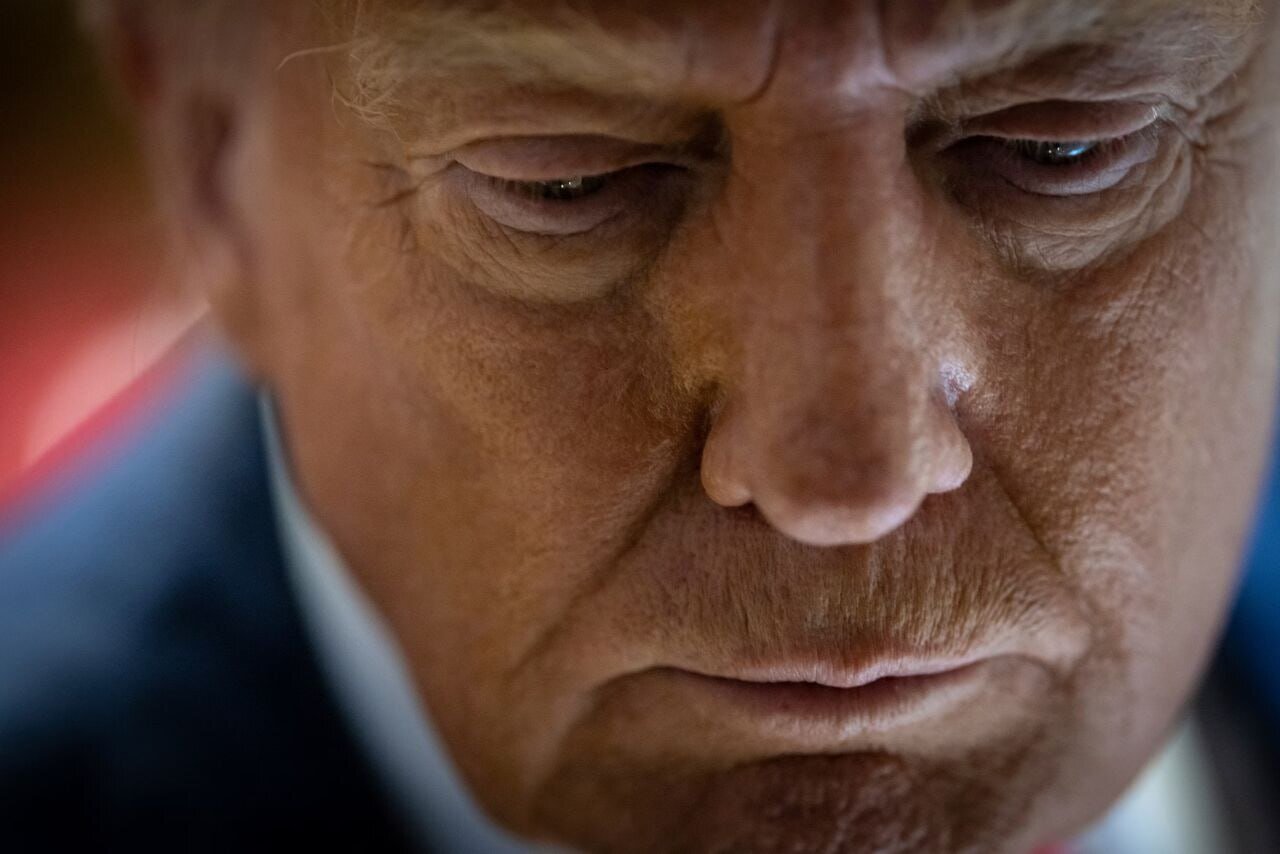
In politics, the tendency to create a favorable narrative about oneself is an integral part of the actions of political leaders. Controversial US President Donald Trump is entering his second term and has once again captured media attention with his grand claims. In recent speeches and interviews, he has repeatedly claimed to have ended eight major global wars and conflicts, relying on diplomatic and economic measures to save millions of lives.
If true, these claims deserve scrutiny, praise, and even consideration for the Nobel Peace Prize. But does the reality on the ground support Trump’s claims? This article examines Trump’s claims on a case-by-case basis, comparing them to objective data and independent reports.
Trump and the structure of his argument
Trump has long sought to solidify his image as a “peace president.” At the United Nations General Assembly in September 2025, he claimed to have ended seven endless wars, then raised that number to eight, citing the Gaza ceasefire agreement. He reiterated this claim in a meeting with members of the Israeli parliament. He spoke proudly of his tariff pressure approach and firm mediation, even criticizing the UN’s inaction.
However, fact-checking by reliable sources such as The Associated Press, CNN, and The Economist shows that in many cases, President Trump’s claims are exaggerated or lack a factual basis, and in some cases, no war could be considered “over.”
Individual investigation of eight claims made by President Trump
1. Thailand and Cambodia
A brief border clash between Thailand and Cambodia that resulted in landmine explosions and dozens of deaths in July 2025 ended after President Trump threatened to halt trade negotiations with the two countries, leading to an unconditional cease-fire agreement. Although the measures appeared to be effective, border disputes had been going on for years, and ceasefire violations soon began. Experts believe President Trump’s role in temporarily halting tensions is effective but limited. Therefore, claims to “end wars” are far from reality.
2. Kosovo and Serbia
President Trump claimed to have resolved the conflict between Kosovo and Serbia. However, political observers point out that there would be no war between the two countries in 2025. His claims primarily refer back to the 2020 economic deal of his first term, which was neither implemented nor led to lasting peace. In fact, Trump’s role in “ending hypothetical wars” is a clear example of his propaganda-driven politics.
3. Rwanda and the Democratic Republic of the Congo
The conflict in eastern Congo, fueled by Rwandan support for rebels, has plagued the region for decades. In June 2025, President Trump invited diplomats from both countries to the White House, and the so-called Washington Peace Agreement was signed. However, this agreement was concluded without the direct involvement of representatives of the leading rebel forces and did not result in any changes on the battlefield. Reports indicate continued violence and widespread human rights violations. Therefore, claims to end the war have no objective basis and are mostly symbolic.
4. India and Pakistan
In the wake of the Kashmir conflict in May 2025, which began with the killing of an Indian tourist, President Trump claimed that the two sides were forced into a ceasefire by threatening high tariffs. Pakistan accepted this theory, but India unequivocally denied foreign intervention and said the ceasefire was the result of direct military negotiations. With no formal agreement in place and border tensions continuing, President Trump’s claims once again look like propaganda.
5. The 12-day war that Israel imposed on Iran
The 12-day conflict in June 2025 began with Israel’s bombing of Iranian nuclear facilities, and the United States directly entered the conflict. President Trump proudly claimed that he forced a ceasefire on Iran by sending American bombers. But an important question arises. How can we end a war we are a part of? Despite a temporary suspension of operations, no oversight agreements, no crisis resolution mechanisms, and no sustained detente were achieved. At best, President Trump ended the war he helped escalate.
6. Egypt and Ethiopia
Although the dispute between Egypt and Ethiopia over the Grand Renaissance Dam is a serious diplomatic tension, there has been no actual war between the two countries. Although President Trump claimed to have prevented a water war, evidence shows there is no serious threat of military conflict and negotiations have long been stalled. Therefore, claims to resolve military conflicts are not only exaggerated, but also fundamentally wrong.
7. Armenia and Azerbaijan
After decades of conflict over Nagorno-Karabakh, President Trump hosted the Prime Minister of Armenia and the President of Azerbaijan in August 2025, and they agreed to normalize relations. Although this is an important step, fundamental issues such as borders, minority rights, and security remain unresolved. Analysts believe the agreement is “the beginning of a peace process” rather than the end of the war.
8. Israel and Hamas
The Gaza crisis entered a bloody phase in October 2023. In October 2025, President Trump proposed a 20-point plan to establish a ceasefire in Gaza, including a prisoner exchange, the provision of humanitarian aid, and a partial Israeli withdrawal. While this is seen as a positive step, lasting peace cannot be achieved without addressing important issues. Additionally, sporadic attacks and Israeli threats continued even after the ceasefire, and in this case the United States also joined the war.
conclusion
Donald Trump’s claim to have ended eight wars is more a media and propaganda ploy than historical fact when compared to reality on the ground and independent reporting. In some cases there was no war (such as Egypt vs. Ethiopia and Serbia vs. Kosovo), and in other cases fragile ceasefires were established without a final agreement or fundamental resolution. President Trump has tried to paint a successful and peace-oriented image by exaggerating his role in foreign policy and peace negotiations, but these claims are largely propaganda. Therefore, claims to end eight wars in eight months are not only exaggerated but also misleading.
MNA/6625417