
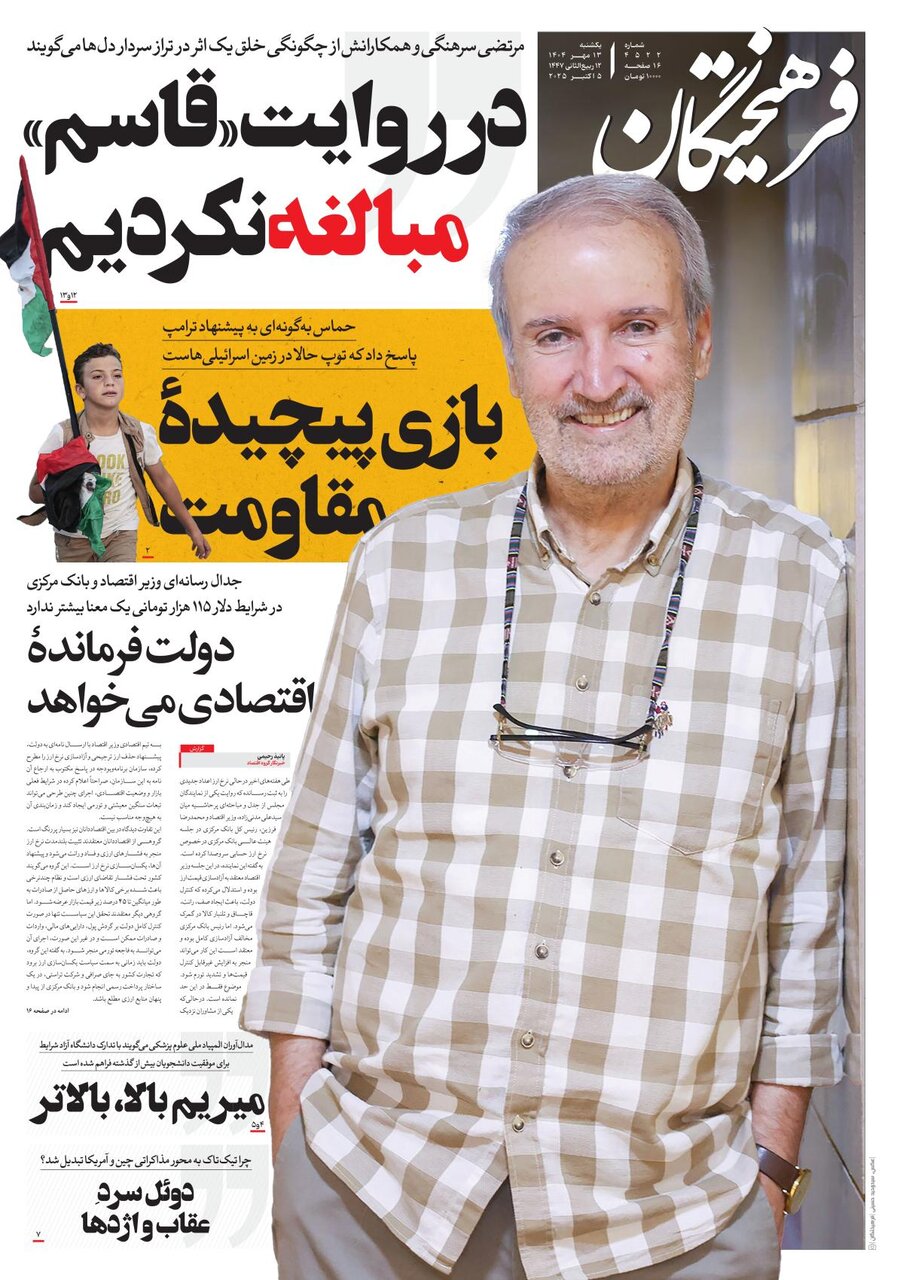
TEHRAN – In an interview with Turkish affairs expert Ali Haydari, Fahhictegan discussed Ankara’s compliance with sanctions against Iran.
He said: Iran did not expect Turkey to announce compliance with UN sanctions so quickly. While Türkiye’s actions are symbolic political actions, symbolic actions also convey their own message. The reason it is symbolic is that while Turkey has implemented sanctions according to the Security Council’s list, most of the people on the list do not have Turkey’s presence or activity. There have been many changes, especially as China and Russia have announced they will not support illegal and unfair sanctions. In other words, in the strategic field, Iran pursues relations between China and Russia, and relations with countries like Turkey are in traditional fields.
Hamshahri: Israel’s reputation is undermined worldwide
Hamshari argued that Israel is facing because Israel writes criminal acts. Iran has always tried to defend its interests, but has never seen war as its main approach. However, life in the Zionist regime is lying in war and bloodshed. The unique puppet nation faces a country with a large history of civilization, and designs new models that many governments around the world may follow. I oppose this model and discourse because the Zionist regime lacks a clear approach. Today, governments, institutions and public opinion towards global universities in Europe and America are denounced Israel. What is clear to everyone today is that the Islamic revolution has become stronger in its discourse and its core: resistance, but it was not the source of a hot war.
Ettelaat: Tension after snapback
Etterato’s analysis warned that the Persian Gulf Arab countries, which host US airspace, fear that the activation of snapback sanctions against Iran could have dangerous consequences and escalate into wars involving Iran, Israel, and the United States. It writes: Arab countries in the Persian Gulf are more vulnerable to escalation of tensions than any other party. The presence of dozens of US military bases in these countries exposes them to face the risk of a possible response from Iran. Within Iran, economic pressures caused by sanctions could also provide the basis for social protest. Some analysts argue that the true purpose of the US maximum pressure policy is to work with Israel to incite a new proxy war with Iran. However, experience over the past few years shows that Tehran is willing to surrender to Washington’s tough situation, so Iran chose the path of resistance rather than succumbing to external pressure. Ultimately, what we observe in the area is a “diplomatic impasse.” Israel has always protected the shadow of war so that it can justify new attacks. Arab countries are concerned that new conflicts will shatter their fragile security, and Iran continues to emphasize resistance and the maintenance of the red line amidst the pressure of sanctions and the threat of war.
Iran: Iran-Russia Strategic Partnership Outlook
In the article, the Iranian newspaper discussed the strategic treaty between Tehran and Moscow, which came into effect on October 2. The paper states: Tehran and Moscow are one of the most complicated periods in history, and one of the most complicated periods in history, and are prominently reaching this level from rapid development to rapid development between Avaian’s future and the uncertain future between Israel and Israeli Israel. Middle Eastern Adventurism. In this context, the comprehensive strategic partnership treaty could be an important tool for both countries to strengthen cooperation in countering Western pressures and sanctions. Furthermore, the emphasis on cooperation in the fields of technology, energy and investment demonstrates that both intend to pave the practical pathway for deepening economic and scientific relationships beyond political slogans. The implementation of the Iran-Russia Strategic Treaty should emerge from a critical situation and be viewed as a meaningful focus by a clear message of resistance to Western hegemony. Moscow effectively announced that new aspects of the partnership will be formed in the course of its current development, and determined that Iran and Russia are part of this new plan.