
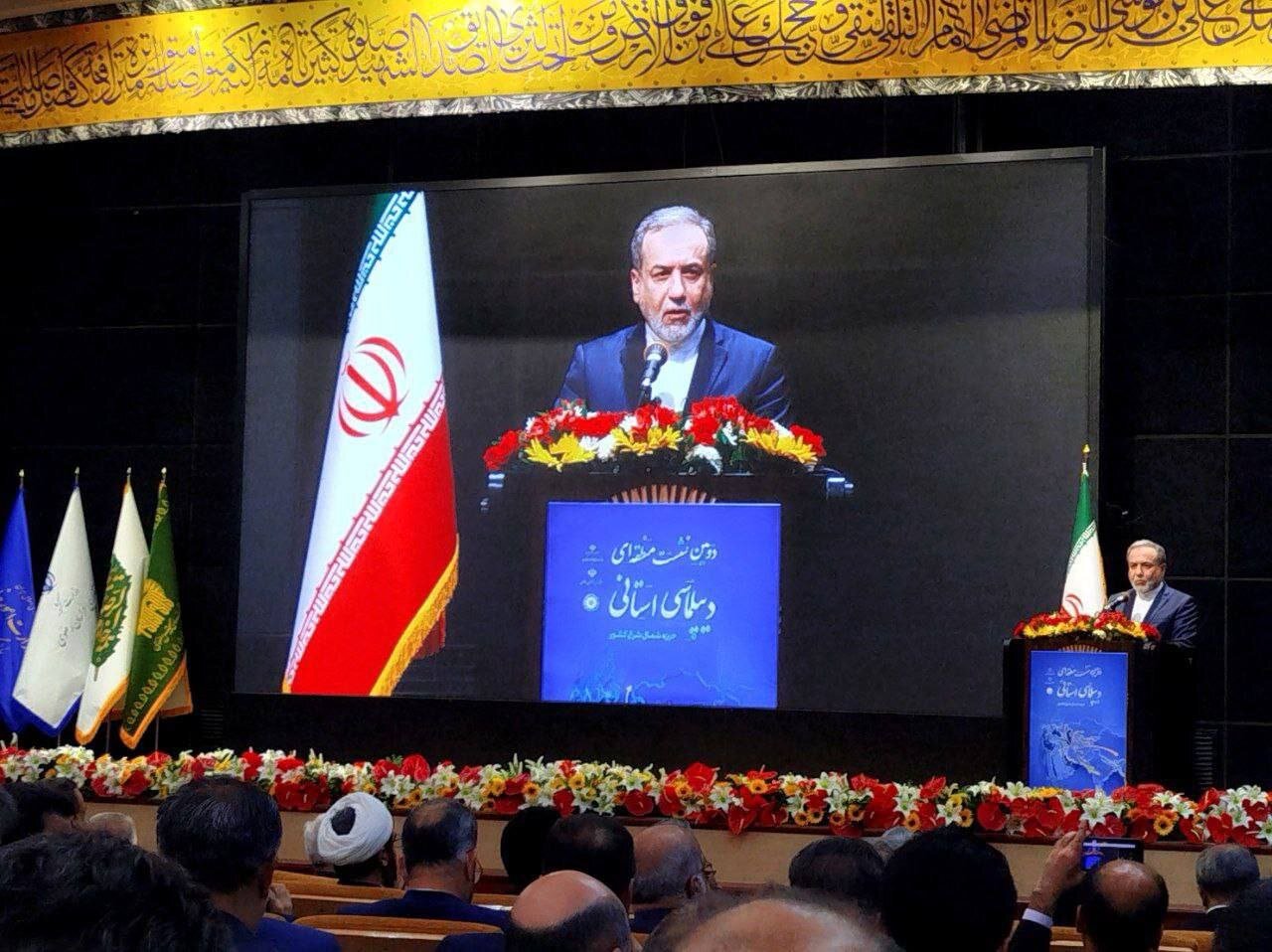
TEHRAN – Iranian Foreign Minister Abbas Araghchi stressed Iran’s continued commitment to diplomacy despite repeated setbacks due to “excessive demands” from the United States.
Arriving in the city of Mashhad on Wednesday to participate in the second Regional Diplomacy Conference, Aragushi stressed that although opportunities for an agreement have arisen, Washington’s intransigence has repeatedly impeded progress.
“There was an opportunity for an agreement, but America’s excessive demands prevented it,” he said. Araghchi added that recent contacts were made through the intermediary of U.S. negotiator Witkoff, but stressed that Iran’s position remains firm.
“The Islamic Republic of Iran is a country of peace and diplomacy. We have always demonstrated our commitment to dialogue, but that does not mean compromising the rights of the Iranian people,” Alaghushi said. He further stressed that Iran will pursue diplomatic avenues as long as its national interests are protected.
“However, the other side has repeatedly shown that it does not adhere to diplomatic principles.” After five rounds of indirect negotiations this year alone, the U.S. has effectively joined Israel’s military offensive against Iran, making any potential deal even more complicated, Araghchi said. Any chance for progress in subsequent talks in New York was also thwarted by Washington’s “excessive demands.”
After his arrival, Araghchi attended the 2nd Regional Diplomatic Conference in Mashhad, which was also attended by the Speaker of the National Assembly. In his speech at the conference, he emphasized the importance of regional economic cooperation.
“Iran can survive under sanctions thanks to its neighbors,” Araghchi said. He noted that Iran exports more to a single neighboring country than to the entire continent of Europe, and emphasized the strategic importance of regional cooperation in sustaining Iran’s economy.
Iranian Parliament Speaker Mohammad Baqer Qalibaf also addressed the conference, highlighting Iran’s evolving diplomatic strategy.
“Iran can work with China and Russia to fight unilateralism,” he said, adding that countries around the world will no longer succumb to US monopoly. Qalibaf pointed to the opposition of two permanent members of the UN Security Council, China and Russia, to the so-called snapback mechanism, as evidence of the emergence of a new world order in which unilateral actions by Western powers are increasingly challenged.
He further noted that Iran currently shares common understanding with its neighbors and strategic partners on regional issues. “Synergies will increase through the expansion of regional diplomacy. Today, more than ever, we must think ahead and create opportunities for the Iranian nation,” Khalibaf said.
These statements come amid heightened tensions following recent moves by Western countries. In late August, Britain, France and Germany activated the so-called snapback mechanism at the United Nations, effectively reimposing sanctions lifted under the 2015 nuclear deal. The Iranian government rejects the move as illegal, citing the US withdrawal from the deal and Europe’s subsequent failure to honor its commitments as the root cause of the current conflict.
Efforts by Russia and China to secure additional diplomatic time at the UN Security Council in September failed, paving the way for Western pressure. On September 29, the European Council announced that sanctions previously lifted under the 2015 agreement were reinstated.
Further complicating matters, Israel launched a major military offensive against Iran on June 13, targeting nuclear scientists, senior military officials, and civilians. The United States then bombed three Iranian nuclear facilities, disrupting indirect talks between Iran and the United States over Iran’s peaceful nuclear program.
The sixth round of talks, mediated by Oman and scheduled for June 15 in Muscat, was canceled due to increased Israeli attacks. Although Iran maintains limited contacts with the United States through Egyptian mediation, particularly regarding developments in the Gaza Strip, Araghchi and other Iranian officials stressed that direct negotiations remain impossible under the current circumstances.
“Negotiations are meaningful if the parties reach an agreement and mutual understanding on respecting each other’s rights and concerns and hold a dialogue on an equal footing. Currently, such conditions do not exist,” Iranian Foreign Ministry Spokesman Esmail Baghai told reporters on Monday. He stressed that as long as the other side continues to make “excessive demands and expectations,” it will not be possible to build the foundation for meaningful negotiations.