
Sudan, a country in the Horn of Africa with a rich history and diverse cultural heritage, has been mired in a cycle of conflict and foreign intervention since the ouster of former President Omar al-Bashir in 2019.
His ouster after years of social unrest and internal pressure marked the beginning of a new era of instability. The Sudanese Armed Forces and Rapid Support Forces (RSF) once acted as allies in the overthrow of al-Bashir’s government, but in April 2023, a power struggle between them erupted into full-scale war, pushing the country to the brink of collapse.
The ongoing conflict has claimed thousands of lives and displaced millions, exacerbating an already dire humanitarian crisis.
Meanwhile, increasing reports of foreign involvement, particularly the UAE’s support for the RSF, which has been accused of mass atrocities, raise serious questions about why the Horn of Africa has become such a strategic theater for outside powers.
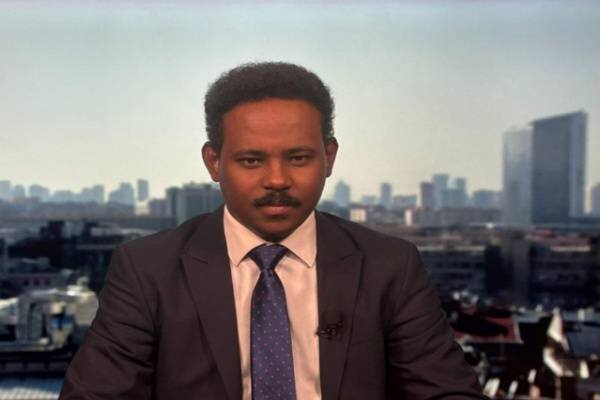
In an exclusive interview with Mehr News Agency, Sudanese analyst Nasser Ibrahim spoke about recent developments in Sudan, including the collapse of al-Fashir, the growing humanitarian crisis, and the deepening involvement of foreign powers in internal affairs. Below is the full text of the conversation.
Fall of al-Fashir It has become a symbol of serious human rights violations. In just three days, more than 1,500 civilians were killed in what appears to be an act of ethnic cleansing. The report suggests that these events are not simply the result of internal conflicts, but are heavily influenced by foreign powers. Could you elaborate on the internal causes of this crisis and the role of external actors in shaping Sudan’s recent developments?
Yes, al-Fashir fell into the hands of the Rapid Support Forces (RSF). Sadly, many civilians have lost their lives and what is happening now amounts to ethnic cleansing. People are being killed because of their religion, language, and skin color. The RSF, which can be described as a terrorist organization, receives support from the United Arab Emirates and is responsible for the genocide. Not only the Israeli regime is involved, but also the Chadian regime, which supports General Haftar’s forces in Libya and the RSF in Central Africa.
This tragedy is not limited to al-Fashir; similar atrocities occur in other parts of Sudan. Both domestic and foreign actors have played a destructive role in the course of this country. He previously said Sudan had a “framework agreement” that the RSF tried to impose on the military, which rejected it. In response, the UAE attempted to orchestrate a coup to bring the RSF to power, but the military resisted this, leading to the outbreak of civil war.
Since 2023, Sudan has been embroiled in a devastating conflict that is a true human tragedy. RSF adheres to an ideology of Arab supremacy, and non-Arab Sudanese are considered a minority without political or economic rights. Essentially, the war stems from the RSF’s push to “Arabize” Sudan, which the Sudanese military continues to resist.
Why has Sudan become important to foreign intervening powers?
The involvement of foreign actors in Sudan, particularly the United Arab Emirates (UAE), is becoming increasingly clear. Large numbers of unmanned aircraft have fallen into the hands of the Rapid Support Forces (RSF), which has gained the upper hand in recent battles.
One of the main reasons behind the UAE’s aggressive policies is its anti-Muslim policy, and the country has essentially taken on the mission assigned by Western powers to suppress Islamic movements in the region.
Another motive is control of Sudan’s vast gold mines, one of Africa’s richest untapped resources. Beyond these, the UAE’s actions also contribute to the broader goal of ‘Arabization’ of Sudan, continuing an ideological and political project aimed at reshaping the country’s identity.
By presenting itself as a defender of Arab interests, the UAE has actually contributed to ethnic cleansing and demographic engineering. Its aim is to control Sudan’s natural resources and consolidate its influence. However, the UAE is not acting alone; Western countries and the Israeli regime are also involved in coordinating these developments.
It is vital that the Sudanese tragedy be viewed as part of a broader regional strategy. Similar tactics have been witnessed in Libya, Tunisia, Lebanon, Iraq, and Yemen, where foreign intervention seeks to weaken central governments through fragmentation and internal divisions. Sudan therefore represents a new stage in this ongoing geopolitical project.
How do you assess the international reaction to recent developments in Sudan?
Recently, a popular slogan “Sudan has no friends other than Sudan” has spread throughout Sudan.
The message behind this phrase reflects the painful truth that no government truly supports Sudan. The international community’s response to recent atrocities has been largely limited to media coverage, with no serious political or humanitarian action.
However, recognizing the Rapid Support Forces (RSF) commander as the leader of a terrorist organization could change the diplomatic dynamics and lead to positive developments, including his political isolation. The al-Fashir massacre mirrors what is happening in Gaza, and the world’s reaction to the Sudanese perpetrators is likely to be as muted as the reaction to the killings in Gaza.
Meanwhile, civil society organizations (NGOs), particularly in Western countries, have begun to speak out against the UAE’s involvement, and there are early signs of an international campaign for sanctions. This suggests that the UAE’s role in the Sudan crisis will ultimately weaken its position and make it a loser in the long run. Unfortunately, just as Iran was unfairly targeted, Sudan faces a similar fate. Both countries share a destiny shaped by resistance and external hostility.
MNA/