
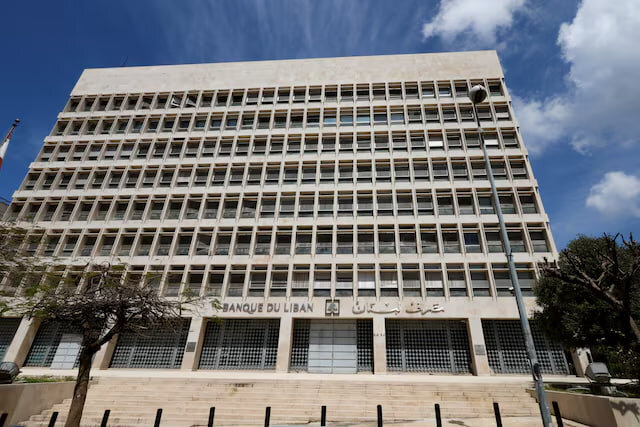
BEIRUT – Bank du Liban has announced that banks and financial institutions eligible for its licenses are prohibited from trading with Al-Qard Al-Hassan, the Hezbollah Solidarity Association.
Thomas Barrack, the US Special Representative, quickly praised the move, thinking it was a “step in the right direction.” He also argued that it represented “the benefits of international efforts to restore Lebanese interests and confidence in the banking sector.”
Before the Bank du Liban’s circulation, it was previously announced that the US Treasury Department’s Office of Foreign Assets Control (OFAC) had imposed sanctions on seven personalities and one entity suspected of having a relationship with Al-Cardo Al Hassan.
“As Hezbollah attempts to rebuild its operations, the Treasury continues to commit to dismantle the financial structure and preventing its restructuring itself.”
“The action plan required by the Financial Conduct Task Force (FATF) in Lebanon states that indirect transactions in whole or in part with exchange agencies such as Al-Qard al-Hassan, money transfer companies, associations, and licensed entities such as Al-Qard Al-Hassan, which are a circular announced by Bank du Liban, in all or in part with licensed entities such as Al-Qard Al-Hassan, money transfer companies, associations, and licensed entities such as Al-Qard Al-Hassan.
Banque du Liban threatened that people called “perpetrators” could be exposed to legal prosecution if they did not comply with the decision. Freezing accounts and assets; Introduction to the Special Investigation Committee.
The move by Bank du Liban Governor Karim Sayed is not uncommon as he is part of an anti-resistance team. Rather, it represents a practical commitment to the demands of the US Spiden in Beirut.
Hezbollah wasn’t surprised as Saed had previously paved the way for travel. The Lebanese banking system justified it by claiming that it cannot be violated by Washington’s decision.
Experts believe that Qard Al-Hassan is not affiliated with either a financial institution or a bank approved by Banque Du Liban, and thus is a threat to the foundation of the resistance’s popularity.
In any case, Qard Al-Hassan is not a financial institution, but a developmental solidarity program. There’s no interest in what people deposit. Rather, it acts as collateral for a loan (personal deposit, whether cash or gold).
This means that the loan is free, except for the cost of storing money and the management procedures.
During the intensive US-led Israeli attacks from September to November on Lebanon, the Wall Street Journal said Israeli officials had said “the attack on the Al-Cardo Al-Hassan Foundation branch is intended to undermine ties with the Hezbollah community.”
The anti-resistance media (mercists at the US embassy) are then said to have begun hostile camps and are looking for money storage facilities in Hezbollah under the Sahel Hospital building. This is said to have encouraged the transfer of funds to Hezbollah, in addition to bombing the exchange office.
In parallel, those suspected of the enemy moving their funds to the Lebanese and Palestinian Resistance Front have been liquidated from April 2024 to the present. This is not a search for funds that Shia travelers (particularly humiliating searches of luggage arriving from Iran, Iraq or Africa) allegedly belong to Hezbollah.
It is worth noting that Al Qard’s Al Hassan is a channel that covers over 250,000 families, with Hezbollah providing rewards for people affected, about $1 billion to repair and shelter.
Bank du Liban’s circular shape is just a new reason to affirm the legitimacy of resistance. The general foundation of resistance monitors the abuse and massacres against the Alawites, but does not abandon or abandon the tools of power in a fierce existential battle.
The so-called US reform is to restore the robbery of banks (an immunity from US Spiden in Beirut) that plundered the deposits of Lebanese people whose theft disrupts the Al-Cardo Al-Hassan institutions.