
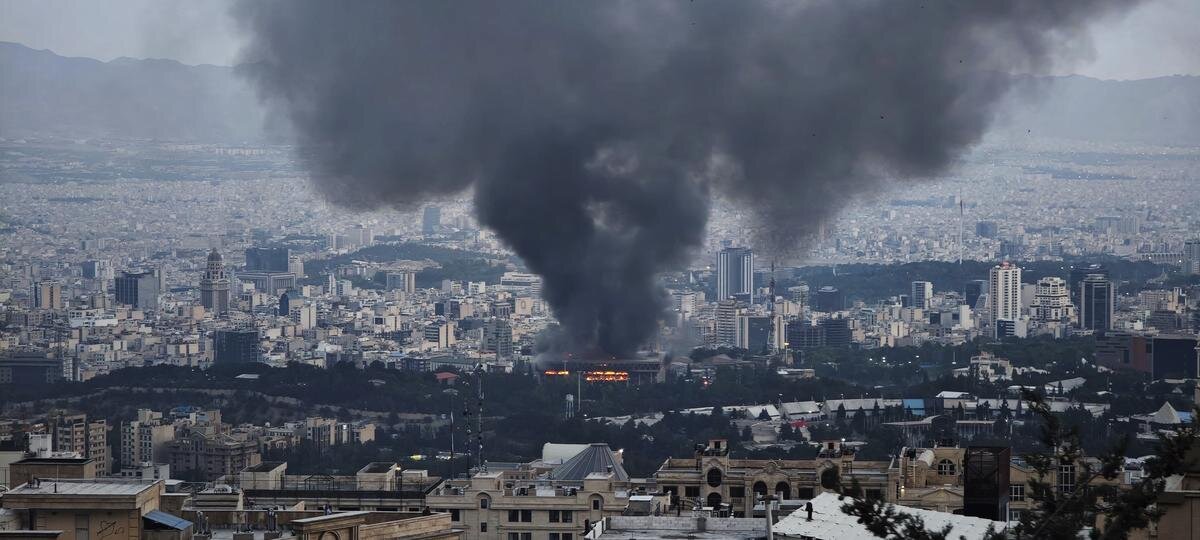
TEHRAN – The United Nations Educational, Scientific and Cultural Organization (UNESCO) has strongly condemned the killing of two Iranian media workers in Israel’s airstrikes last month at Tehran’s Islamic Broadcasting (IRIB) headquarters.
In a statement issued Thursday, UNESCO Director Audrey Azurey urged a full, transparent and impartial investigation into the attack. She emphasized that media institutions are protected under international humanitarian law.
Azurei also cited UN Security Council resolution 2222. This explicitly requires protection for journalists and media personnel during armed conflicts.
The Israeli strike, which took place on June 16, targeted the buildings that house the news department in Ilib.
The attack included the use of at least four bombs, which hit the facility while live news broadcasts were ongoing. The power of the first explosion temporarily destroyed the transmission, but quickly recovered. News Director and political affairs officer Hassan Abedini appeared on screen shortly afterwards to condemn the attack.
At the time of the bombing, news anchor Sahar Emami was offering live broadcasts. Despite the first explosion that rocked the studio, she continued reporting until the second explosion filled the room with smoke and debris, evacuating her. Emami later returned to the air and shared her experiences with Abedini.
In total, three IRIB employees were marching on a strike on the NationL broadcasting station premises.
The attack came on June 13th a few days after another wave of Israeli attacks. Meanwhile, coordinated operations across Iran have killed several high-ranking Iranian military commanders, nuclear scientists and civilians.
A week later, the conflict escalated further when the US launched airstrikes at three Iranian nuclear facilities. Tehran has condemned the move as a serious violation of the UN Charter, international law and the Nuclear Non-Proliferation Treaty (NPT).
In response, Iranian forces launched a wide range of retaliation operations, targeting key Israeli military sites across the occupied territory and attacking Al-Udeid Air Base in Qatar, the largest US military facility in West Asia. Iran’s operations, carried out on June 24th, effectively halting illegal attacks and marked a major change in conflict.
Meanwhile, global concerns continue to be drawn to Israel’s ongoing war with Gaza. Gaza has become the most deadly conflict for journalists in modern history. A recent report by the cost of a war project at Brown University’s Watson Institute for International Public Relations shows that 232 journalists have been killed since the war began, an average of 13 per month.
The report found that more media experts had died in Gaza than in World War I, World War II, the Vietnam War, the Yugoslavian War and the US invasion of Afghanistan.
In November 2024, the International Criminal Court issued an arrest warrant for Israeli Prime Minister Benjamin Netanyahu and former Minister Joav Gallant on charges of crimes and crimes committed against humanity in Gaza.