
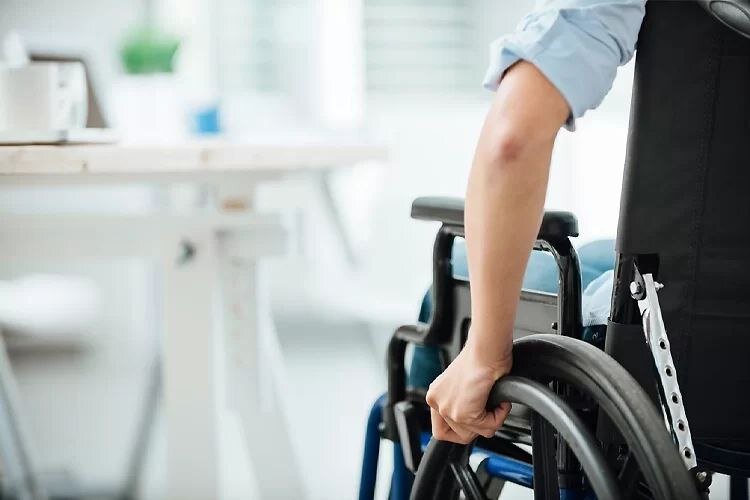
Tehran – The United Nations Children’s Fund (UNICEF) works with special education institutions to run a program that helps children with disabilities in low-income families pay for medical care and stay in schools.
The program is currently implemented in nine states, covering 1,554 children with disabilities, each receiving approximately 50 million rials (almost $44) of cash support.
It helps families pay for medical care, rehabilitation and school supplies. This will allow children to stay at school and continue their studies. In the next phase, another 2,564 children from other states will also receive such support, UNICEF’s website announced in an October 5 press release.
In addition to direct financial aid, UNICEF is working to improve how schools and health centres support these children.
Teacher Training: In Khorasan Razavi, over 300 teachers and experts have completed a training program focused on early support, better student evaluation, and creating personalized learning and rehabilitation plans. This could help schools understand each child’s needs and learn more effectively.
Accessible Equipment: To make Essential Services more accessible, Unicef has provided new occupying and voice therapy equipment to 53 rehabilitation centres in Khorasan Razavi.
Mobility and Hearing Aids: Crossing Khorasan Razavi, Sistan and Baluchestan, UNICEF has provided 36 hearing aids and 29 wheelchairs so far, ensuring more children are fully involved in school and daily life.
These comprehensive efforts, by working with partners across the country, demonstrate that UNICEF is building a future where every child can learn, grow, thrive and ultimately open opportunities for everyone, regardless of their abilities.
Other Services
Enhancing the improvement in emergencies for children with disabilities is one of the other services provided by UNICEF and its partners.
The 26th National “Earthquake and Safety” Drill, marked with the Earthquake Bell, is being held simultaneously at schools across the country, with a proactive focus on safety and preparation for students with disabilities and special needs.
The purpose of earthquake training in schools is to raise awareness of earthquakes among students, prepare them to respond correctly and quickly, quickly, get used to natural disasters and empower them to face such events.
Additionally, these drills aim to strengthen the safety culture of the community, make schools safer, and reduce earthquake casualties and damage. Special school drills aimed at promoting earthquake preparation for children with disabilities, especially those with disabilities, have also collected valuable feedback on training materials.
The drill, held on November 27, 2024, was carried out in conjunction with the ongoing project, “Comprehensive Earthquake Preparation Education Plan for Children with Special Needs and Disabilities,” by UNICEF and the United Nations Education, Scientific and Cultural Organization (UNESCO), in collaboration with the International Institute for Earthquake Engineering and Seismic Science and Technology (IIEE).
The initiative highlights the important importance of children with disabilities being prepared to face and mitigate the impact of natural disasters, represents an important step towards comprehensive disaster preparation, and promotes a safer and more resilient future for the younger generation of Iran.
Under a globally unique program called “Earthquake Preparation Education for Children with Disabilities,” UNICEF and its partners have developed three books. Each targets different stakeholders, including children with disabilities, teachers, and policy makers’ parents/caregivers.
Throughout the book, UNICEF and UNESCO, in collaboration with IIEE, provide guidelines for disaster management, including measurement, preparation, response and recovery, focusing on children with hearing impairment, mobility disorders and autism spectrum disorders.
The development process for these books included consultations with supporting children with disabilities and their families, organizations with disabilities (OPDS), teachers at special education institutions, social workers in state welfare organizations, and workers at the Iranian Red Crescent Association (IRCS).
Additionally, four consultation training workshops were held where teachers, social workers and aid workers learned feedback on strategies to support children with disabilities before the earthquake, and provided feedback to assist them after the earthquake.
UNICEF’s Iran will work with partners to make these resources mainstream with its annual earthquake and safety training held at schools and develop comprehensive guidelines for drills.
mt/mg