
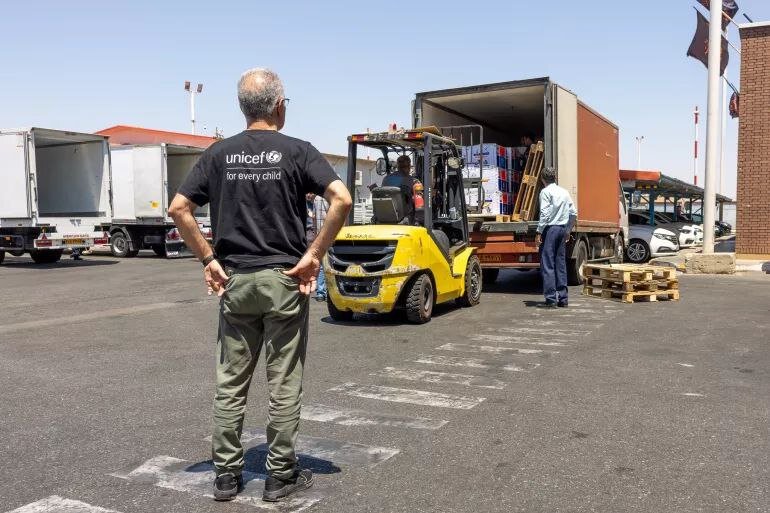
TEHRAN – The United Nations Children’s Fund (UNICEF) has procured a massive commission for rabies, rotavirus vaccines on the 5th to immunize children against life-threatening diseases.
The vaccine was procured at the request of the Ministry of Health, Medical and Education (MOHME).
More than one million doses of rotavirus vaccines were provided on August 21 and 23, with previous supplies being provided in May. This vaccine protects children from severe diarrhea, the main cause of illness in children.
On August 23, 15,000 rabies vaccines arrived, with another 74,400 expected by the end of September. Rabies is a fatal disease that spreads to bites in infected animals.
The pentameric vaccine at doses of over 255,000 also arrived on August 23rd. This single shot protects your baby from five dangerous diseases including difteria, hibb, hooping cough, hepatitis B and tetanus. It is usually given to babies in the first year as part of their regular vaccination schedule.
On August 3rd, a 465,000 dose pentagonal vaccine arrived in the country.
These deliveries highlight UNICEF’s close cooperation with Iranian government and global partners like the Gavi Alliance following the 12-day conflict in June. Together, they aim to ensure that every child in Iran has access to life-saving vaccines, even in times of crisis.
On July 30, the latest batch of pneumococcal conjugated vaccines (PCV) — 200,250 vials arrived in Iran. This followed previous shipments in April, including PCV and rotavirus vaccines.
These efforts were made possible with the support of the Gavi Alliance for Vaccines and Immunization, a global organization that helps improve vaccine access in low- and middle-income countries.
In March 2024, UNICEF supported 564,000 doses of the Pneumococcus Conjugated Vaccine (PCV) to prevent Iran’s pneumococcus-related infections and death.
The commission was the first shipment of PCV and the first shipment to the country, provided in cooperation with Iranian Ministry of Islamic Medical Education through UNICEF’s procurement services, using Iranian financial resources left behind from the procurement of the Covid-19 vaccine. The cargo arrived from India and landed at Imam Khomeini International Airport in Tehran on March 17th.
The vaccine was added to Iran’s national vaccination schedule in 2024. PCV protects young children from dangerous diseases such as pneumonia, meningitis and blood infections caused by Streptococcus pneumoniae. Pneumonia remains one of the top killers of under five children worldwide, so putting this vaccine in infants is a life-saving step.
UNICEF is also working hard to ensure that these vaccines are effective from the moment they arrive in the country until when they are given to each child. That means supporting cold chain systems, such as walk-in refrigerators and specially equipped delivery trucks, to keep the vaccine at the right temperature. UNICEF also trains healthcare workers and provides technical support to ensure vaccines are processed safely and in accordance with international standards.
With each birth, UNICEF confirms that every child in Iran has a considerable opportunity to get a healthy start in life.
National Vaccination Program
In May, the Ministry of Health began distributing domestically produced five-phase vaccines nationwide.
“Around 800,000 vaccines have been developed so far, and this number is expected to reach 1.2 million over the next two to three days,” the IRNA quoted Mehdi Pir-Salehi, director of the Food and Drug Administration (FDA), who will be speaking on May 5th.
The Pentavalent vaccine was integrated into the national vaccination program in November 2014. According to the National Vaccination Program, each child is required to receive the pentagonal vaccine three times at two-month intervals. The first is usually the end of the second month of your life.
The vaccination program to combat pneumococcus and rotavirus began in February 2024 after being missed from a 10-year vaccination schedule.
Children can receive free pneumococcal and rotavirus vaccines at all medical centers across the country, according to Deputy Health Minister Alireza Raeisi.
Pneumococcal vaccines can be injected when babies are 2, 4, and 12 months old. Babies can get three rotavirus vaccines at 2, 4 and 6 months of age. The vaccine is administered by putting drops into the child’s mouth.
mt/mg