
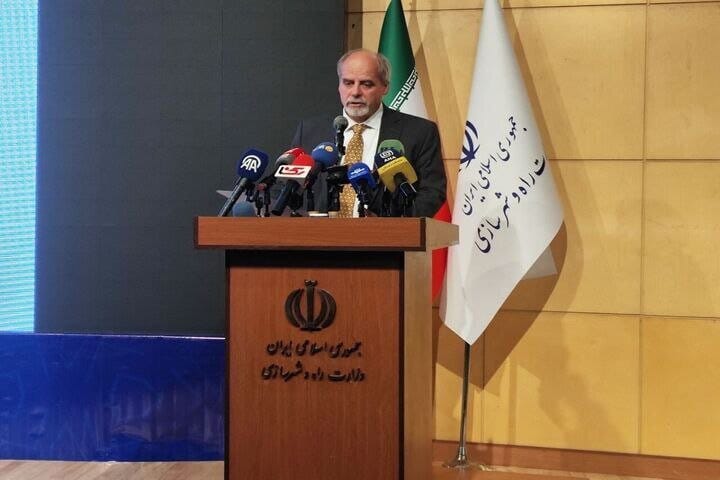
Tehran-Stefan Prienor, UN resident coordinator in Iran, has reaffirmed the continued support of the United Nations to make cities more resilient and improve equitable access to housing.
“By synergizing the national housing movement between the 7th National Development Plan (2023-2027) and the United Nations Cooperation Framework, we can prepare for a crisis and create a network of sustainable, fair and resilient cities that promise a better future for everyone.”
Officials made their remarks while dealing with an event held on Tuesday on the occasion of World Habitat Day, which fell on October 6th this year.
Pleenor also praised the efforts made by governments and agencies, highlighting the need to develop comprehensive housing policies and strengthen cities’ resilience to the crisis.
He noted that the UN Human Residential Programme and other organizations have already collaborated with Iran in a variety of areas, including urban resilience, risk reduction, post-disaster reconstruction and strengthening critical infrastructure such as hospitals.
Referring to the theme of World Habitat Day, “Urban Crisis Response,” he said today that cities are at the forefront of a global crisis, from climate change to conflict and inequality. But at the same time, they are also considered to be the main platform for finding sustainable solutions.
The official city’s resilience and the role of local governments, mayors, women and youth, like many countries, have said they are facing a severe housing crisis. Millions of Iranian families face serious challenges in accessing proper housing, with rent consuming more than a third of their household income.
Between 1956 and 2024, Iran’s urban population grew 11 times, with more than 77% living in cities today.
Officials continued to praise the government’s policy to prioritize housing in the Seventh National Development Plan. “Improved access to homes, reducing aging structures and utilizing the latest construction technologies demonstrate Iran’s commitment to comprehensive and sustainable solutions.”
Responding to urban crisis
Marked on the first Monday of October, 2025, the world habitat, was focused on tackling urban crises such as climate change, human evacuation, inequality and urban sustainable solutions.
The United Nations designated the world’s habitat day in 1985. This day is reflected in the condition of our towns and cities and the fundamental rights to appropriate shelters.
It also aims to remind the world that we all have the power and responsibility to shape the future of cities and towns. It is our collective responsibility for the future of human habitat.
This year, that day fell to October 6th. Global compliance with World Habitat Day is related to urban crisis response. The theme focuses on addressing multiple crises affecting urban areas, including climate and conflict, which contribute to inequality, and promoting existing tools and approaches to effective crisis response.
The realization of the theme “urban crisis response” in Iran requires cooperation between executive bodies, scientific institutions and public participation in order to provide sustainable settlements and healthy human habitats for current and future generations.
mt/mg