
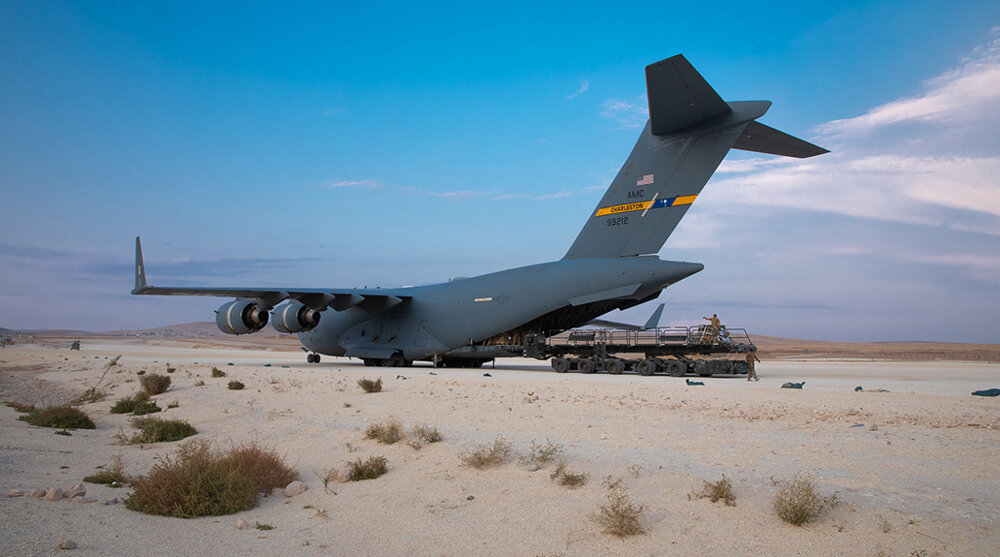
The so-called Syrian Observatory for Human Rights reported that a US cargo plane landed at Halab al-Jil airport near the oil-rich town of Rumeran on Monday afternoon, along with an attack helicopter.
The UK-based monitoring group, citing local sources, said the cargo ship was carrying various types of ammunition, including electronic equipment and heavy weapons, as well as a large number of military personnel.
The observation group noted that the latest development comes amid attempts by the US-led military coalition, said to have been formed to fight the terrorist organization Daesh (ISIS), to consolidate and strengthen its positions in northeastern Syria.
On October 21, another US cargo plane, accompanied by two military helicopters, landed at the same airport carrying air defense systems and heavy weapons.
Approximately 2,000 U.S. soldiers are deployed to Syria, spread across several bases, the majority of which are located in the country’s northeast.
Thomas Barrack, who was appointed U.S. ambassador to Turkey and special envoy for Syria by President Donald Trump, said in early June that the Pentagon aims to reduce its military presence in Syria, with only one base remaining operational.
In an interview with Turkish broadcaster NTV on June 2, Barak said the reduction in troops and the closure of military bases represented a strategic realignment.
“What I can say is that our current Syria policy is not close to the Syria policy of the last 100 years, because none of it has worked,” he said at the time.
Former Syrian authorities have consistently said the deployment of U.S. troops and equipment to the country’s northeastern flank is aimed at plundering its natural resources.
In recent years, various videos have been released showing that US occupation forces are using tankers to transport Syrian crude oil from the country’s northern provinces to bases in northern Iraq as part of their continued exploitation of Syria’s vital resources.
US President Donald Trump has acknowledged multiple times that US troops are stationed in Arab countries because of their oil resources.
MNA/