
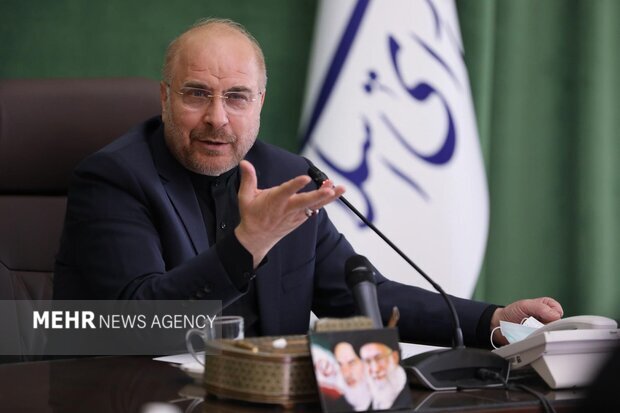
Speaking at a conference on regional diplomacy, Foreign Minister Ghalibaf said that Iran, which enjoys a historical background and unique position, can work with China and Russia as strategic partners and serve as an axis for regional and global multilateral cooperation.
“Such cooperation is meaningful in addition to strengthening economic and technological ties, as well as in confronting unilateralism and global hegemonic structures,” the National Assembly Speaker said.
He pointed to clear examples of such changes as the tariff game and discriminatory US trade policies promoted with the aim of imposing US will on the global economy.
“Today, however, countries are no longer subject to this monopoly. The failure of the United States and three European countries (UK, France, and Germany) to illegally trigger the snapback mechanism, and the official opposition of the two permanent members of the Security Council (Russia and China), are signs of a new world, one in which decisions are no longer written in a single capital letter,” Ghalibaf said.
His remarks came amid heightened diplomatic exchanges following a joint declaration by Iran, China and Russia rejecting the European Troika’s attempt to reimpose UN sanctions on Tehran through a snapback mechanism.
In a coordinated statement and a joint letter to the UN Secretary-General and the President of the Security Council, the three countries asserted that all relevant provisions expired on October 18, 2025, under UN Security Council Resolution 2231.
They stressed that the UK, France and Germany have failed to uphold their commitments under the JCPOA and resolutions and lack the legal standing to trigger the mechanism.
The declaration presented a united front between Tehran, Moscow, and China, demonstrating both the alliance’s stance against Western unilateralism and the view that the conclusion of Resolution 2231 marks the formal end of the Security Council’s involvement in the Iranian nuclear issue.
MNA/TSN