
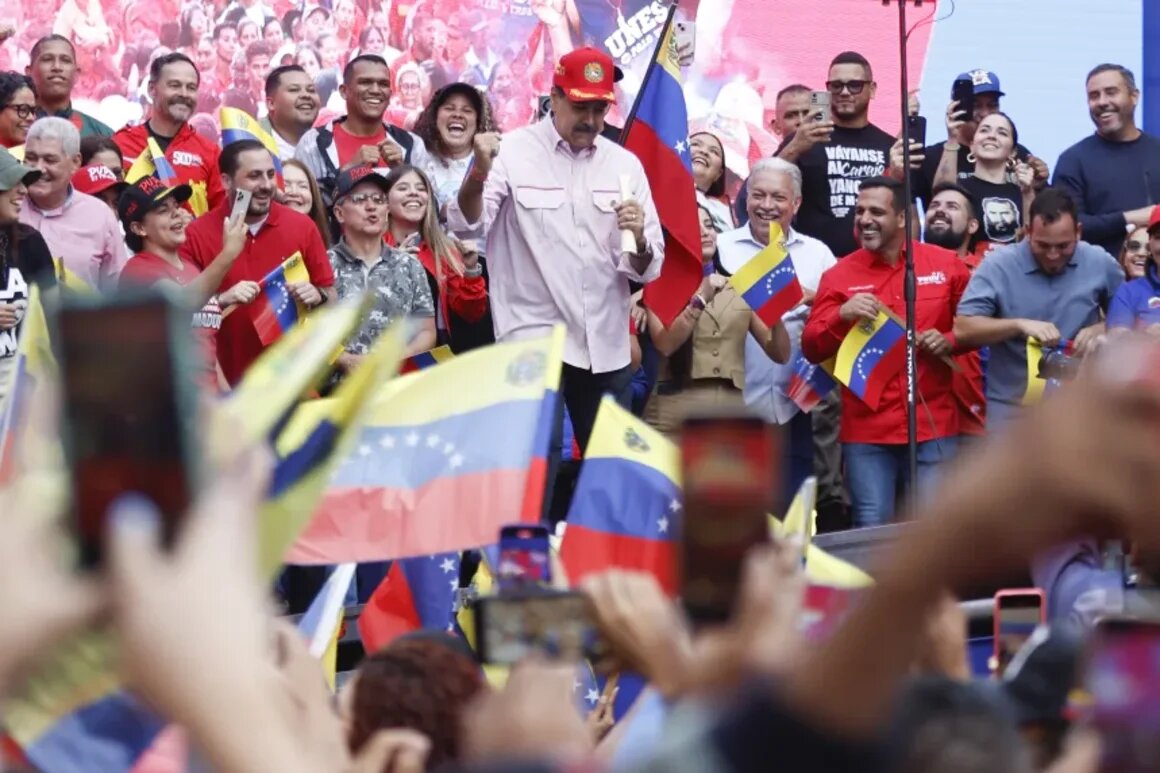
TEHRAN – Venezuelans took to the streets in Caracas and other cities this week to protest increased military pressure from the United States. The demonstration comes in the wake of the continued presence of the USS Gerald R. The United States has also carried out more than 20 attacks on maritime targets in the Caribbean and Pacific Ocean since early September, killing more than 80 people, an action Caracas says goes beyond a counter-drug operation and threatens Venezuela’s sovereignty.
protect sovereignty
Speaking at a rally outside Miraflores Palace, President Nicolas Maduro reaffirmed Venezuela’s commitment to peace, but said it would only do so on conditions that respect national sovereignty. “We don’t want peace for slaves or peace for colonies! Colonies, never! Slaves, never!” he told the flag-waving crowd. President Maduro pointed to 22 weeks of sustained pressure by the United States, including sanctions, threats and military posture, and condemned acts of “psychological terrorism.” Meanwhile, the government has deployed troops and displayed military equipment to protect key areas such as the capital, highways and coastal areas.
second strike controversy
Tensions escalated further on September 2, when the US military was said to have attacked a ship in the Caribbean for the first time, killing nine people. According to reports, Army Secretary Pete Hegseth gave verbal instructions for additional attacks, described in some accounts as an order to “kill everyone.” Mission commander Admiral Frank Bradley is reported to have carried out a second attack, killing two survivors clinging to the rubble. International law experts and some U.S. lawmakers have expressed concern that the actions could constitute a potential war crime under international law. Democrats and some Republicans in Congress have expressed concern, and committees in both the House and Senate have launched investigations into the incident. International law prohibits such attacks, and the UN Charter (Article 51) authorizes the use of force only in response to an actual armed attack. The Geneva Convention prohibits attacking people who are helpless, shipwrecked, or no longer a threat during combat. The follow-up attack on September 2 could also constitute a war crime under the Statute of the International Criminal Court in Rome.
America’s contradictions
The Trump administration’s response to this incident shows internal contradictions. Trump said it was “not a second attack and we didn’t want that to happen,” but the White House defended the operation as legal and necessary to protect U.S. interests on the high seas. Hegseth painted the victims as “narco-terrorists” with ties to Maduro’s regime, even though intelligence services showed no direct link. These justifications demonstrate a pattern of U.S. interventions justified by selective claims and strategic goals.
Regime change and oil regulation
Beyond military pressure, Trump has openly threatened to attack inside Venezuela if Maduro refuses to leave power. In a telephone conversation revealed by US media, President Trump warned Maduro to “resign or take action against the US military.” He later declared Venezuelan airspace “totally closed,” raising fears of an impending invasion. Analysts say Trump’s Venezuela policy is inseparable from his regime change ambitions and control of oil reserves. The regime revoked Chevron’s license to operate in Venezuela and imposed crippling sanctions on the state oil company, a move widely seen as an attempt to weaken President Maduro and secure influence over the world’s largest proven oil reserves.