
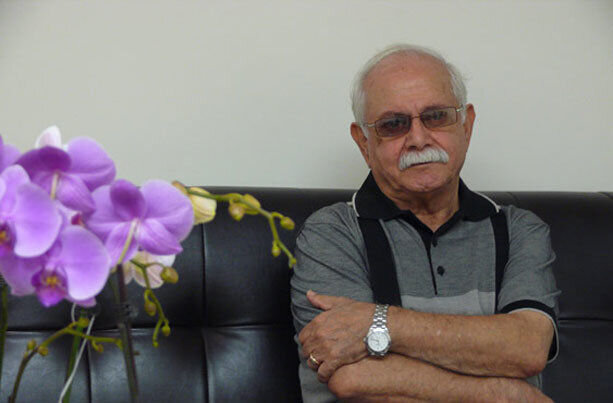
TEHRAN – Nasser Masoudi, a legendary figure in Iranian folk music, especially the traditional music of the northern province of Gilan, died on Thursday at Arya Hospital in Rasht after several months of illness and advanced age. He was 90 years old.
According to a report by Mair, his son Ali Masoudi Nia, a well-known literary critic and author, announced the sad news and expressed his deep sadness over the death of this iconic artist.
Born in Rasht in 1935, Nasser Masoudi was a prominent singer whose voice became a symbol of Gilan’s rich musical heritage. In 1949, he moved with his family to Tehran, where he began his musical career, initially studying under the tutelage of Ali Akbar Khan Shahnazi, a renowned maestro of Persian classical music. But Masoudi’s true calling lay in the traditional music of his homeland, and in 1955 he returned to Gilan to immerse himself in the local folk traditions.
His pioneering career as a singer began in the mid-1950s, when he joined Radio Gielan in 1956, becoming one of its early vocalists. His unique voice and heartfelt playing quickly became famous in northern Iran. Over more than 50 years, Massudi has recorded more than 500 songs across a variety of genres, including traditional, pop, and orchestral music. His vast repertoire includes more than 200 Persian songs, many of them arranged with orchestra, as well as nearly 50 popular melodies that were broadcast on programs such as the legendary radio series “Gorha”, which showcased Iranian musical talent.
But it was his performance of over 250 Giraki folk songs that cemented his reputation as a cultural icon. Many of these songs were composed by himself and capture the essence of Gilan’s poetic and musical tradition. Collaborations with prominent musicians such as Ahmad Ebadi, Jalil Shahnaz, Reza Varzande, Asghar Bahari, and Morteza Hananeh have greatly contributed to the preservation and promotion of Iranian traditional music. Masoudi’s voice became a symbol of Gilan’s cultural identity and resonated with national and international audiences.
Throughout his career, Masoudi worked with some of the most prominent figures in Iranian music, including virtuoso players such as Farhan Sharif, Esfandyar Monfarezadeh, and Farhad Fakhredini, and famous poets such as Simin Bebahani, Nozal Paran, and Turaj Negahban. He also toured internationally and held concerts in many countries to showcase Iran’s musical heritage.
After the 1979 Islamic Revolution, Masoudi continued his artistic career, introducing his voice to a new generation, most notably by recording the theme song for the popular television series “Rebel of the Jungle,” which tells the story of the legendary freedom fighter Mirza Kuchak Khan Dzhangari. In the late 1980s and early 1990s, he was one of the first Iranian musicians to defy restrictions and perform concerts abroad, and continued to promote Iran’s traditional musical culture.
In the 2000s, Masoudi released several critically acclaimed albums, including ‘Hara Chela’, a collaboration with Masood Lahizi and Majid Derakshani. His album “Hala Chera” won the Best Traditional Music Album award at our music festival. This is a testament to his lasting influence and artistic excellence.
He returned to the stage after several decades, performing with the National Orchestra under conductor Farhad Fahredini at Tehran’s Vahdat Hall in the 2000s. In 2016, he held a grand concert in his hometown of Rasht, which received widespread praise and affection from fans and cultural figures.
His hit songs before 1979 include “Banafsheh Gol”, “Divoonam”, “Allah Titi” and “Mosafar”. His works since 1979 include albums such as “Qalandar”, “Parchin”, and “Koorashim”, which further enriched the Iranian music world.
Minister of Culture and Islamic Guidance, Seyed Abbas Salehi, issued a statement mourning his death, emphasizing that Masoudi’s works embody the authenticity of indigenous music and the cultural soul of Gilan. “His melodies are a testament to Iran’s rich musical heritage and will remain a lasting legacy for future generations,” the statement said.
In his message of condolence, Seyyed Abbas Salehi expressed his sadness over the death of this “noble artist” and emphasized that his voice and songs are part of Iran’s cultural treasure.
SAB/