
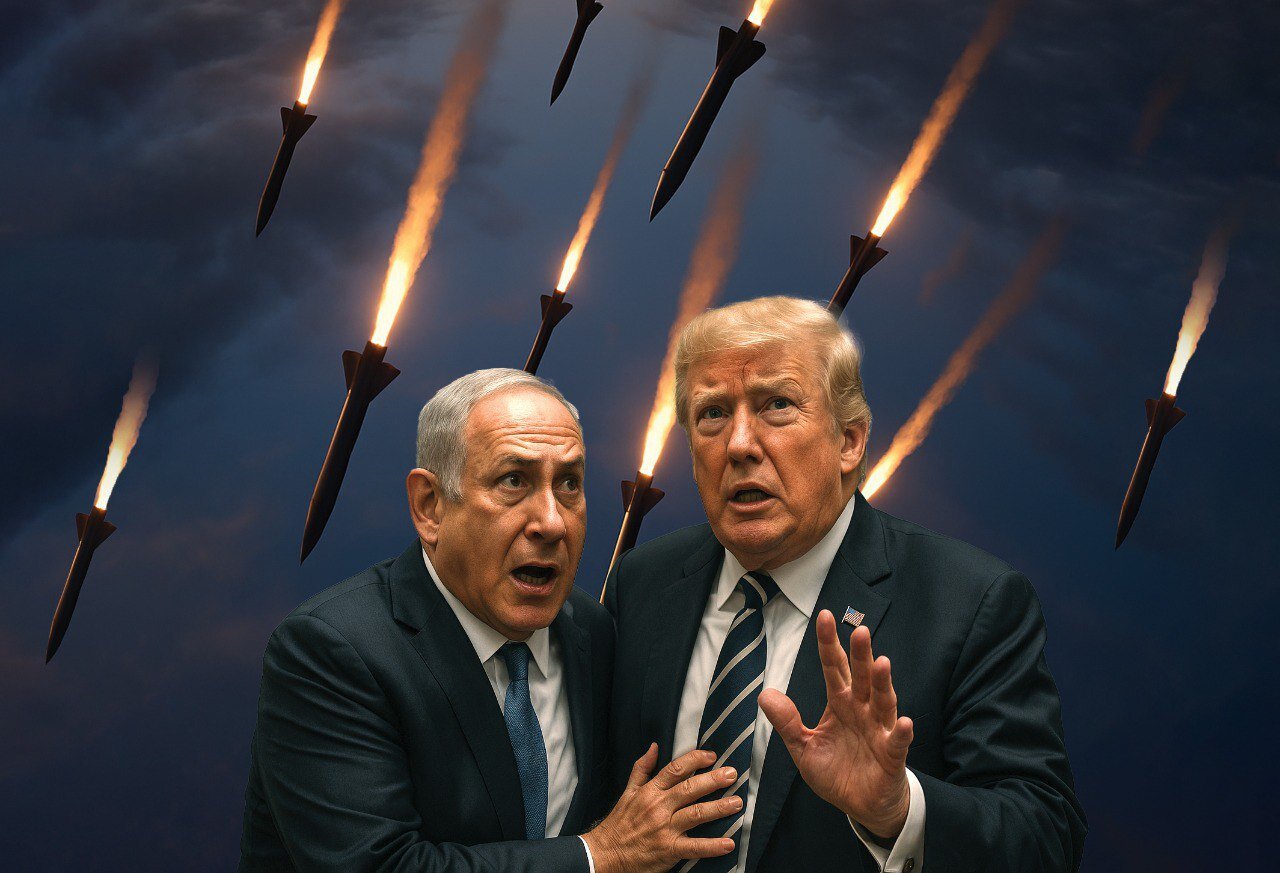
Tehran – Benjamin Netanyahu’s five-day trip to the US was marked by a series of eyebrow-raising declarations. From announcing his nomination of Donald Trump for the Nobel Peace Prize to claiming he wanted a “better future” for the Palestinians after killing more than 60,000 people in cold blood, the Israeli Prime Minister has issued a quirky statement that observers have come to expect.
But the outrageous declarations he made must be taken more seriously, as it contained an important underlying message that could have been brought badly enough to Iran, Israel’s biggest enemy.
In an interview with Fox News, Netanyahu tried to justify the illegal and unprovoked war that it launched against Iran on June 13th. Iran is currently “in deep trouble,” Netanyahu told an American interviewer.
The stated goal of the war was to dismantle Iran’s nuclear program. A hidden agenda that overthrows the Iranian government. However, intelligence and analysis indicate that neither goal was met. Iran’s nuclear sites have not been “expunged” and despite the assassination of major military officials early in the conflict, the Iranian government is more popular and in power than before the outbreak of war.
What Netanyahu gained in return was the unexpected destruction of at least 50,000 buildings in Israel, damage to important military and energy facilities, and the widespread erosion of Israel’s perception as an inexplicable safe haven. These unexpected results were the reason he came up with new, outrageous demands in his interview. Netanyahu said that if the country limits the range of ballistic missiles to 300 miles, it would only “accept” a deal with Iran.
It is not Netanyahu (or Israeli leader) who will determine the terms of the potential deal between Iran and the United States (who was engaged in indirect nuclear negotiations before the war ended), but his demand is new to him, given his usual focus on Iran’s nuclear programme. Netanyahu is trying to eliminate Iran’s missile capabilities and aims to resume a war that he was ultimately forced to end despite his original purpose, said Mashala Shamsolvezin, whose prime minister Mash Peshschkian, a senior Iranian journalist and political analyst, is closing down the country’s reformist factions.
“Israel is hoping to attack Iran and not face any consequences, just as how it is acting with regard to Syria these days,” he said. “Iran will never agree to such a request, especially since we know that the only way to prevent an attack is to maintain its ability to respond.”
Iran maintains a large, sophisticated arsenal of short, medium and long-range ballistic and cruise missiles. A few years ago, Ayatollah seided Ali Khamenei, the leader of the Islamic Revolution, and limited the range of these missiles to 2,000 km. However, this range is sufficient to retaliate against attacks by Israel, the only force in West Asia actively involved in the launch of wars against the regional countries. The average distance that missiles travel from Iran to the occupied territory is approximately 1,568 kilometers.
International practices and charters do not legally limit the scope of ballistic missiles developed by any country. “Under Article 51 of the UN Charter, Iran has the right to develop the necessary capabilities for self-defense,” explained Sham Solvezin. “The country must be prepared to attack anytime given Israel’s obvious desire to do harm to Iran.”
Iran’s defense minister Aziz Nasirzadeh said on Monday that he does not expect a ceasefire that came into effect between Iran and Israel on June 24th. “We don’t trust ceasefire at all. The Israelis are plotting, treating this as a time to prepare ourselves and plan multiple scenarios for the next round.”
Also on Monday, Iranian military chief of staff, Major General Abdulrahim Musavi praised the country’s Aerospace Force for the highly effective missile counterstrike he carried out against Israel last month. He made a statement during his visit to the IRGC Aerospace Facilities, adding that repeated mistakes are filled with “even stronger reactions.”
“Iran has a lot of important cards that we haven’t played yet,” Shamsorvezin said. “Missiles are an undeniable need for these plans to work.”