
For many years, Tehran Times has served as a communication channel for prominent members of Tehran’s diplomatic corps. The two recent communications received over the past few weeks are just the latest of many that this publication has facilitated.
Poland’s foreign minister attended a presentation organized by a US-based Zionist group in the UK parliament last month. Standing next to a drone provided by the group, he claimed it was an Iranian drone sent to Russia for use in the Ukraine war and accused Iran of undermining European security.
Later, Poland’s Chargé d’Affaires in Tehran, Marcin Wilczek, sent a letter to the Tehran Times. His letter referred to an earlier interview published by the newspaper, in which, in response to the foreign minister’s controversial remarks, the paper quoted a prominent Russia-based professor who claimed that Poland had forgotten its history, particularly the time during World War II when Iran provided refuge to countless Poles fleeing the ravages of war in Europe. Mr Wilczek claimed that Warsaw’s actions in the UK Parliament were not directed at Iran, but rather at Russia and were “interfering” in Iran-Poland relations.
Now, the Russian ambassador to Tehran, Alexei Dedov, provided his own correspondence. He addressed what he characterized as substantial inaccuracies in Wilczek’s text and clarified the Russian Federation’s official position on issues of European security, historical narratives, and bilateral relations.
Below is the full text of the Russian diplomat’s statement.
During World War II, the Soviet people suffered more than any other country in the world. Our ancestors sacrificed 27 million lives to liberate the world from Hitler’s monstrous ideology, which considered both Russians and Poles subhuman.
We have never denied the human tragedy of the past. We grieve and hold in our hearts the memory and respect of all those who fell victim to the catastrophe caused by Hitler and his allies and accomplices.
However, historical events cannot be viewed one-sidedly. History is only accurate when considered as a whole, based on a complete set of complex facts and circumstances.
Relations with Poland have always been complicated. In the early 17th century, the Polish king, weakened by the turbulent times, invaded Russia. In addition to occupying the western regions, Polish-Lithuanian forces occupied Moscow for two years. It was not until November 4, 1612, that the foreign invaders were expelled from the capital by the People’s Volunteer Army.
In 1919, the Polish authorities insidiously took advantage of the internal difficulties of our country, once again embroiled in civil war, to occupy the west and then carry out a long-term policy aimed at erasing national identity and imposing violent Polonization. As a result of military operations supported by European allies, Poland acquired the western territories of Belarus and Ukraine.
At least 157,000 Red Army soldiers were taken prisoner during the Soviet-Polish War. More than 80,000 people did not return home from numerous concentration camps in Poland where inhumane conditions prevailed. Prisoners were executed, tortured, starved, denied treatment for rampant infectious diseases, and sentenced to inevitable death. In October 1919, a committee of the International Committee of the Red Cross, which inspected the Polish camp at Brest-Litovsk, stated that “the camp was a veritable cemetery.” The Polish ruling class is deliberately downplaying the number of deaths in order to hide this bloody page in the history of the two countries.
On the eve of World War II, Britain and France made it clear to Germany that they would not interfere with Germany’s expansion to the east. Their intention was clear: to force the Nazi regime in Berlin into military conflict with the Soviet Union, while keeping them on the sidelines.
When Germany occupied the Sudetenland in October 1938, Poland became an accomplice and collaborated with Hitler in annexing part of Czechoslovak territory (the Teszyn region of Silesia), earning it the nickname “Europe’s Hyena”. Throughout the 1930s, high-ranking Nazi German officials frequently visited Poland, including Propaganda Minister Goebbels and Reichsmarschall Göring (the second most powerful person in the Nazi party), who was later convicted as a war criminal at the Nuremberg Tribunal. Poland’s Foreign Minister, Beck, met with Hitler many times. Official representatives of the two countries maintained regular secret dialogue and discussed mutual expansion of foreign policy influence in the spirit of partnership. Among the topics covered was “weakening and destroying Russia.” Poland made many grave mistakes in the years before World War II and ultimately fell victim to the Nazi invasion.
On the contrary, the Soviet Union made every effort to establish a full-fledged collective security system in Europe that could prevent military conflict and its devastating consequences. Unfortunately, the Western powers were not interested in this, and the Soviet Union was forced to normalize relations with Germany in order to gain time and strategic depth before the inevitable military conflict with the Third Reich.
In September 1939, Germany attacked Poland and within two weeks had subdued it and captured a significant portion of its territory. On September 17, the Red Army crossed the eastern border of Poland and within ten days liberated western Ukraine and western Belarus. Thanks to the Soviet Union’s timely actions, the population of what was then the eastern territory of Poland, including Jews, Belarusians, Ukrainians, Poles, and Russians, was spared, albeit temporarily, from genocide. Many Polish nationals and refugees were immediately given the opportunity to emigrate. It is important to note that even Warsaw’s allies in London and Paris did not consider Soviet actions to be an “invasion.”
Based on the Soviet-Polish agreement, in 1941 a new Polish army under the command of General Anders was formed on Soviet territory. Even during the most difficult period of 1941-1942, the USSR continued to supply the “Anders Army” with large quantities of weapons and equipment. The Soviet authorities, at the request of General Anders himself, did not prevent the subsequent transfer of this army to Iran. Regarding the difficult conditions in which Poles lived on Soviet territory during World War II, it was a harsh reality that all Soviet citizens faced due to the inhumanity and brutality of Nazi Germany and its collaborators.
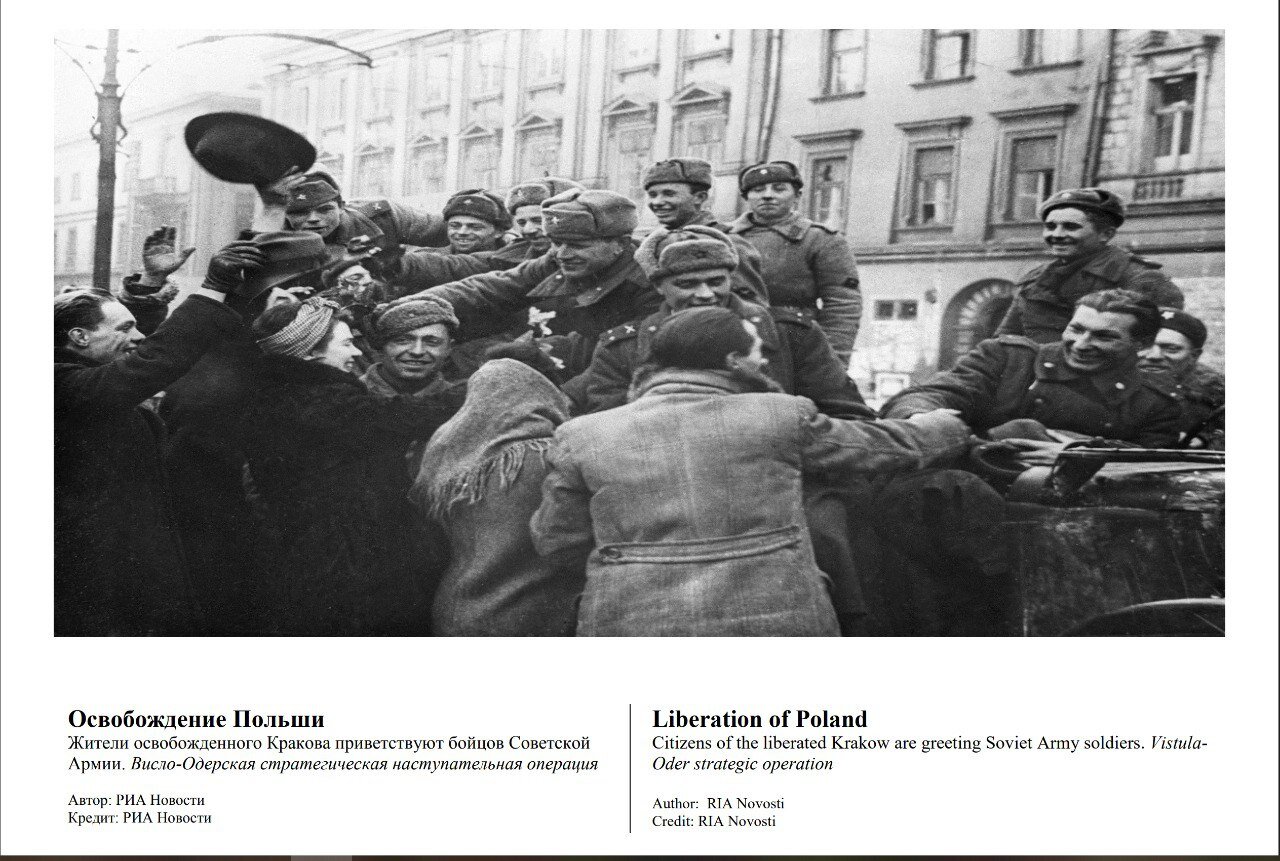
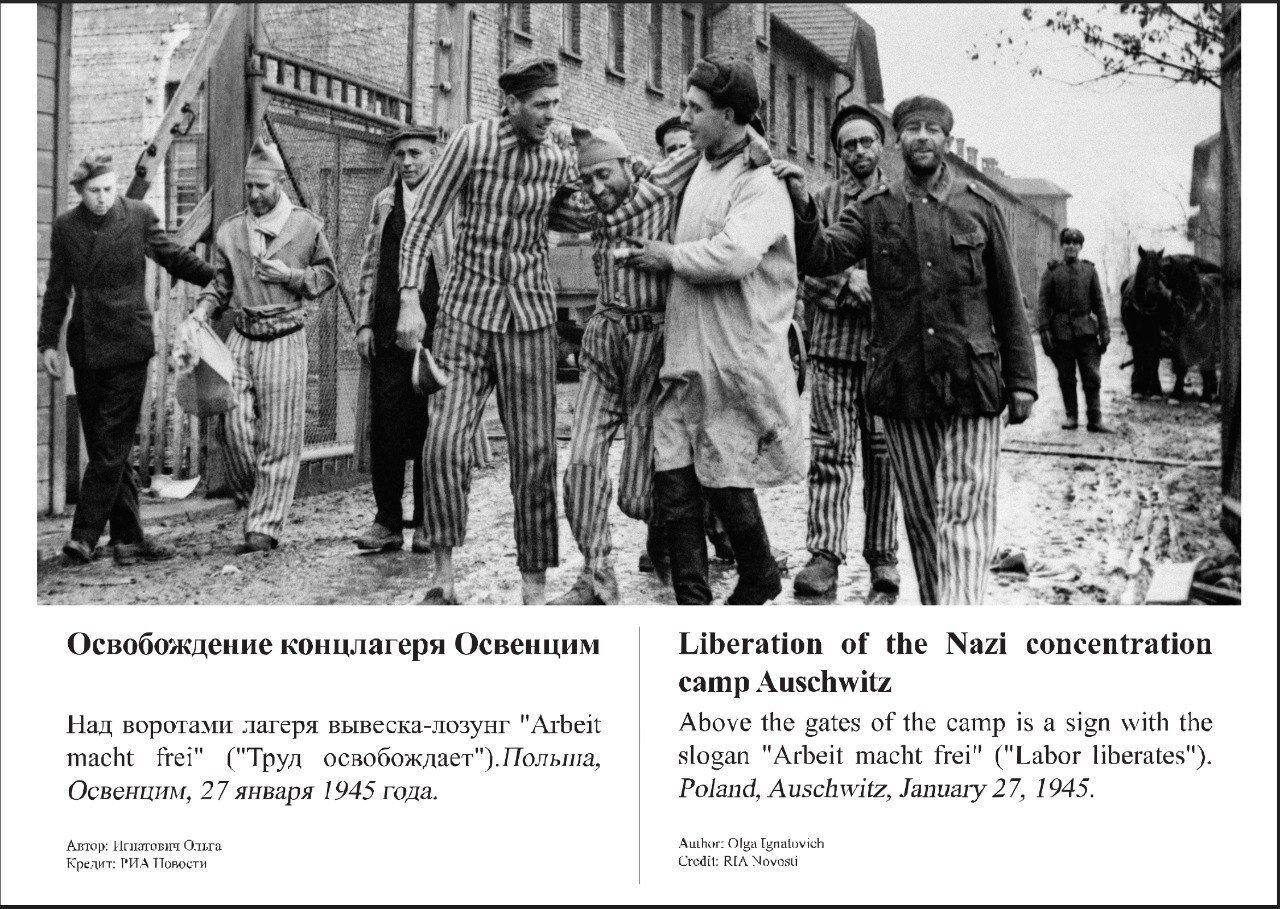
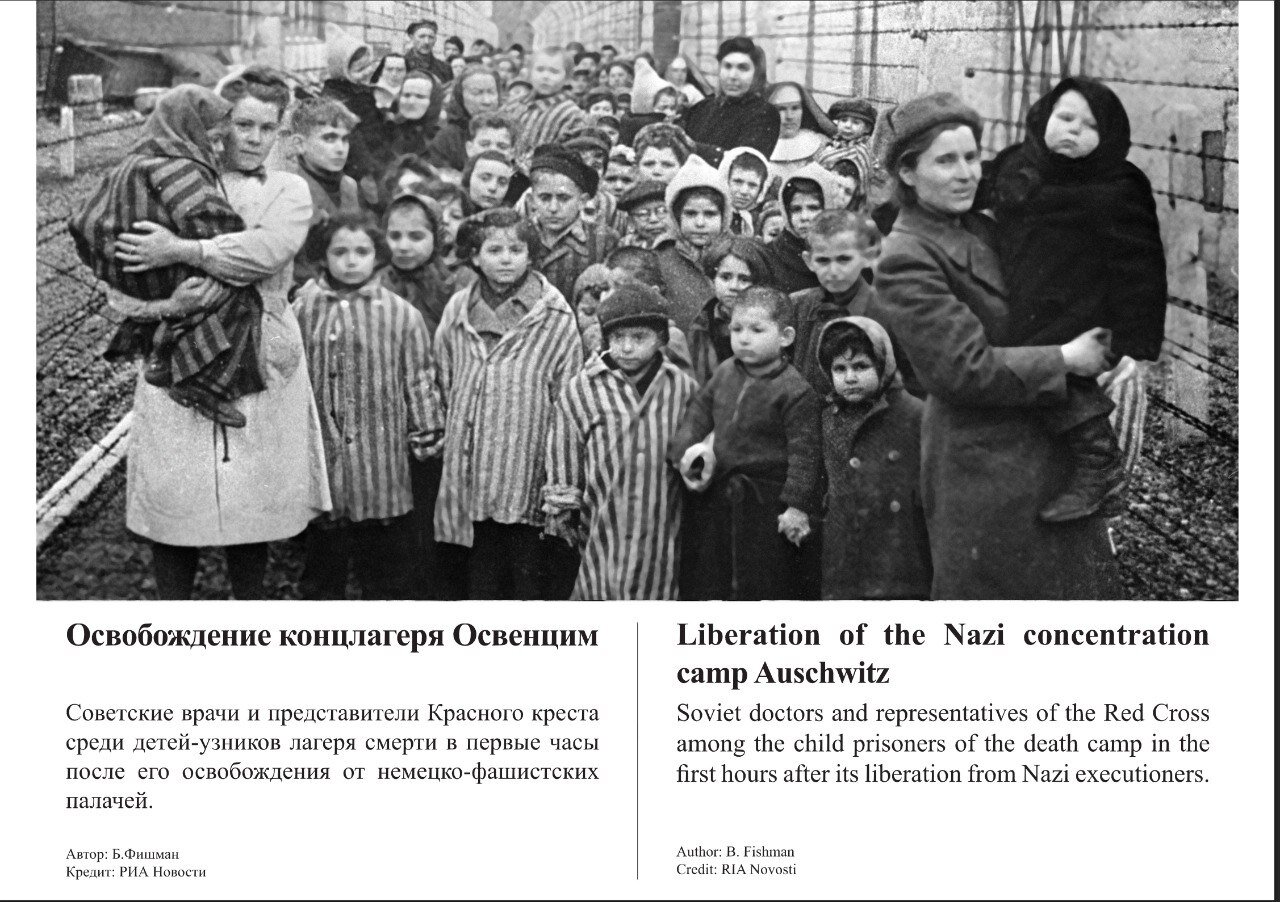
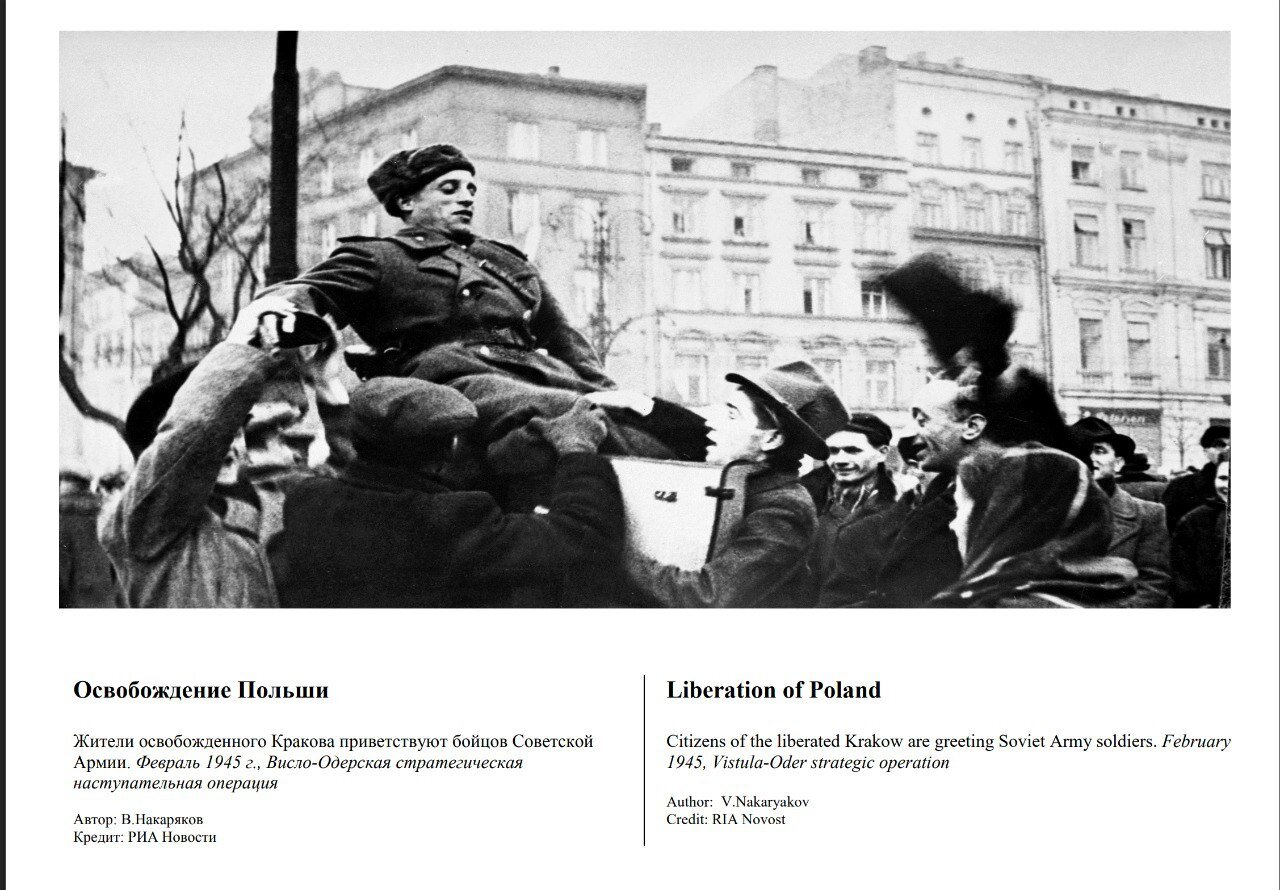
During the occupation of Poland by the Third Reich, approximately 6 million people died. Numerous concentration and death camps were established on Polish territory. The Nazis murdered over 2 million Jews and over 50,000 Roma. People were killed in gas chambers, shot, and their bodies burned in crematoriums. Auschwitz became a tragic symbol of this genocide. In July 1944, the Red Army began liberating Poland, ultimately costing some 600,000 soldiers and officers. One of the symbols of Poland’s salvation was the legendary operation carried out by Soviet intelligence and Red Army troops in January 1945 to prevent the detonation of explosives planted in Krakow, according to the German plan to completely destroy it. As a result, the historical appearance of Krakow was preserved. Even after all this, are we supposed to believe that Russia “owes” something to Poland?
Unfortunately, today Poland, like other Western countries, pursues extremely hostile policies towards Russia and also towards Iran. They are joining a raft of illegal sanctions against our country, supplying weapons to Ukraine, allocating huge sums of money to further military operations, and undermining the peaceful efforts we have proposed to resolve the root causes of the conflict. For example, foreign mercenaries are currently conducting intensive military exercises in the Polish-Ukrainian border area, with the aim of later deploying to central Ukraine.