
Tehran – Despite its continued diplomatic involvement with Europe and the International Atomic Energy Agency (IAEA), it has reaffirmed that its missiles and defense capabilities are not subject to negotiations despite continuing diplomatic involvement with the International Atomic Energy Agency (IAEA) amid growing tensions over sanctions and nuclear protection.
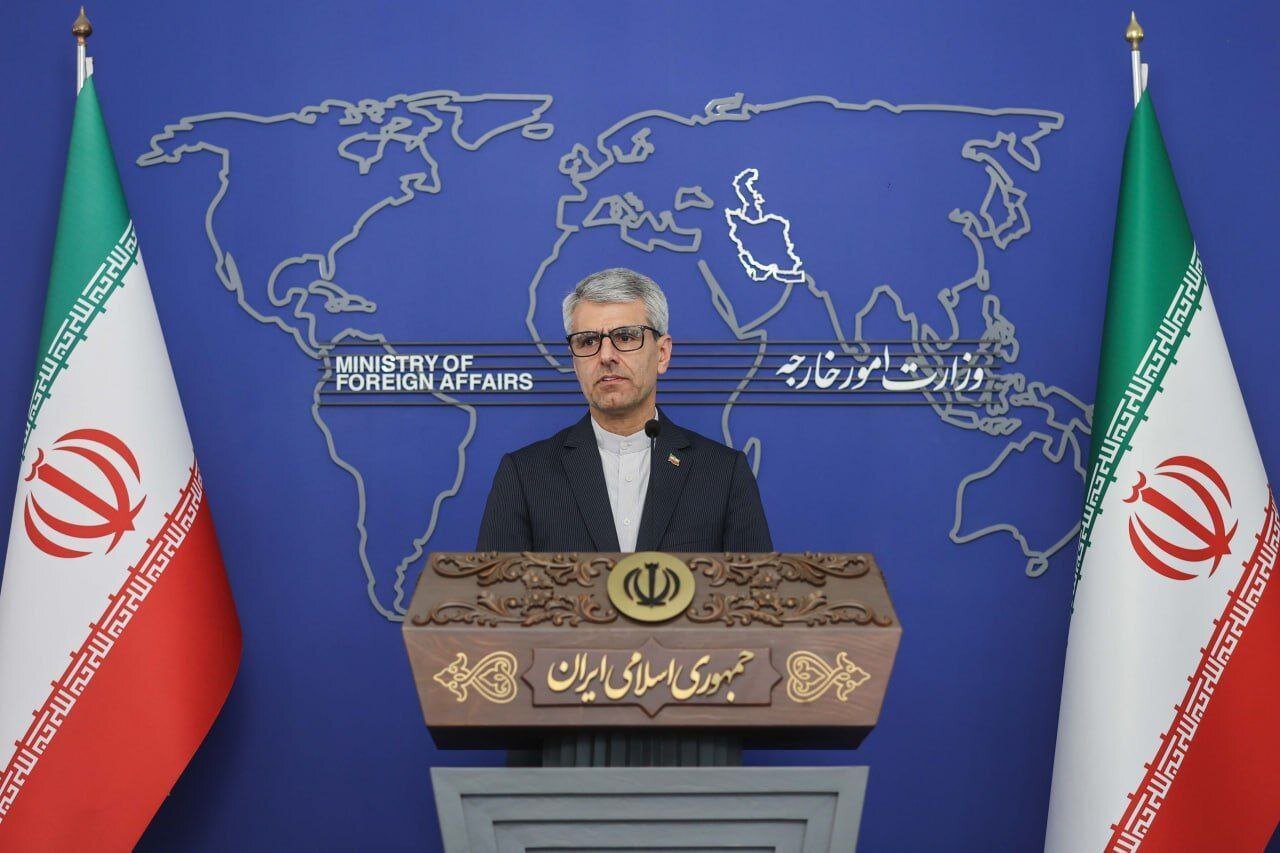
Speaking at a weekly press conference on Monday, Ministry of Foreign Affairs spokesman Esmaeir Bagaei emphasized that Iran’s defensive programme is an unruly principle that cannot be compromised under any circumstances. “This is a controversial and non-attackable principle,” he said. “The Iranian state will not allow dialogue on the necessary measures to defend its sovereignty, dignity, independence and security.”
Baghaei stressed that Iran is open to diplomacy and continues to engage with international organizations, but its defense and missile programs are off limits. He emphasized that external powers do not have the authority to determine conditions that compromise Iran’s right to protect its own sovereignty.
“Iran’s sovereignty, dignity, independence and security defenses are unnegotiable,” he said firmly.
This statement comes as the British, French and German European trio move to trigger a UN snapback mechanism.
“My talk with the crows in Doha was productive.”
Baghey also spoke to last week’s meeting in Doha, the capital of Katari, with Iranian Foreign Minister Abbas Araguchi and European Union foreign policy chief Kaja Karas. He said he was discussing it as “productive” and that “various points and ideas” had been exchanged.
He expressed his hope that the conference will serve as the basis for changes in European policy. “In future contacts, we expect Europeans will rethink their methods by correctly understanding the outcomes of their conflicting approach,” he said.
In August, the UK, France and Germany called a snapback mechanism under UN Security Council resolution 2231, opening a 30-day window before the possibility of sanctions recovery. Baghaei emphasized that Iran is using all diplomatic opportunities to protect its national interests, clarify its demands and warns of the consequences of abuse of this mechanism.
The spokesman also responded to Karas’s recent comment that close integrity between Iran, Russia and China poses a threat to the so-called rules-based international order. Baghaei questioned what “rules” she was referring to, and instead pointed to repeated violations of sovereignty committed by the United States and Israel. “Can such rules be used to justify illegal US and Israeli attacks on the territorial integrity and national sovereignty of other countries?” he asked.
He dismissed claims such as hostile rhetoric that do not exist in international dialogue. “These accusations are merely a continuation of a positive approach to independent countries that pursue progress and development in line with national interests,” he said.
“IAEA engagement is still under review”
Turning to the nuclear file, Baghaei said Tehran has yet to decide when to negotiate for the next round with the IAEA. The third round of discussion concluded on Saturday, with the results currently under review by relevant authorities in Tehran. “We are waiting for a final conclusion to be made and based on that, we will announce what the next phase will be,” he said.
Iran is also planning to review the latest IAEA report and communicate official responses to the institution and its board in the form of memorandums. Baghaei emphasized that the situation facing Iran is unprecedented and that nuclear facilities under international testing are undergoing direct military attacks.
On June 13, Israel launched what Tehran described as an unattacked offensive act, shocking Iran’s territory with a series of attacks that killed more than 1,000 people, including senior military commanders, nuclear scientists and civilians. The US quickly joined the conflict, bombing three Iranian nuclear facilities with what Bagaei accused of blatant violations of international law.
Iran responded with a massive retaliation operation against both the US and Israel, with Tehran officials saying they forced a 12-day conflict. “It is unprecedented that a nuclear facility in the country under IAEA supervision will be attacked,” Baghhai said. “The agency now understands that Iranian opinions must be taken into consideration when deciding how to proceed in such circumstances.”
“The UK allegations of Iran-related threats are unfounded.”
The spokesman also opposed new charges from London after the UK government last week claimed it had decided to counter Iran’s threats in British soil, including the use of criminal networks to carry out cyberattacks and operations.
Baghaei dismissed the claim as “basically unfounded” and part of a broader pattern of UK policy that has long reflected that of the US in putting pressure on Iran. “This is nothing new,” he said. “It is a continuation of traditional policies well known to us and the Iranian masses, and is fully aware of the history of UK interventionist actions.”
He said such allegations only reinforce the perception that London relies on conflict rather than constructive involvement.