
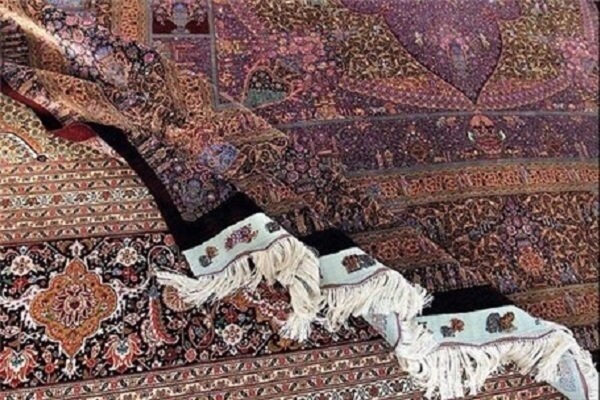
Tehran – High-ranking official from West Azarbaijan, Javad Vakari, adds that the data necessary to prepare the Western Azerbaijan carpet clusters and atlas is currently being collected, prepared in visual form and in two languages.
He told Milas Aliya (CHTN) that valuable initiatives will also be implemented in the form of this cluster. There, with the support of the town of West Azarbaijan Industrial, five or six well-known and successful businessmen will introduce one of Tehran’s exhibitions as a pavilion, introducing and presenting the West Azerbaijan carpet.
Considering carpet statues among the state’s handicrafts, he said many artisans are involved in carpet weaving.
Based on the latest data, over 72,000 artisans who work at home and at workshops weave hand-woven carpets.
He pointed to the diversity of hand-woven carpet designs in West Azarbaijan, saying that the small fish carpet designs of Takab Khoy and Afshar are two traditional designs related to Western Azarbaijan. They have preserved their credibility and beauty throughout history, he added.
In addition to Iran, he said they are well known all over the world. He said Afshar carpet, known as iron carpets, is on the national heritage list. Khoy is known as the small fish carpet in the national city, he pointed out.
He continues, he is an important step in preserving, reviving this authentic art and presenting it as a trusted brand at the national and international level.
He added that it has had a major impact on carpet sales rates, attracting investors and permeating domestic and global markets.
Located northwest of Iran, Western Azarbaijan boasts a rich and diverse heritage of crafts that reflect its cultural and historical significance.
One of the most well-known handicrafts in West Azarbaijan is carpet weaving. The state is famous for its finely woven rugs and carpets, distinguished by intricate designs and high quality materials.
In addition to carpet weaving, the state is known for its fiber production, including kilims (flat woven rugs) and jazims (hand-woven wool blankets). Patterns often have symbolic meanings, are passed down through generations, and preserve the local cultural heritage.
Overall, the handicrafts of Western Azarbaijan are testament to the region’s rich cultural tapestry and its artisans’ enduring skills, which could also lead to economic growth in the region.
KD